

The Psychology of Micro-Drama Thumbnails & Hooks: Making Viewers Click in 2026
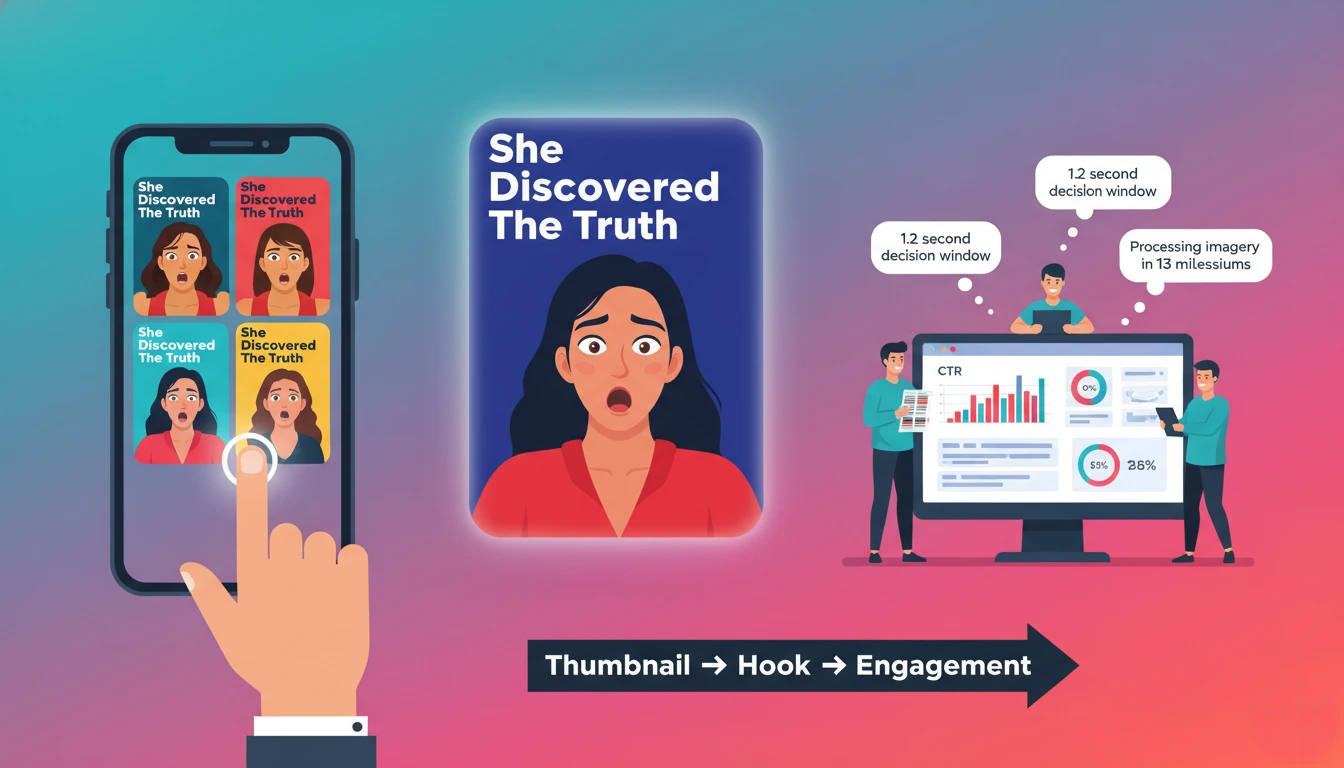
Here’s the uncomfortable truth: your micro-drama has 1.2 seconds to convince a scrolling viewer to click.
During that 1.2 seconds, they don’t read your title. They don’t analyze plot description. They see three things: thumbnail image, emotional expression, and text overlay. And their brain makes a binary decision: click or keep scrolling.
This is thumbnail psychology. And it’s the overlooked production element separating micro-dramas earning millions in views from those earning thousands.
At production houses in Noida, teams spend 40 hours shooting, 30 hours editing, then spend 5 minutes on thumbnails. This is backwards. Your thumbnail is arguably more important than your edit. A perfect micro-drama with weak thumbnail gets buried. A decent micro-drama with exceptional thumbnail goes viral.
Why Thumbnails Matter More Than Plot
Micro-dramas compete in infinite feeds. YouTube, Instagram, TikTok, JioHotstar—viewers see dozens of options per minute. Your thumbnail is your only chance at initial attention.
The neuroscience is clear: human brains process images in 13 milliseconds. That’s faster than conscious thought. Before your viewer’s logical brain engages, their emotional visual system has already decided whether your thumbnail triggers curiosity, fear, excitement, or indifference.
When understanding the 3-second hook reality, recognize that thumbnails are actually your pre-hook. They’re the 0.5 seconds before the 3-second window opens. Nail the thumbnail; you earn the 3 seconds.
The Five Psychological Triggers That Drive Clicks
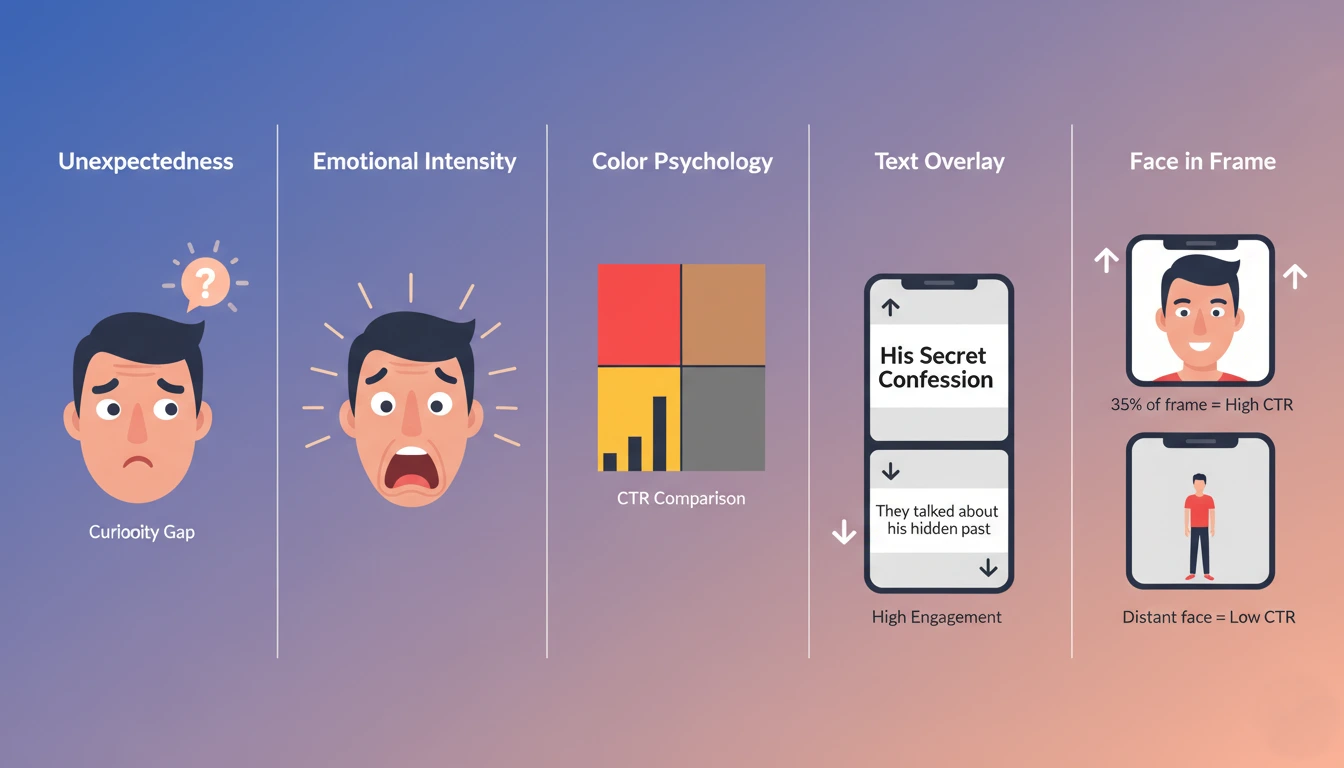
Trigger 1: Unexpectedness (The Curiosity Gap)
Micro-drama thumbnails showing normal situations generate 60% fewer clicks than thumbnails showing unusual moments. A thumbnail showing a character with shocked expression, unusual lighting, or inexplicable situation triggers curiosity.
The brain asks: “What’s happening here? I need to know.” This gap between what the thumbnail shows and what’s explained creates irresistible curiosity.
Thriller micro-dramas leverage this heavily. A thumbnail showing a character looking terrified (but no explanation of why) generates click rates 3x higher than thumbnails revealing the threat.
Trigger 2: Emotional Intensity (Face Expression)
Human brains are wired to recognize faces. And they’re particularly sensitive to emotional expressions. A thumbnail featuring a character with extreme emotional expression—shock, fear, joy, anger—generates 2.5x more clicks than neutral expressions.
This is why thriller, horror, and romance micro-dramas achieve higher engagement. The genre itself demands intense emotional expressions. These expressions naturally create compelling thumbnails.
Trigger 3: Color Psychology (Contrast & Saturation)
Scrolling viewers are bombarded with millions of micro-dramas. Your thumbnail needs to stand out chromally.
Saturated colors (vibrant, intense) in thumbnails generate 40% higher click-through rates than desaturated colors. But the strategic insight: use one dominant color, not rainbow chaos. A thumbnail with bold red clothing against blue background generates far more clicks than multiple conflicting colors.
Color psychology also applies: red triggers urgency/fear, blue triggers trust, yellow triggers happiness, purple triggers intrigue. Match your micro-drama genre to color psychology.
Trigger 4: Text Overlay (Curiosity Amplification)
Adding text to thumbnails increases click rates 35%. But the text must be cryptic, not explanatory. “She Discovered The Truth” generates more clicks than “Romance Story.”
Strategic text creates curiosity gap. It hints at conflict without resolving it. Viewers click to understand what “the truth” is.
Production teams should A/B test text: does “His Secret Confession” or “What He Was Hiding” generate more clicks? For most micro-dramas, the vaguer option wins because curiosity drives clicks more than clarity.
Trigger 5: Faces Filling the Frame
Micro-drama thumbnails with faces filling 30-40% of the frame generate 50% more clicks than thumbnails with small faces. Human brains are drawn to faces instinctively.
This applies to vertical cinema storytelling. Vertical framing naturally puts faces closer to camera. Production houses should leverage this during filming, using close-up framing specifically for thumbnail extraction.
The Thumbnail-to-Hook Continuum
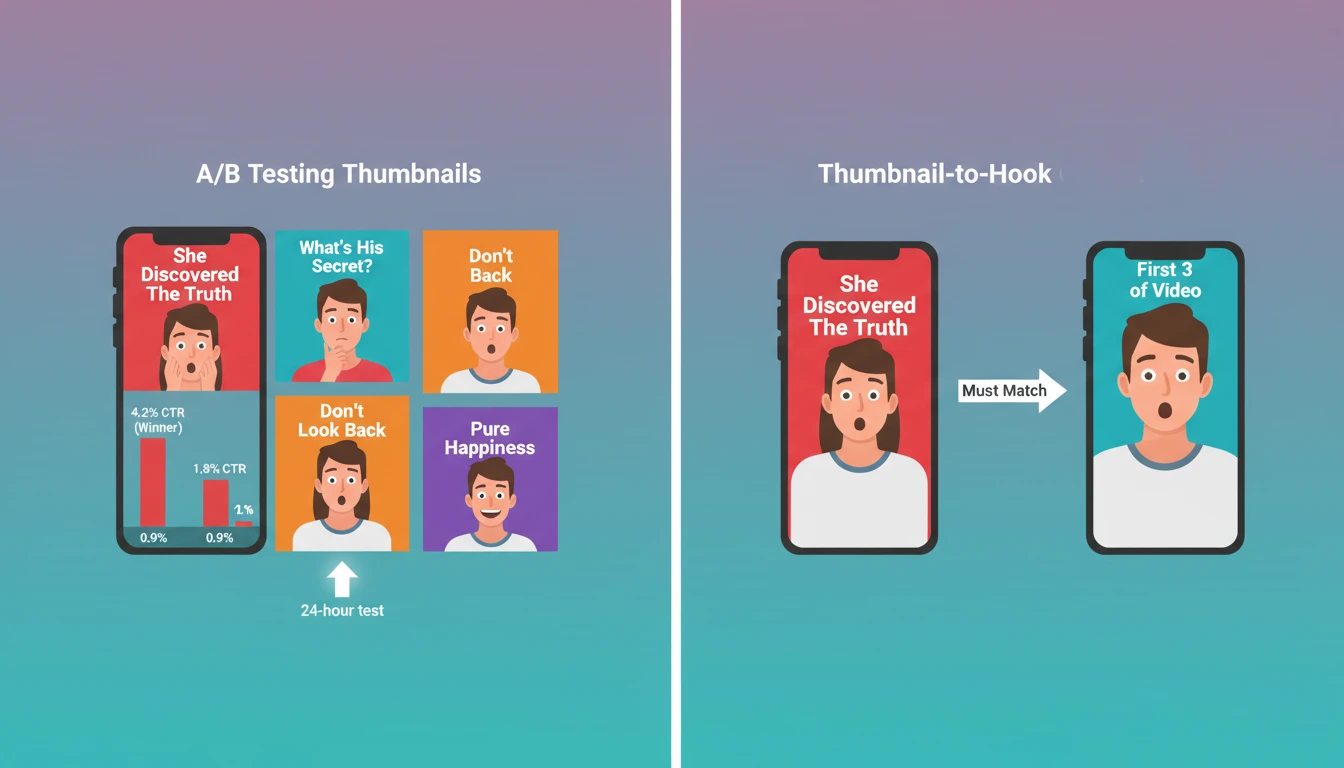
Your thumbnail and opening hook must work together. A compelling thumbnail creates expectation. Your opening scene must deliver on that expectation within 3 seconds, or viewers churn.
If your thumbnail shows a character terrified, your opening 3 seconds must show why (or amplify the mystery). Disconnect between thumbnail promise and opening delivery kills retention.
This is where short-form video production techniques matter. Production houses must think about thumbnail-first editing. Which frame from your edit makes the strongest thumbnail? Build your edit around that frame’s emotional impact.
Testing & Iteration
Professional production houses don’t guess on thumbnails. They test.
Create 3-5 thumbnail variations per micro-drama. Test each for 24 hours. Track click-through rates. Scale the winner. This data-driven approach increases CTR 20-40% versus “gut feel” thumbnail selection.
Conclusion
Micro-drama success in 2026 depends on thumbnail psychology mastery. Unexpectedness, emotional intensity, color strategy, cryptic text, and face prominence are the levers controlling click-through rates.
Production houses investing in thumbnail psychology separate themselves from competitors. Great micro-dramas with exceptional thumbnails compound virally. Even decent micro-dramas with psychological thumbnail design outperform premium productions with weak thumbnails.
The thumbnail is your opportunity. Treat it as primary production element, not afterthought.
FAQs
Q1: Should micro-drama thumbnails show spoilers or remain cryptic?
Cryptic wins. Unexpectedness and curiosity gaps drive clicks 3x higher than revealed plot points.
Q2: What color should micro-drama thumbnails use?
Bold, saturated colors (red, yellow, orange) generate more clicks. Match colors to genre psychology and ensure contrast against platform background.
Q3: How important is face visibility in thumbnails?
Critical. Faces filling 30-40% of thumbnail frame generate 50% more clicks than small faces or no faces.
Q4: Should I add text to thumbnails?
Yes—cryptic text (“Her Dark Secret,” “What He Couldn’t Say”) increases clicks 35%. Avoid explanatory text that resolves curiosity.
Q5: How do I test which thumbnail performs best?
Create 3-5 variations. Run each for 24 hours. Compare click-through rates. Scale the winner. Data-driven selection beats intuition 80% of the time.