

The Great Video Format Debate: When To Use 15-Seconds Reels Vs 10-Minute Storytelling In 2026
The digital landscape of 2025 has created an unprecedented paradox: attention spans are shrinking, yet audiences crave deeper, more meaningful content than ever before. As a leading production house in Delhi NCR, we’ve witnessed this duality firsthand through hundreds of client projects. The question isn’t whether short or long-form video wins—it’s understanding which format serves your specific business objective, platform dynamics, and audience psychology.
THE SHORT-FORM PHENOMENON: WHY 15-SECOND REELS DOMINATE DISCOVERY
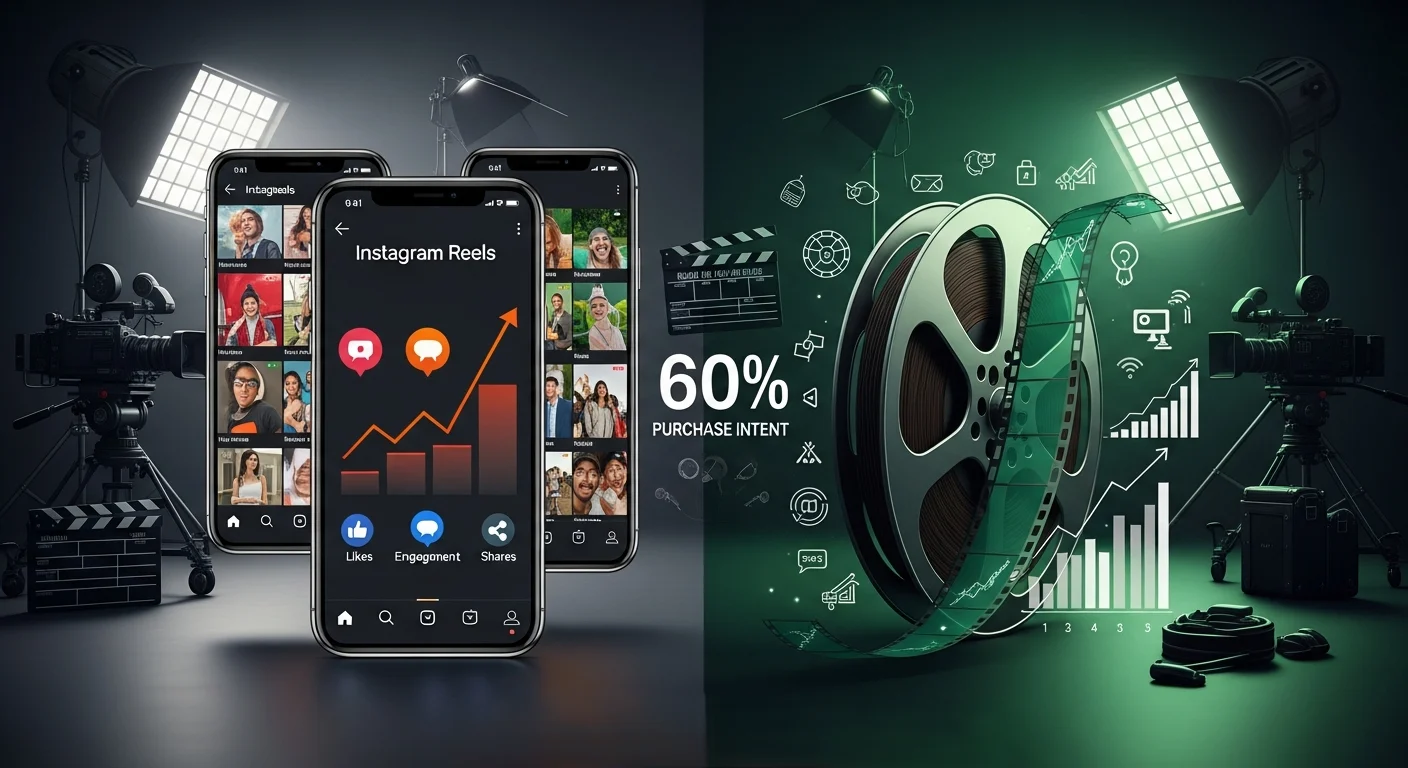
Instagram Reels, TikTok, and YouTube Shorts have fundamentally rewired how brands capture initial attention. The 15-second format isn’t arbitrary—it’s engineered for algorithmic amplification and mobile-first consumption. In 2025, these bite-sized videos generate 3x more engagement than static posts, making them indispensable for brand awareness campaigns.
When short-form reels outperform:
The brilliance of reels lies in their velocity. A perfectly executed 15-second product showcase or trend-aware creative can reach millions organically. B2B companies overlooking this format miss critical visibility windows. Unlike traditional advertising, reels leverage entertainment value as their primary currency, making them ideal for building community and driving traffic to deeper content channels.
Short-form content also excels at audience micro-segmentation. Each reel tells a micro-story that resonates with specific viewer preferences, allowing algorithms to serve content to hyper-targeted audiences. This is particularly valuable for lead generation strategies where initial brand awareness must happen before deeper engagement.
THE LONG-FORM ADVANTAGE: WHERE 10-MINUTE CONTENT BUILDS AUTHORITY
While reels capture eyes, long-form videos capture minds. A 10-minute documentary-style piece, educational deep-dive, or narrative-driven story creates the kind of authority and emotional resonance that short content cannot replicate. In 2025, brands distinguishing themselves from commoditized competitors increasingly rely on long-form storytelling.
The data supports this: viewers who consume 8+ minutes of video content show 60% higher purchase intent than those who watch under 2 minutes. This translates directly to conversion potential and customer lifetime value.
Storytelling in video production isn’t merely aesthetic—it’s a conversion mechanism.
Why 10-minute videos matter for 2025 strategies:
Long-form content performs exceptionally well on YouTube, where audiences explicitly choose depth over brevity. Corporate training videos, product education, and brand documentaries sustain viewer attention through substantive value delivery. This format also supports complex narratives that build the emotional connection necessary for premium positioning.
PLATFORM REALITIES: FORMAT ALIGNMENT WITH DISTRIBUTION CHANNELS
The format debate resolves differently across platforms. Instagram and TikTok algorithmically favor reels within their ecosystems, making short-form essential for these channels. YouTube’s recommendation engine, conversely, favors watch-time metrics, making longer content advantageous. LinkedIn’s professional audience increasingly engages with educational long-form videos over entertainment-focused reels.
In podcast production and audio content strategies, the long-form principle dominates entirely.
Podcasts as a future of content marketing demonstrates that when audiences opt into audio consumption, they’re willing to invest 30+ minutes in substantive content. This same principle applies to YouTube viewers seeking educational value.
THE PRODUCTION PERSPECTIVE: HOW FORMAT IMPACTS CREATION WORKFLOW
From our experience scaling production house operations, format selection cascades through your entire creative workflow. Short-form content demands rapid ideation, trend responsiveness, and efficient production cycles—often shooting 10-15 variations in a single day. Long-form requires extensive pre-production planning, substantial scripting, and deliberate pacing decisions.
Inside any professional production house, these processes diverge significantly. Short-form teams optimize for volume and algorithmic appeal. Long-form teams invest in narrative architecture, cinematography quality, and strategic editing that transforms minutes into memorable experiences. Both require distinct skill sets and resource allocation.

HYBRID STRATEGIES: THE 2025 COMPETITIVE ADVANTAGE
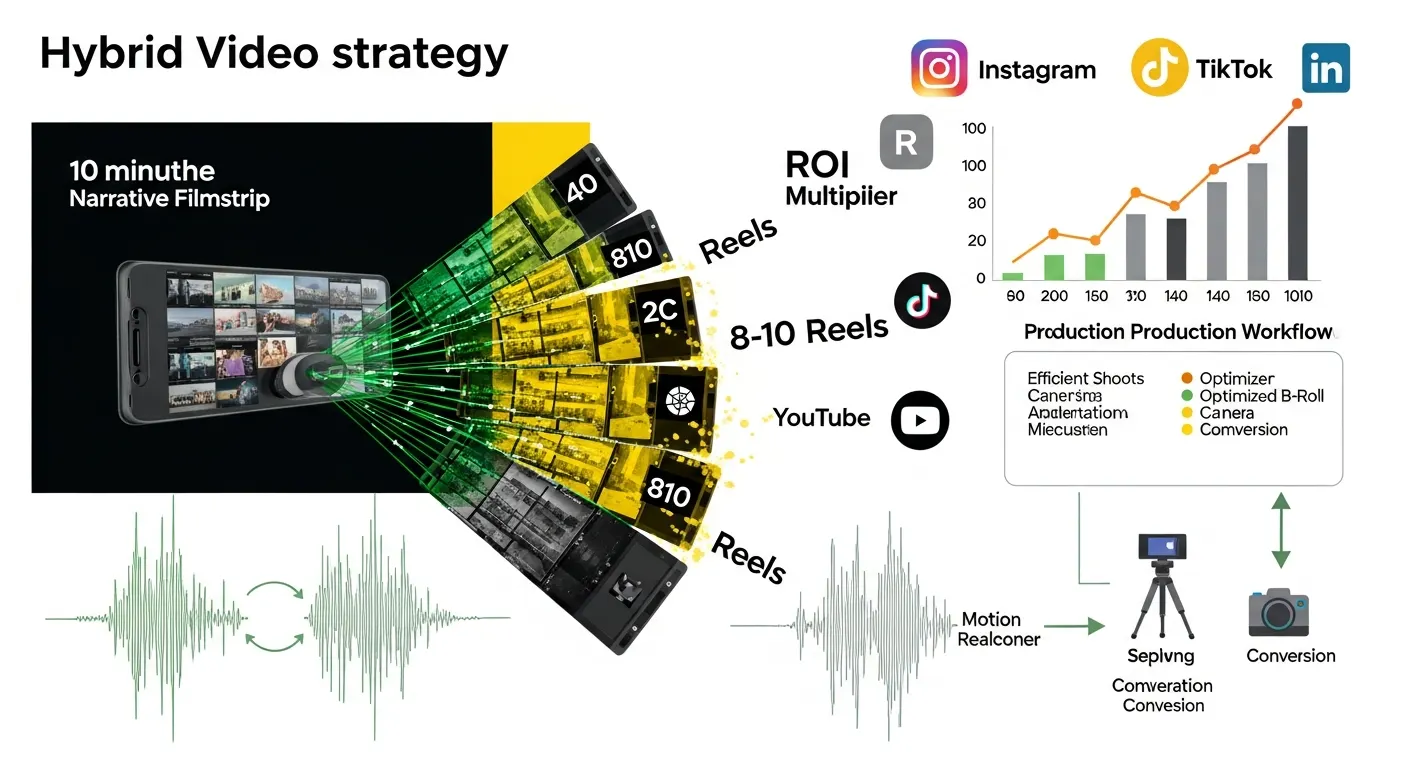
Forward-thinking brands in 2025 aren’t choosing between formats—it’s orchestrating them. A single 10-minute narrative can generate 8-10 optimized reels through strategic repurposing. This approach maximizes content ROI while serving different audience segments through appropriate channels.
Documentary-style long-form content establishes authority and emotional resonance. Extracted short-form clips then distribute these insights across high-volume discovery platforms. This synergy leverages algorithmic dynamics while building genuine brand depth. The integration works because each format serves distinct functions within a cohesive customer journey.
Advanced video production teams now structure shoots with both formats in mind from pre-production phases. Camera positioning, interview segments, and B-roll capture accommodate both 60-second highlights and 600-second narrative arcs simultaneously. This efficiency multiplies output without proportionally increasing production costs.
AUDIENCE INTENT: THE ULTIMATE DECISION FRAMEWORK
Ultimately, format selection hinges on audience intent. Users scrolling social feeds in fragmented time windows respond to reels. Users intentionally visiting YouTube seeking education or entertainment tolerate and often prefer longer narratives. B2B decision-makers researching solutions watch 8-12 minute comparison videos. Casual consumers discover brands through 6-second story bumpers.
Mapping audience intent against platform behavior illuminates format strategy. A fitness brand building awareness uses reels for trend participation. That same brand educating customers about technique uses 12-minute tutorial videos. A technology company seeking B2B lead generation produces 10-minute product walkthroughs while using 15-second explainer reels for initial awareness.
CONCLUSION
The format debate of 2025 reflects maturation in digital marketing. Early internet prioritized novelty; current markets reward strategic alignment. Short-form and long-form both command essential roles in sophisticated video marketing strategies.
Success requires diagnosing your specific business objective, audience behavior, and platform distribution before format selection. A production house partner who understands these nuances helps navigate this complexity, optimizing both creative quality and business impact.
The answer to “short or long?” is increasingly: “Why not both, strategically orchestrated?”
FAQ’S
Q 1: Which video format generates more immediate engagement?
15-second reels dominate immediate engagement metrics with 3x higher interaction rates than static posts, but 10-minute videos drive deeper conversions and higher purchase intent.
Q 2: Should B2B companies focus on short-form or long-form content?
B2B companies need both: short-form reels for lead awareness and LinkedIn visibility, plus 10-minute comparison/product videos for decision-makers evaluating solutions.
Q 3: Can I repurpose one long-form video into multiple reels?
Yes—a single 10-minute narrative generates 8-10 optimized 15-60 second reels through strategic segmentation, maximizing ROI without doubling production costs.
Q 4: Which platform requires short-form content?
Instagram, TikTok, and YouTube Shorts algorithmically prioritize short-form reels, while YouTube, LinkedIn, and podcast platforms favor long-form educational content.
Q 5: How do I choose between formats for my brand?
Map your audience intent against platform behavior: use reels for discovery and awareness, long-form for authority and conversion—then orchestrate both strategically.