

The Creator Economy: Monetization Models and Revenue Sustainability in 2026
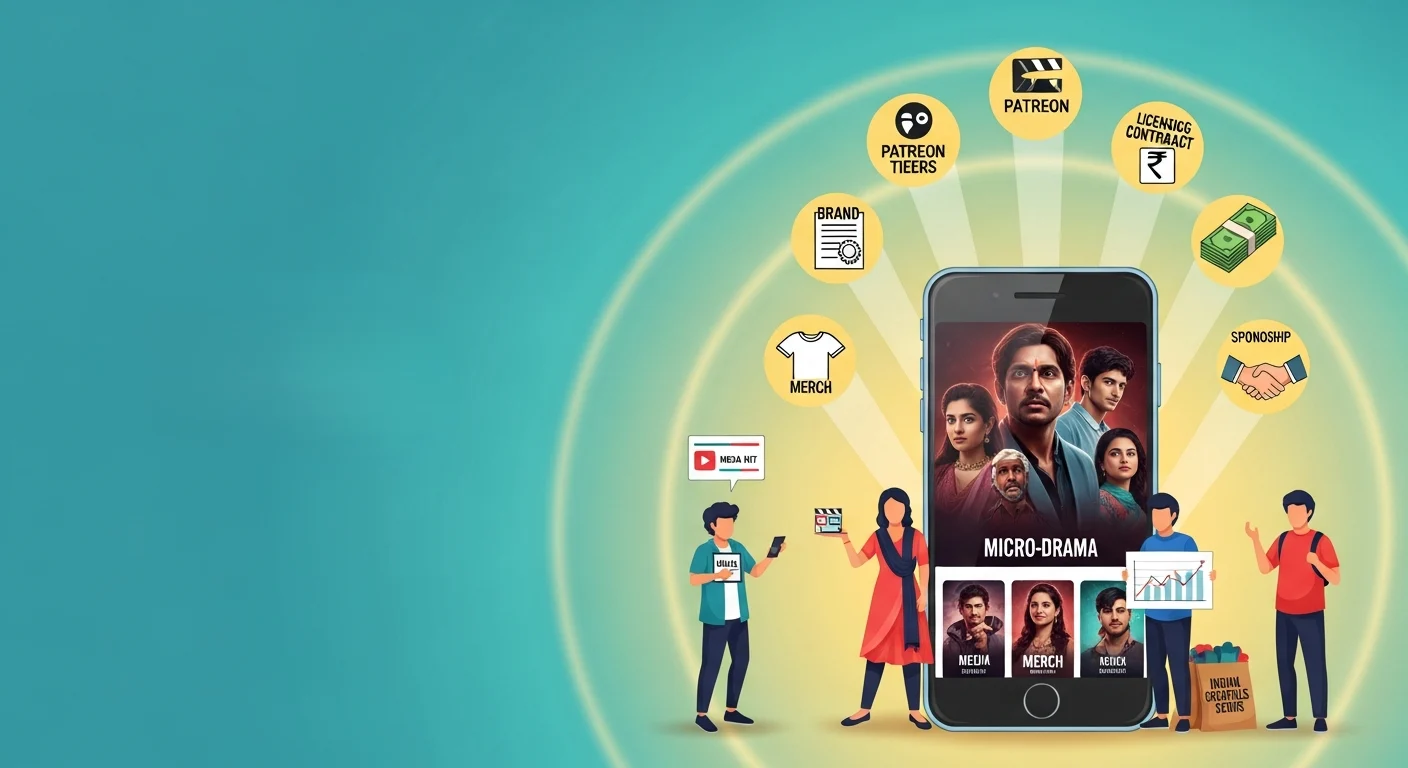
The micro-drama boom is real. Dashverse, a platform backed by Flipkart, is releasing 30+ micro-drama titles monthly and has processed over 26.5 million views in its first weeks. JioHotstar’s mythology series generated massive engagement despite operating with non-traditional talent and vastly reduced budgets. But here’s what separates successful micro-drama creators from those who burn out: they’ve solved the monetization equation.
The creator economy for micro-drama producers isn’t just about views anymore. It’s about building sustainable revenue systems that let you produce consistently without burning through savings or relying on a single platform’s goodwill. This masterclass walks through the monetization models that actually work in 2026—and which ones are dead ends.
The Monetization Reality: Why Views Alone Don’t Pay Rent
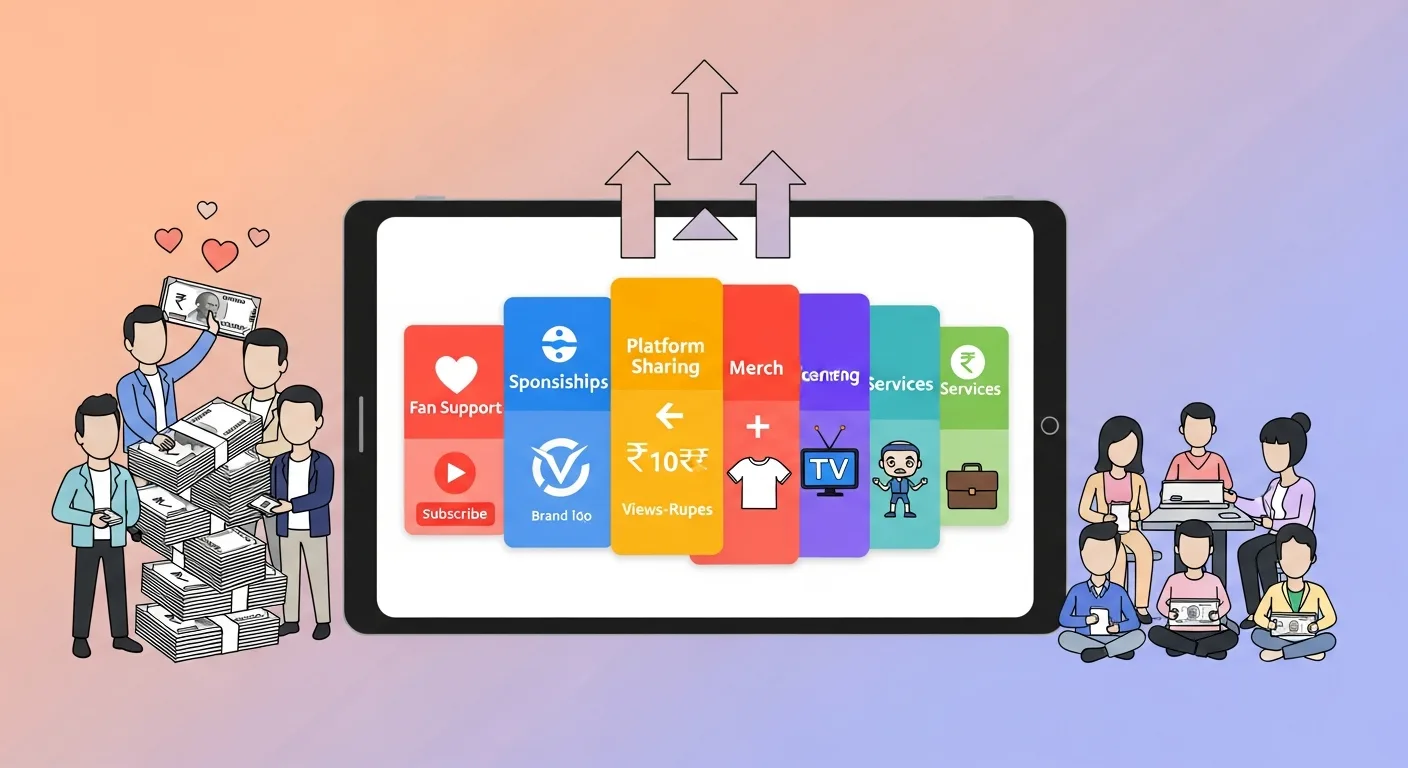
A hard truth: 1 million views on YouTube Shorts generates approximately $1,000–$3,000 in AdSense revenue depending on geography and audience quality. That’s unsustainable for a team of 3–5 people producing weekly micro-dramas. For Indian creators especially, CPM (cost per thousand impressions) hovers between $0.25–$0.75, meaning a 5-million-view series might generate ₹2–5 lakhs gross—before taxes, software, and crew costs.
This is why understanding micro-drama as digital storytelling extends beyond narrative craftsmanship into business model design. The production house or individual creator who understands how to diversify revenue streams survives; those who depend on platform AdSense alone don’t.
Monetization Model 1: Direct Fan Support (Patreon, YouTube Memberships, Creator Fund)
Revenue potential: $500–$5,000/month per 1,000 engaged fans
This is the most direct relationship between creator and audience. Platforms like Patreon allow fans to subscribe at tiers ($1, $5, $10+/month) for exclusive content, early access, or behind-the-scenes production footage.
YouTube Memberships operate similarly—fans pay directly to your channel for perks like exclusive episodes, member-only streams, or custom shoutouts.
Why this works for micro-drama:
Micro-drama audiences are engaged. They watch your story week after week, forming emotional attachments to characters and narrative arcs.
Exclusivity feels valuable. Offering episode 2 of a cliffhanger one week early to members creates real perceived value.
Production behind-the-scenes content leverages assets you’re already creating.
Realistic numbers: A micro-drama with 50,000 regular viewers (10% engagement to memberships) could generate ₹1.5–3 lakhs monthly at $5/tier average. Scale to 200,000 viewers, and you’re at ₹6–12 lakhs.
Monetization Model 2: Brand Sponsorships & Product Placements
Revenue potential: $5,000–$50,000+ per episode depending on reach
This is where the real money lives for micro-drama creators. Brands want placement in vertical video content because it reaches mobile-first audiences. A fast-fashion brand might pay ₹50,000–2 lakhs per episode for product placement in a trending micro-drama series. A beverage brand? Double or triple that.
The key is authenticity. Audiences tolerate sponsorships in micro-dramas if they feel integrated into the narrative. A character sipping a branded beverage feels natural; a 30-second commercial break destroys immersion.
How to land sponsorships:
Media kit: Build one showing episode views, audience demographics, engagement rates, and past brand work.
Audience alignment: Brands want their products in front of the right demographic. A fashion brand invests in a lifestyle micro-drama, not a thriller.
Negotiate upfront vs. rev-share: Upfront payments are safer; rev-share (5–15% of platform revenue) only works if your platform has strong monetization (which most don’t yet).
Monetization Model 3: Platform Revenue Sharing
Revenue potential: Highly variable ($0.50–$30 per 1,000 views depending on platform)
JioHotstar, Dashverse, and emerging micro-drama platforms are starting to pay creators a percentage of subscription revenue or ad revenue. This differs from AdSense in that platforms with curated content and premium positioning generate higher CPMs ($8–$30 vs YouTube’s $0.50–$3).
Strategic insight: Understanding how to produce a 100-episode series on a micro-budget becomes directly relevant here—if you can produce at cost, platform rev-share becomes sustainable faster.
Monetization Model 4: Licensing & Syndication
Revenue potential: $1,000–$100,000+ per license depending on media rights
Once your micro-drama gains traction, licensing happens. Your series might be licensed to OTT platforms, TV networks, or international platforms seeking vertical content. A ₹50-lakh series licensed to 3 platforms regionally could generate ₹20–30 lakhs in total licensing revenue.
This is where understanding the great video format debate becomes relevant—knowing which formats, lengths, and styles command licensing premiums helps you produce strategically for this revenue stream.
Monetization Model 5: Merchandise & IP Extension
Revenue potential: $2,000–$50,000+ annually depending on fanbase
Micro-drama characters become intellectual property. Sell character merchandise (t-shirts, posters, figurines) through Shopify or Amazon. Create spin-off comics or audio drama. License character likenesses to game developers. A moderately successful micro-drama series can generate ₹10–30 lakhs annually in IP licensing.
Monetization Model 6: Production House Services & Consulting
Revenue potential: $10,000–$100,000+ annually
Once you’ve proven your micro-drama success, brands and studios hire you to produce their micro-dramas or short-form content. This is where the production house positioning becomes critical—you’re no longer just a creator; you’re a service provider. This model scales your expertise across multiple client projects while maintaining your own content production.
Building a Sustainable 2026 Revenue Stack
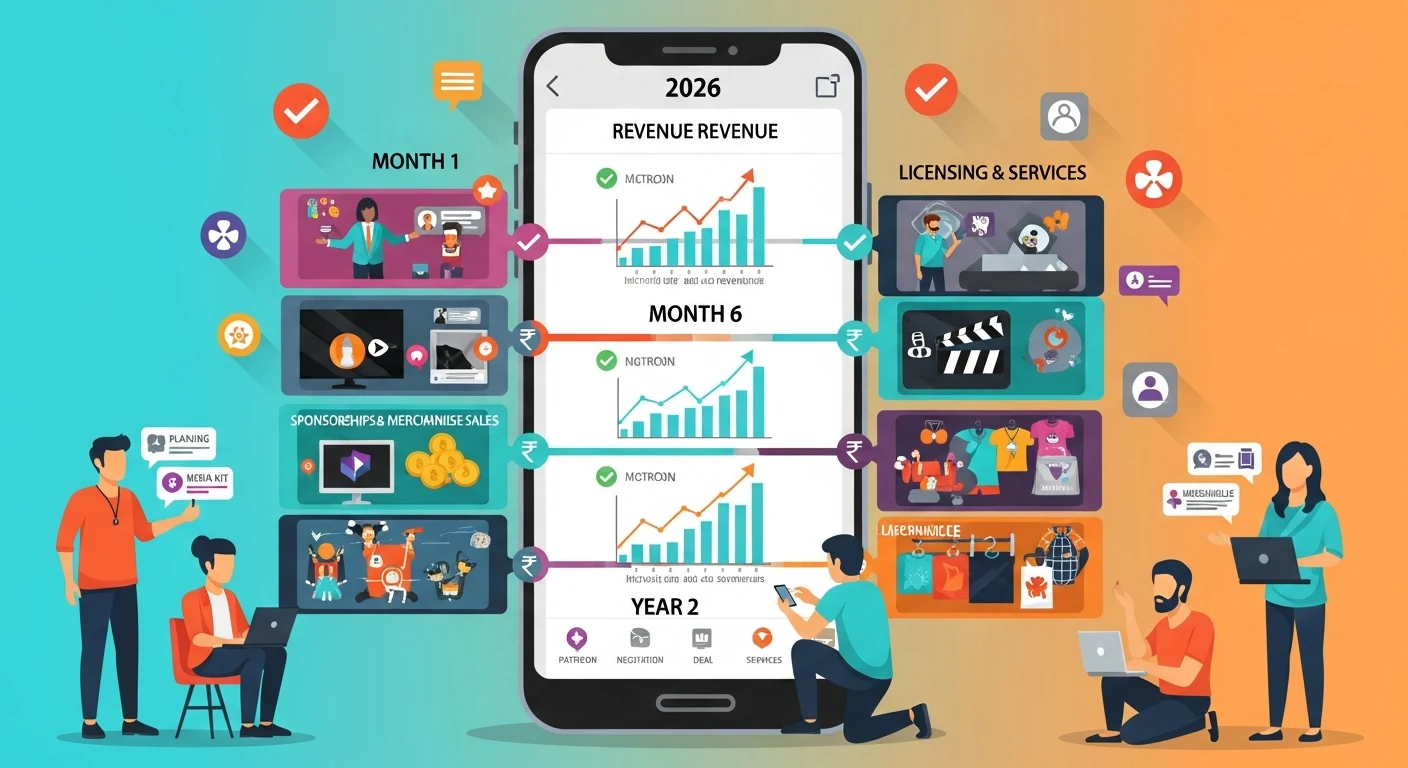
The creators and production houses winning in 2026 aren’t betting on single monetization models. They’re stacking:
Months 1–3: Direct fan support (Patreon) + Ad revenue (YouTube/platform default)
Months 4–6: Land first brand sponsorship + Platform rev-share deals
Months 6–12: Licensing negotiations + Merchandise launch
Year 2+: Production house services + IP licensing + Premium platform partnerships
This diversified approach means losing one revenue stream doesn’t tank the business. A sponsorship deal falls through? Your Patreon and licensing revenue keep you afloat.
Conclusion
Understanding how to control costs is inseparable from monetization. That’s why exploring short-form video production optimization and traditional video production skills in the AI era becomes essential. The creators earning ₹10+ lakhs monthly aren’t just great storytellers—they’re also ruthlessly efficient producers.
At Garage Productions, we help micro-drama producers and creators build sustainable business models alongside their storytelling vision. From production optimization to monetization strategy consulting, we’ve guided creators through the exact revenue models outlined above.
Ready to turn your micro-drama passion into a sustainable income? Let’s talk through which monetization models fit your audience and production capacity. Contact us for a creator economy strategy consultation.
FAQ’S
Q1: How long before a micro-drama series becomes profitable?
With efficient production, a micro-drama with 100,000+ regular viewers can achieve profitability within 6–12 months through sponsorships and fan support combined.
Q2: What’s the minimum audience size needed to secure brand sponsorships?
Micro-drama sponsorships typically start at 50,000–100,000 monthly viewers; however, niche audiences (highly engaged, specific demographics) can attract sponsorships at lower viewership if alignment is strong.
Q3: Should I use Patreon, YouTube Membership, or create my own membership platform?
Start with YouTube Membership (built-in audience) or Patreon (lower operational overhead); move to a custom platform only after 500+ paying members justify the complexity.
Q4: How do micro-drama licensing deals typically work?
Platforms offer either upfront payments ($5,000–$100,000) for exclusive rights or revenue-share models (5–15% of subscription revenue); always negotiate exclusive geographic or platform limitations.
Q5: Can I monetize while still maintaining creative control and audience trust?
Absolutely—authentic brand integration (products that feel natural to the narrative) and transparent sponsorship disclosures actually strengthen audience trust over time.