

Regional Language Micro-Dramas: Tap Tier-2 India’s ₹4,000 Crore Market
India’s micro-drama market is projected to reach ₹4,000 crore by 2026, growing at 40-50% year-over-year, with regional language content driving 60-70% of total consumption from Tier-2 and Tier-3 cities. This explosive growth represents a fundamental shift in content consumption patterns as vernacular storytelling meets mobile-first entertainment, creating unprecedented opportunities for production houses willing to move beyond English and Hindi metro narratives.
Why Regional Languages Dominate Micro-Drama Consumption
Over 80% of Indian users find regional-language content more relatable than dubbed or subtitled alternatives, making vernacular micro-dramas the fastest-growing segment in short-form entertainment. Platforms like ShareChat report nearly 60 million people watching micro-dramas daily, with users spending close to an hour consuming content rooted in local culture, language, and emotional contexts.
Tier-2 and Tier-3 audiences consume short-form content more frequently and for longer sessions than metro users, preferring emotionally driven stories centered on family conflict, romance, social aspiration, and justice. These viewers typically watch episodes from start to finish rather than skipping, resulting in higher repeat viewing, sharing rates, and superior engagement metrics that translate directly into monetization potential.
The ₹4,000 Crore Opportunity Landscape
Major platforms have launched dedicated regional micro-drama initiatives recognizing this massive market shift. Tata Play Binge introduced “Shots,” offering vertical micro-dramas across Hindi, Tamil, Telugu, Bengali, and Marathi at launch, with multilingual dubbing expanding reach across linguistic boundaries. Bharat-focused platform MiniPix recently raised ₹2.4 crore in pre-seed funding specifically to scale regional micro-drama content targeting mobile-first audiences in UP, Bihar, Jharkhand, and beyond.
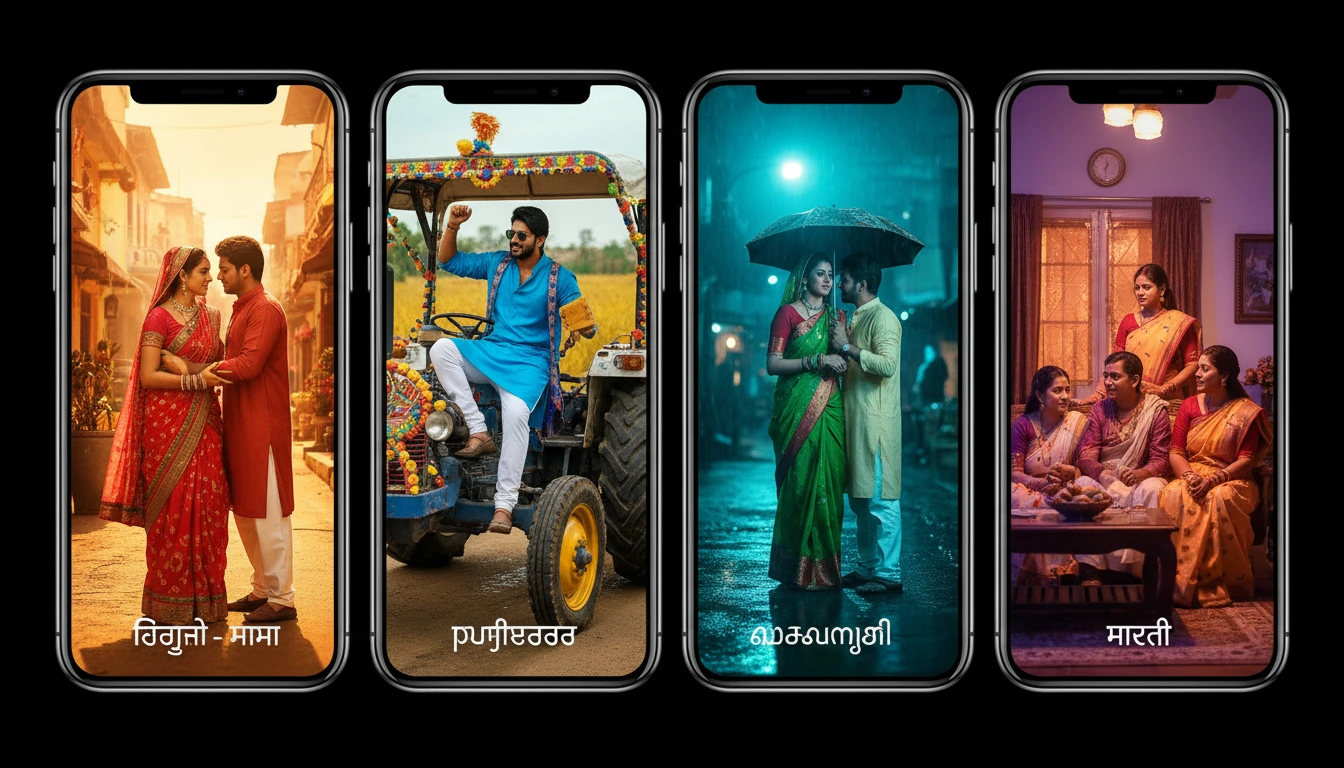
Eight major regional platforms now shape India’s vernacular micro-drama ecosystem: aha (Telugu), Hoichoi (Bengali), Planet Marathi, ManoramaMAX (Malayalam), Sun NXT (Tamil), along with Punjabi and Bhojpuri shorts thriving on YouTube and dedicated apps. Each platform brings distinct cultural flavors—from Kerala’s lyrical storytelling on ManoramaMAX to Marathi intergenerational warmth on Planet Marathi—demonstrating that regional doesn’t mean generic.
Content Preferences Across Regional Markets
Tier-2 and Tier-3 markets show significantly higher preference for family, romance, revenge, and aspirational narratives compared to the experimental, satirical, or trend-based content that performs better in metros. Genres like romance, action, and rags-to-riches stories resonate particularly strongly when rooted in local culture and linguistic nuances that create immediate emotional hooks.
MiniPix’s success with Bhojpuri content illustrates this principle perfectly—their 1-1.5 minute episodes pack drama, romance, crime, and reality into bite-sized stories using colloquial language and cultural references that feel authentic to audiences across UP, Bihar, and neighboring states. This hyper-localized approach generates higher engagement than generic Hindi content attempting broad appeal.
Production Strategies for Regional Success
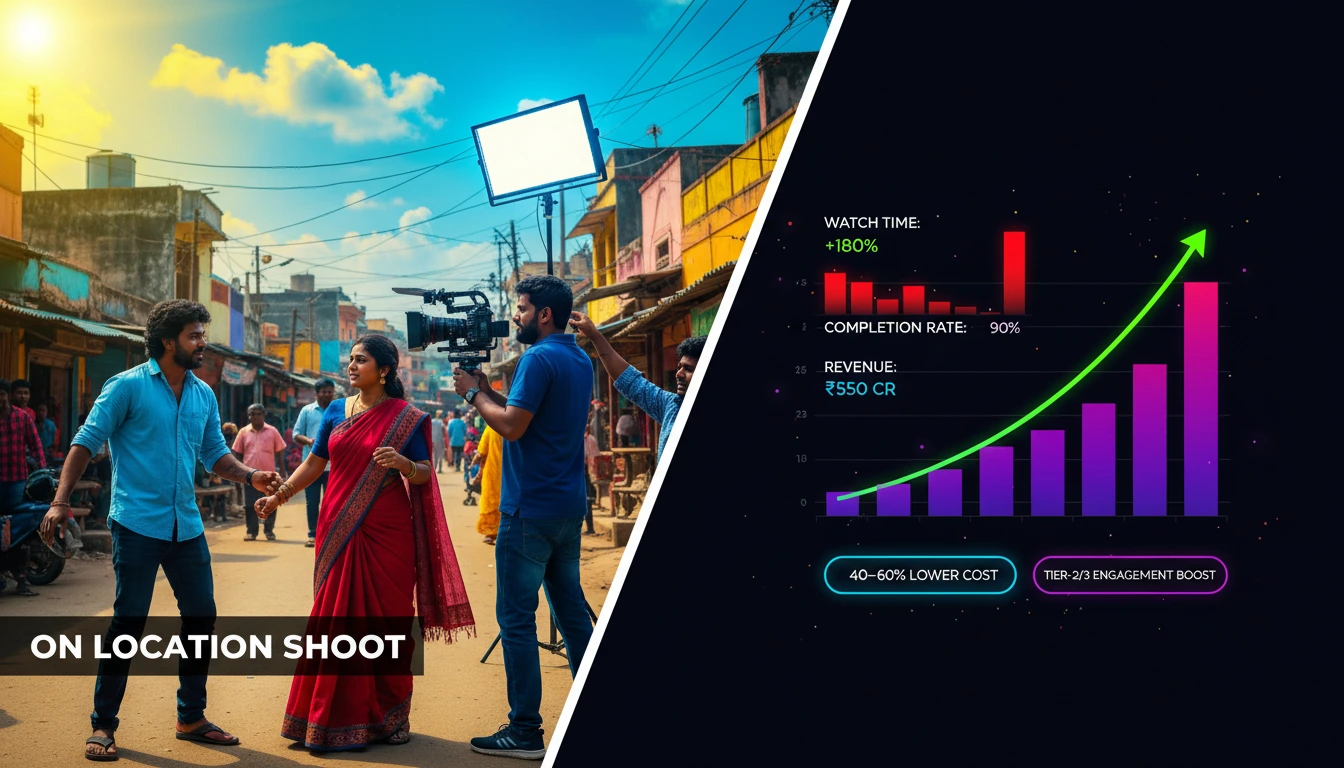
Smart production houses are adapting casting strategies to prioritize local talent who bring authentic linguistic delivery and cultural understanding over metro-based actors attempting regional accents. Punjabi micro-dramas thrive with music-soaked romances and swaggering heroes filmed in actual villages, while Malayalam content leverages Kerala’s storytelling poise with rain-washed romance and folklore-tinged narratives.
The “reelification of storytelling” inspired by Chinese and Korean content adapts beautifully to India’s linguistic diversity, allowing producers to create culturally specific versions that maintain core narrative hooks while adjusting emotional beats, dialogue patterns, and visual references for regional audiences. This localization strategy proves far more effective than simple dubbing or subtitling approaches.
Monetization and Business Models
Regional audiences demonstrate early willingness to pay for quality vernacular content, marking a significant shift in consumption behavior and business opportunities. ShareChat and Zupee are actively developing microdrama monetization strategies specifically tailored to Tier-2/3 markets, recognizing that these audiences engage differently than metro viewers.
The economic model becomes particularly attractive for producers when regional content costs 40-60% less to produce than metro-focused series while generating comparable or superior engagement rates and longer watch times. Production houses can serve multiple regional markets simultaneously, creating portfolio effects that spread risk while maximizing the ₹4,000 crore market opportunity.
Regional language micro-dramas represent India’s most dynamic content opportunity in 2026, where authentic vernacular storytelling meets massive untapped audiences willing to engage deeply and pay readily for entertainment that speaks their language—literally and culturally.

FAQ’S
Q1: Which regional languages drive the most micro-drama consumption in India?
Hindi, Tamil, Telugu, Bengali, Marathi, Bhojpuri, and Punjabi dominate, with Tier-2/3 cities contributing 60-70% of total viewership.
Q2: Why do regional micro-dramas perform better than Hindi content in smaller cities?
Regional content delivers 80% higher relatability through local language, cultural references, and authentic emotional contexts that resonate deeply.
Q3: What genres work best for regional language micro-dramas?
Family conflict, romance, revenge, social aspiration, and justice-themed stories generate highest engagement and completion rates in regional markets.
Q4: How much does it cost to produce regional micro-drama content?
Regional productions cost 40-60% less than metro-focused series while delivering comparable engagement, making them highly profitable ventures.
Q5: Which platforms offer the best reach for regional micro-dramas?
Tata Play Binge Shots, MiniPix, ShareChat, aha (Telugu), Hoichoi (Bengali), and YouTube dominate regional micro-drama distribution in 2026.