

Netflix’s Micro-Drama Pivot: What It Means for Indian Production Houses
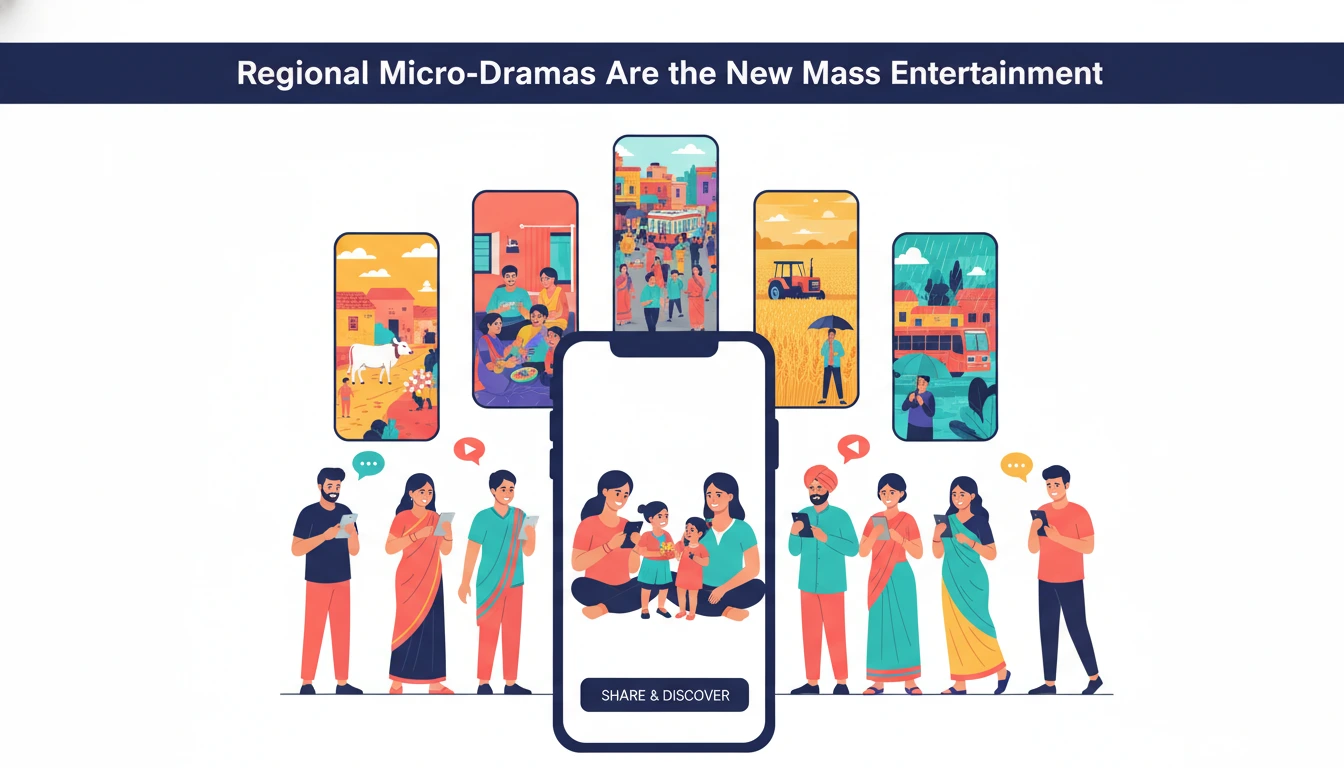
Netflix’s move toward micro-drama-style viewing is a signal that vertical, short-form storytelling has become a serious part of the entertainment market in India. For Indian production houses, this means the next competitive edge will come from building fast, regionally relevant, mobile-first IP that can work across OTT, brands, and ad-supported platforms.
Why the Pivot Matters
India’s micro-drama market is already scaling quickly, with reports placing it at ₹4,000 crore by 2026 and 250 million cumulative downloads across apps by late 2025. Platforms are seeing viewers consume these stories in “in-between moments,” such as commutes, breaks, and evenings, which makes the format habit-driven rather than appointment-driven. That behavior is exactly what streaming platforms want, because it creates repeat viewing and stronger discovery loops.
Netflix entering this space changes the conversation because it validates the format for mainstream audiences and premium advertisers. If a global platform known for premium long-form content sees value in micro-drama logic, Indian studios should expect more demand for short episodic fiction, reality-style vertical content, and faster IP experimentation.
What Changes for Production Houses
Indian production houses will need to move beyond traditional OTT thinking and build content in smaller, more modular units. A micro-drama episode is not just a shortened scene; it is a complete emotional beat with a sharp hook, a fast escalation, and a cliffhanger that keeps the audience moving. This rewards writers and directors who can compress conflict without losing momentum.
The economics also matter. Producing a micro-drama in India costs roughly Rs 8,000–9,000 per minute, far lower than conventional streaming production, which makes the format attractive for volume-based studios. For production houses, this opens the door to higher output, quicker testing, and faster brand collaboration without the financial risk of long-form series.
Regional IP Will Win
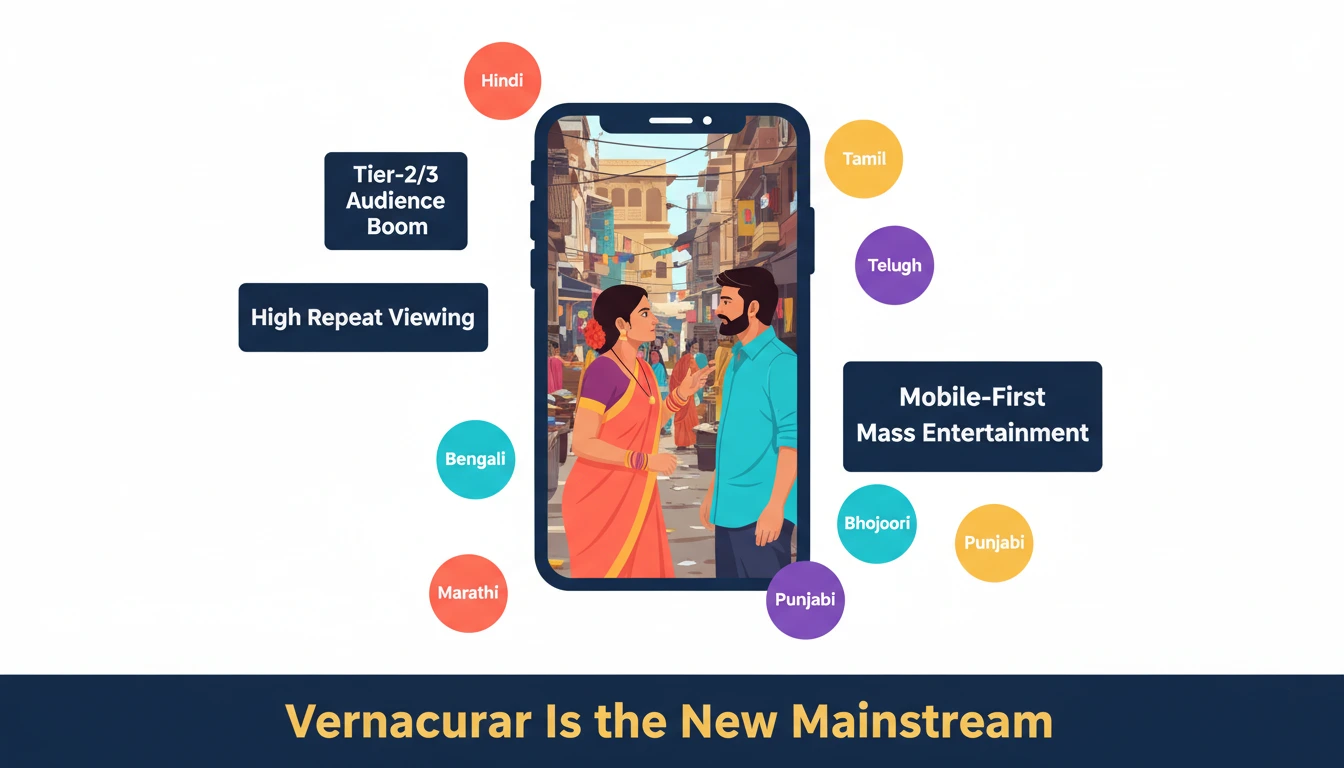
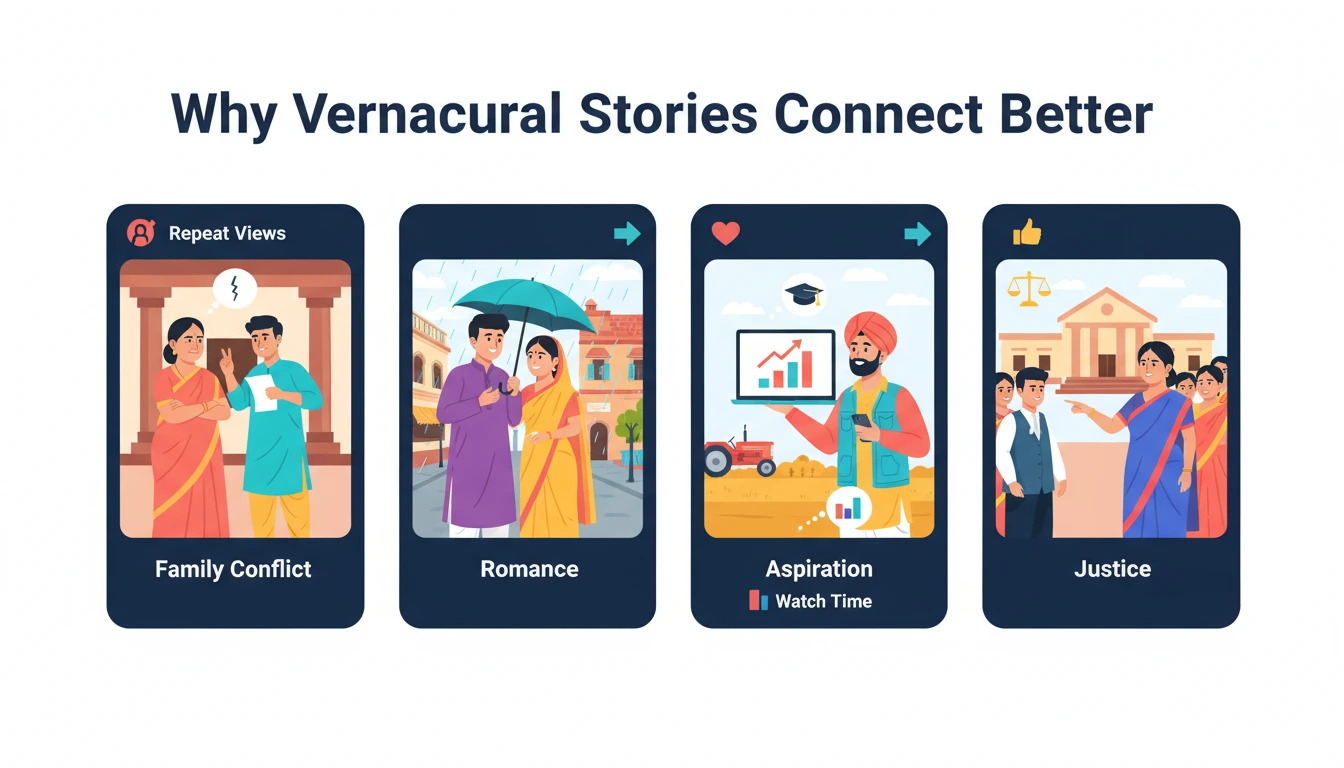
Netflix’s pivot reinforces what the Indian market already shows: regional relevance is the real growth engine. Viewers are more likely to stick with stories that reflect their language, geography, and emotional context, especially in Tier-2 and Tier-3 markets. That means Hindi alone is not enough; Telugu, Tamil, Bengali, Marathi, Punjabi, and Bhojpuri all offer distinct opportunities for scalable micro-drama libraries.
For production houses, this is where regional micro-dramas become a long-term business strategy, not just a trend. The studios that win will be those that can build culturally specific stories quickly and at scale, then localize them with AI voice cloning and fast editing workflows to multiply reach across languages.
Brand Money Will Follow
The Netflix pivot also strengthens the case for advertiser-funded micro-drama IP. Brands already see higher engagement in serialized short-form stories because viewers are emotionally invested, not passively scrolling. That makes the format ideal for co-productions, product integrations, and character-driven brand storytelling that feels native rather than intrusive.
Indian production houses can use this momentum to pitch themselves not just as service vendors, but as IP partners. If a series can run across ad-supported, subscription, and branded environments, the upside becomes much larger than a one-time production fee.
The Strategic Shift
The biggest change is mental: production houses must think like format builders, not just content suppliers. The opportunity is to create repeatable show structures, strong hooks, regional universes, and modular story arcs that can be adapted for Netflix-style consumption as well as Indian short-form platforms. That also means investing in micro-drama hook science and brand integrations from the start, because the first few seconds and the business model now matter as much as the script.
Netflix’s pivot is not just about one platform. It is a market signal that India’s next major content economy will be built on short, high-frequency, regionally grounded storytelling. Production houses that adapt early will be best positioned to own the next wave of IP.
FAQ’s
Q1: Why is Netflix’s micro-drama move important for India?
It validates short-form vertical storytelling as a mainstream entertainment format.
Q2: What should Indian production houses do first?
Build regional, mobile-first IP that can scale across multiple languages and platforms.
Q3: Is micro-drama cheaper to produce than OTT series?
Yes, India’s estimated cost is about Rs 8,000–9,000 per minute.
Q4: Why does regional content matter so muc h?
Because Tier-2 and Tier-3 audiences respond best to local language and cultural nuance.
Q5: How can brands benefit from this shift?
By funding micro-drama IP through integrated storytelling and co-productions.