


Multi-Platform Distribution Strategy: Release Cadence, Cross-Platform Repurposing
Here’s the uncomfortable truth: 73% of video production budgets go toward creation. Only 27% fund distribution. Yet, distribution determines whether your content reaches 100 people or 100,000.
At a production house in Noida, we’ve seen clients spend ₹5 lakhs on premium film production, then distribute it randomly to three platforms. Meanwhile, competitors with half the budget dominate reach because they understand distribution strategy.
Multi-platform distribution isn’t about posting everywhere. It’s about orchestrating synchronized releases across algorithmic ecosystems while maximizing content ROI through strategic repurposing.
Understanding the Release Cadence Advantage
Every platform operates on algorithmic preference for consistency. Instagram rewards creators posting 4+ times weekly. YouTube favors channels maintaining 1-2 weekly uploads. TikTok accelerates distribution for creators posting daily.
But here’s what separates strategic distribution from random posting: predictable rhythm compounds algorithmic favor.
When you establish a fixed release schedule—say, Reels every Tuesday and Thursday at 10 AM, long-form videos every Monday at 6 PM—platforms learn your pattern. Instagram’s algorithm begins pre-promoting your content during these windows. Followers receive notifications because the system expects your post. This creates a self-reinforcing cycle where consistency drives organic reach growth.
The production houses dominating in 2026 aren’t those creating more content. They’re producing smarter release sequences that align with platform mechanics.
Optimal cadence framework:
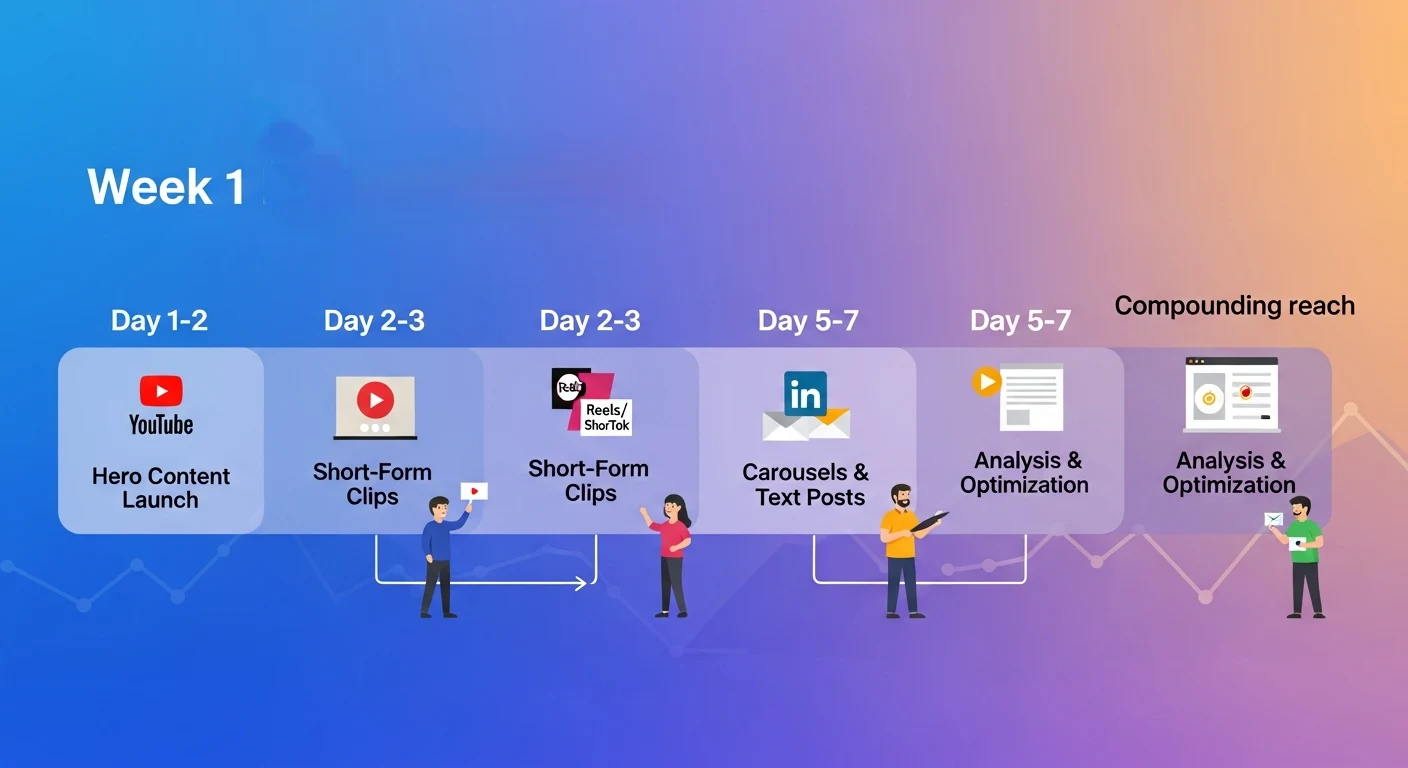
Day 1-2: Release hero content on main platform (YouTube long-form or LinkedIn article)
Day 2-3: Distribute 3-4 short-form clips across TikTok, Instagram Reels, YouTube Shorts
Day 4: Repurpose as carousel posts, text content, podcast clips
Day 5-7: Analyze performance; adjust next week’s angles
This distributed rhythm keeps your audience engaged continuously while teaching platforms to amplify your reach incrementally.
Cross-Platform Repurposing: The 10x Multiplier
Most creators treat each platform as separate. Strategic producers view one piece of hero content as source material for 10+ platform-specific versions.
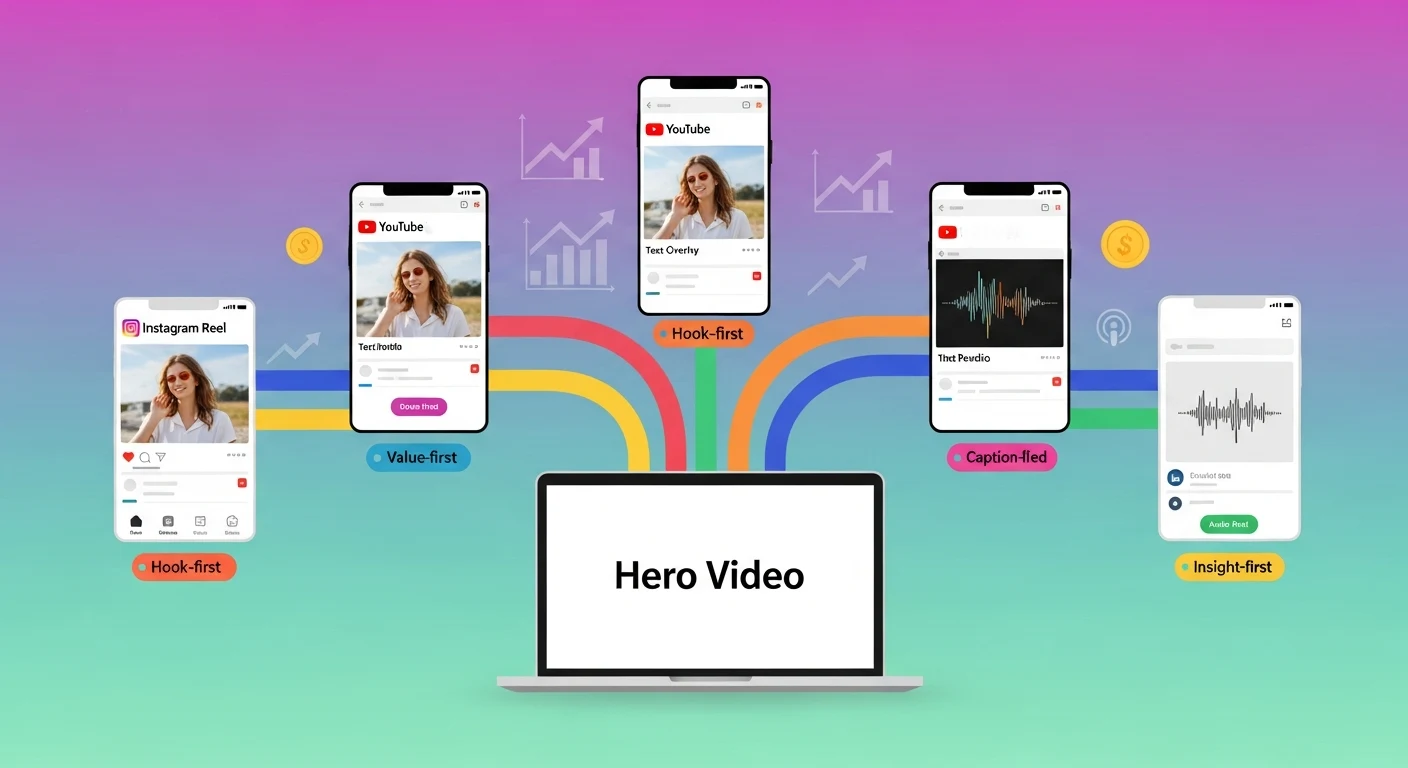
A 12-minute corporate film becomes:
4x Instagram Reels (30-60 seconds each, sound-on optimized)
3x TikTok clips (platform-specific hooks, trending audio)
2x LinkedIn snippets (professional framing, captions-first design)
1x YouTube Shorts version (educational framing)
Podcast audio extracted and distributed
Text-based insights for email/blog
The key insight: repurposing isn’t recycling. Each version undergoes platform-specific optimization. TikTok’s version includes trending sounds and text overlays. LinkedIn’s version adds captions and professional context. YouTube’s version emphasizes educational framing.
When you master short-form video production techniques, you understand that what works on Instagram (visual hook first) differs from YouTube Shorts (value proposition first). Platform fluency makes repurposing exponentially more effective.
The 3-second hook applies across platforms, but its execution varies. On TikTok, start with motion. On YouTube Shorts, start with your promise to viewers. This nuanced adaptation—not crude cutting—separates 10K-view content from 100K-view content.
Algorithmic Growth Framework: Platform-Specific Mastery
Each algorithm rewards different behaviors:
Instagram Reels prioritize completion rate (did viewers finish?) and shares (did they distribute?). A 20-second reel watched 100% and shared 20 times beats a 90-second reel with 40% completion.
YouTube measures watch time and click-through rate. Longer videos aren’t inherently better—only those retaining attention. Understanding
the great video format debate clarifies this: different formats serve different algorithmic logic.
TikTok weights initial engagement heavily. Mastering
the 3-second hook directly impacts algorithmic distribution. First 1-2 seconds determine whether TikTok’s algorithm promotes your content widely or buries it.
Production strategy must account for these differences rather than assuming platform-agnostic approaches work everywhere.
Implementation Timeline for Production Houses
Week 1-2: Map audience locations across platforms; establish release calendar
Week 3-4: Produce hero content optimized for main platform; create repurposing checklist
Week 5-8: Execute first distribution cycle; measure platform-specific metrics
Week 9-12: Optimize based on data; scale successful formats; implement AI assistance for repurposing
Month 4+: Automate using tools like Descript; focus creative energy on strategic content
Measuring Distribution Success
Track these metrics per platform:
Completion rate: How many finish your content
CTR: Click-through to your link/next action
Share/save rate: How many re-distribute your content
Conversion: Leads, sales, or subscribers generated
Optimize your release cadence and content angles based on which platforms drive actual business results.
Conclusion
Multi-platform distribution strategy isn’t an afterthought to production. It’s the strategic framework that multiplies content ROI 5-10x. Release cadence builds algorithmic trust. Repurposing maximizes efficiency. Algorithmic mastery ensures your message reaches the right people on the right platform at the right time.
The production houses winning in 2026 understand: production is creation; distribution is multiplication.
FAQ’S
Q1: How often should I post across platforms for optimal algorithmic distribution?
Instagram Reels: 4-6x weekly | YouTube: 1-2x weekly | TikTok: 3-5x weekly | LinkedIn: 2-3x weekly. Consistency matters more than volume.
Q2: Can a single video work across all platforms?
No. Each platform rewards different behaviors. Adapt hooks, captions, and pacing for each—this is repurposing, not recycling.
Q3: What’s the ideal time gap between platform releases?
Stagger releases 24-48 hours apart to maintain continuous audience engagement and teach algorithms to expect your content rhythm.
Q4: How much content can I extract from one long-form video?
One 10-minute video typically yields 8-12 platform-optimized pieces (reels, shorts, clips, carousel posts, podcast audio).
Q5: Which metric should I prioritize for distribution success?
Start with completion rate (engagement), then move to CTR (conversion intent). Together they indicate algorithmic preference and business impact.