

Modular Production Pipelines: How Studios Are Shooting 100 Episodes Faster with Assembly-Line Workflows
Studios are no longer treating every episode like a separate production; they are building modular pipelines that turn 100-episode runs into repeatable, scalable systems. In India’s fast-growing micro-drama market, this assembly-line approach helps teams cut timelines, control costs, and deliver binge-ready content across platforms without expanding crews at the same pace.
Why modular wins
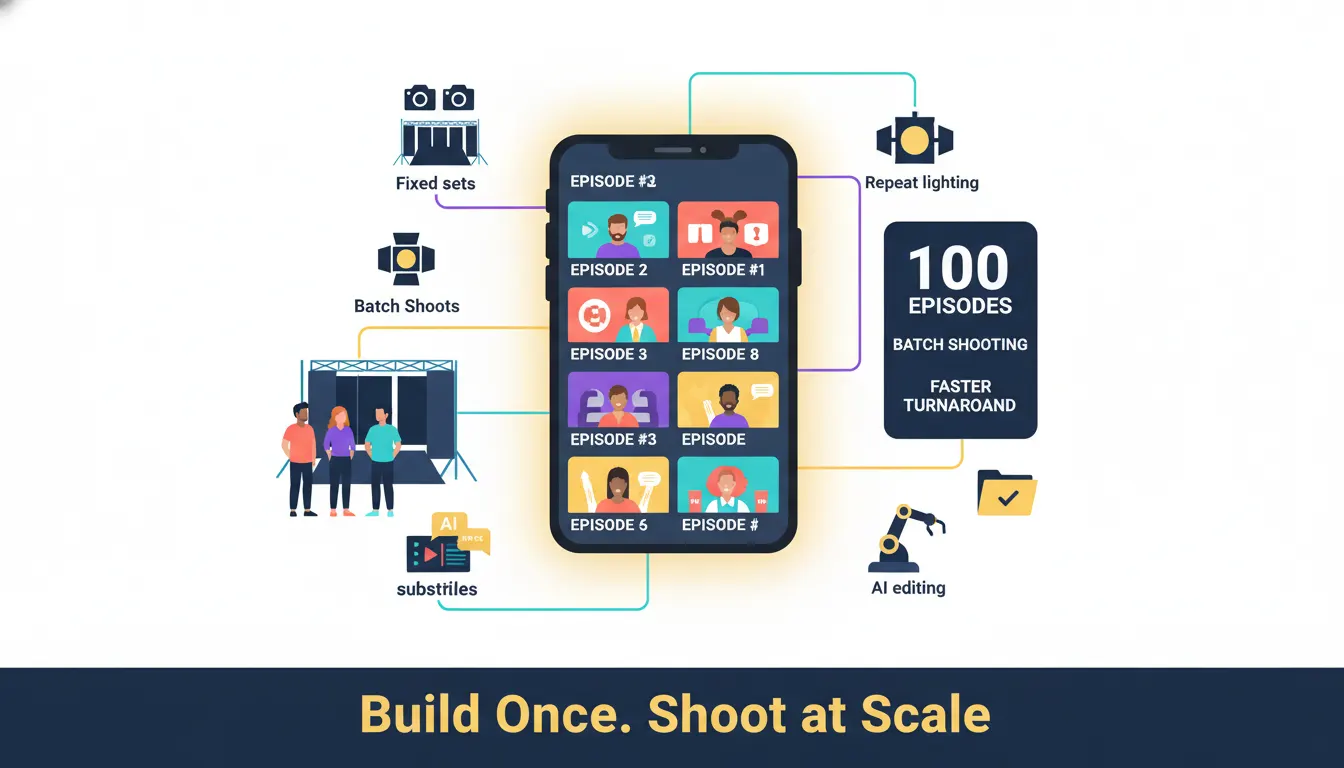
A modular production pipeline breaks one large series into reusable parts: fixed sets, repeat lighting plans, standardized shot lists, recurring props, and batch-based scheduling . Instead of preparing, shooting, and editing each episode from scratch, studios group similar scenes together and capture multiple episodes in one production block, which improves speed and budget control . This model fits micro-dramas especially well because the format already rewards compressed storytelling, fast turnarounds, and consistent visual language .
How the workflow works
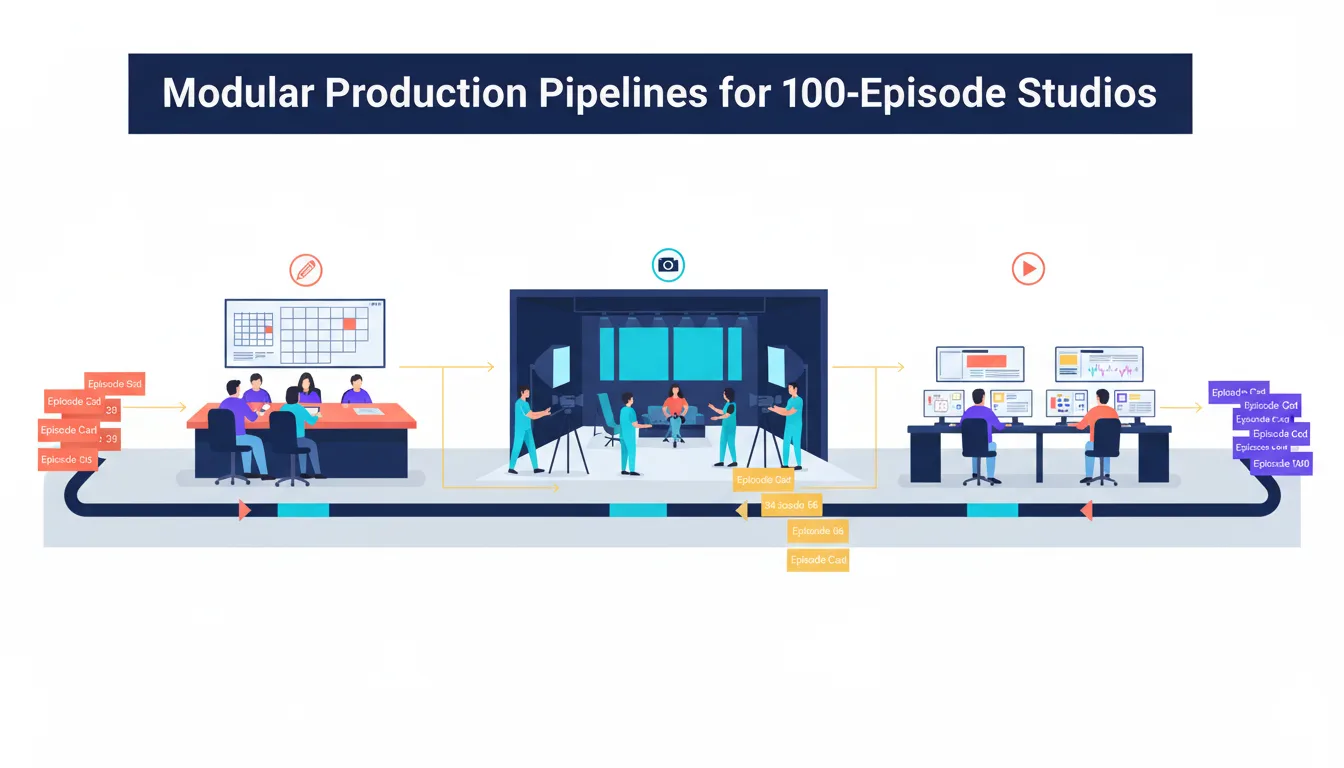
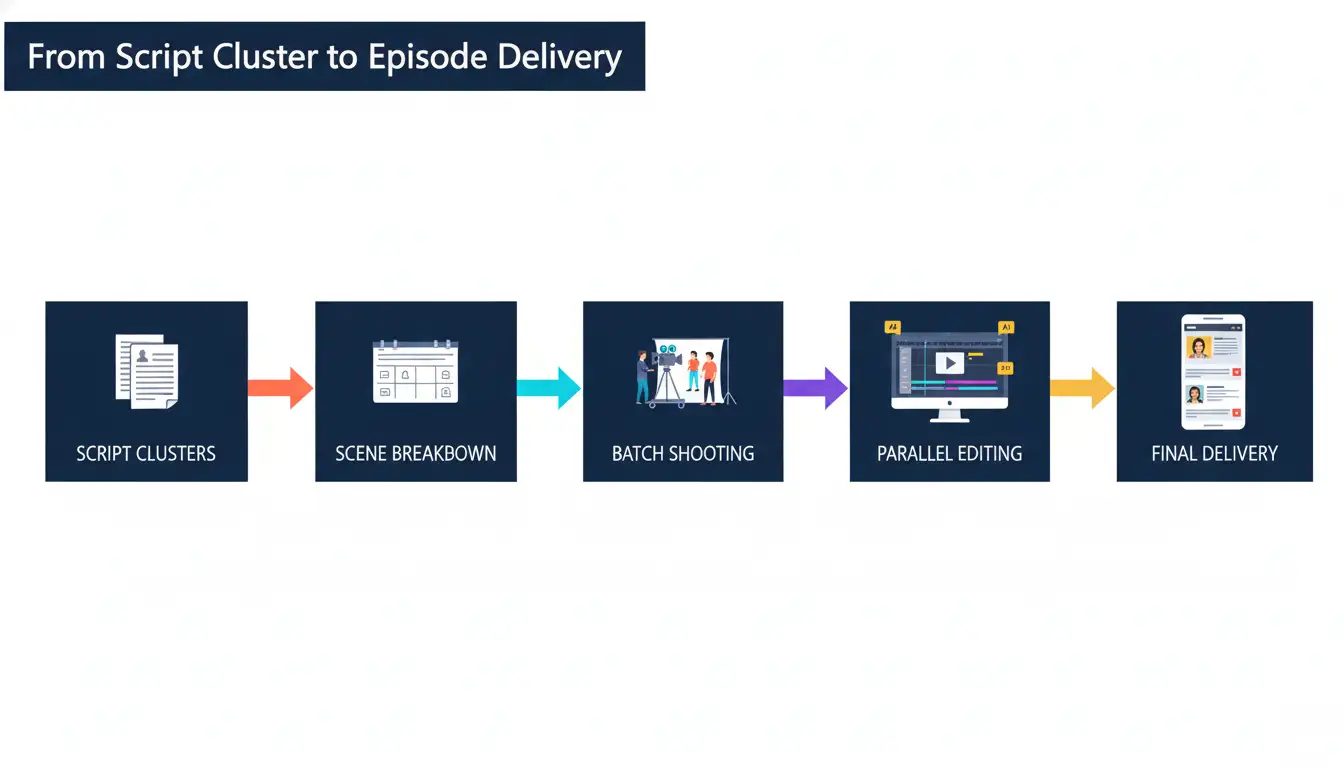
The most efficient studios organize work like an assembly line: writers build episode clusters, assistant directors break scenes by location and cast, production teams shoot all matching setups together, and editors process footage in parallel rather than waiting for the full series wrap. A living template guides each stage, including framing rules for vertical video, subtitle-safe compositions, pre-approved transitions, and cliffhanger structures that keep pacing consistent . Garage Productions already emphasizes an efficient production workflow by shooting multiple episodes in one block and keeping lighting and settings consistent, which is exactly the foundation of a modular system .
Where the speed comes from
The biggest time savings come from reducing resets. If a bedroom set appears in 22 episodes, the studio shoots all those moments together instead of rebuilding the same space over several weeks . Costume continuity, camera placement, lens choice, and sound setup are planned once and reused, while post teams work from standardized edit templates that reduce repetitive decision-making. This is where production techniques become operational, not just creative.
The role of AI and post
Assembly-line production gets stronger when post-production is modular too. AI-assisted editing tools now help teams automate transcript-based cuts, subtitles, clip sorting, and rough assembly, which removes repetitive labor from every episode cycle. That means studios can move from shoot-day to first cut much faster, especially when paired with AI automation and fixed content formats. Instead of crafting each edit from zero, editors refine a pre-built structure, making volume output realistic without sacrificing polish.
What studios should build first
Studios trying to scale to 50 or 100 episodes should start by standardizing five things: script format, shot taxonomy, set usage, edit templates, and asset naming conventions. Once those are fixed, scheduling becomes easier because teams can slot scenes into reusable production blocks rather than reinventing the shoot each day . This also improves collaboration between writing, production, and post because everyone works from the same system instead of disconnected files and instincts.
A smart rollout looks like this:
- Build one pilot workflow for 10 episodes first, not 100.
- Group scenes by location, cast, and prop continuity before locking shoot dates .
- Keep 2–3 reusable visual formats for hooks, dialogue scenes, and cliffhangers .
- Use micro-drama hooks as a repeatable opening template rather than reinventing the first three seconds every time.
- Create a post-production checklist so every episode meets the same quality bar .
Why this matters in 2026
India’s micro-drama opportunity is rewarding studios that can produce fast, localize efficiently, and release consistently. Assembly-line workflows make that possible because they turn production into an operating system instead of a sequence of isolated projects. For studios aiming to build franchises, brand-funded series, or regional content slates, modular pipelines are becoming the difference between making a few good episodes and sustaining a high-volume business.
A studio that masters modular production does not just shoot faster; it becomes easier to brief, easier to scale, and easier to monetize across formats. That is why the next generation of successful production houses will not simply be more creative; they will be more systemized.
FAQ’S
Q1: What is a modular production pipeline?
It is a repeatable workflow where scripts, sets, shots, and edits are standardized so multiple episodes can be produced in batches faster .
Q2: Why does assembly-line production work well for micro-dramas?
Because micro-dramas rely on short runtimes, recurring setups, and fast release schedules that benefit from repeatable systems .
Q3: How do studios save the most time in modular production?
By grouping scenes by set, cast, and lighting setup instead of rebuilding the same production environment for each episode .
Q4: Does modular production reduce quality?
Not if the workflow is designed well; it often improves consistency because every episode follows clearer production and post standards.
Q5: What should a studio standardize first?
Start with script format, shot list structure, set usage, edit templates, and file naming conventions.