

AI Avatars & Digital Twins: Create Lifelike Presenters for Training & Global Content Fast
Imagine a corporate training video that adapts to viewer preferences in real-time. A product explainer that responds to audience questions. A global marketing campaign where the same brand ambassador appears in 47 languages, culturally adapted, without requiring a single actor.
This isn’t science fiction. AI avatars and digital twins make it possible in 2026.
For production houses in Noida and Delhi, AI avatars represent an existential shift. They eliminate the bottleneck of physical talent availability while reducing production timelines by 70% and costs by 40-60%.
Understanding AI Avatars vs Digital Twins
These terms are often conflated, but they serve different purposes:
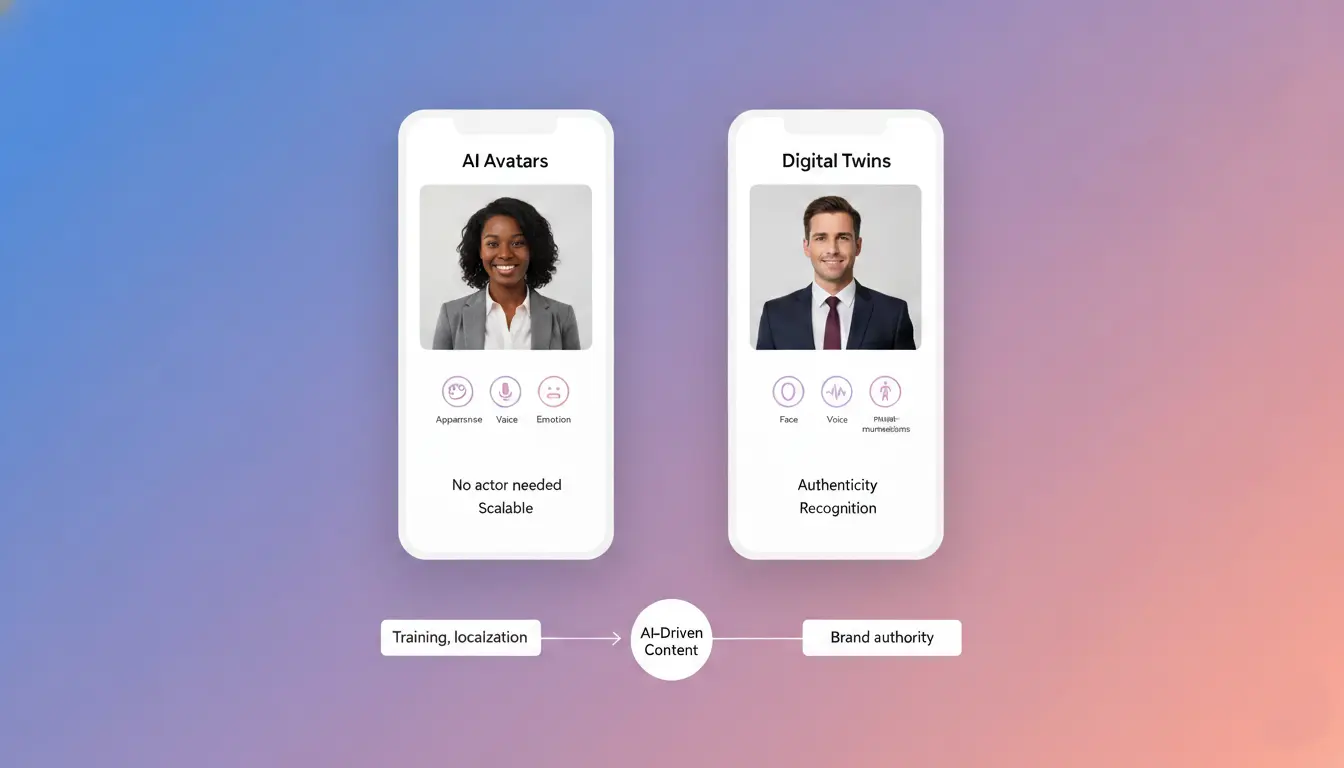
AI Avatars: Photorealistic digital characters generated from AI models. Think: custom-created personas with controllable appearance, voice, emotion, and movement. Generated for each use case without requiring actor talent.
Digital Twins: 1:1 recreations of real people (actors, executives, celebrities). Capture someone’s biometric data (face, voice, mannerisms) and generate infinite variations controlled via script.
For corporate training, marketers favor avatars (speed, cost, scalability). For brand authenticity, executives request digital twins of real people (recognition, authority, personal connection).
The Training Content Revolution
Corporate training is where AI avatars generate immediate ROI.
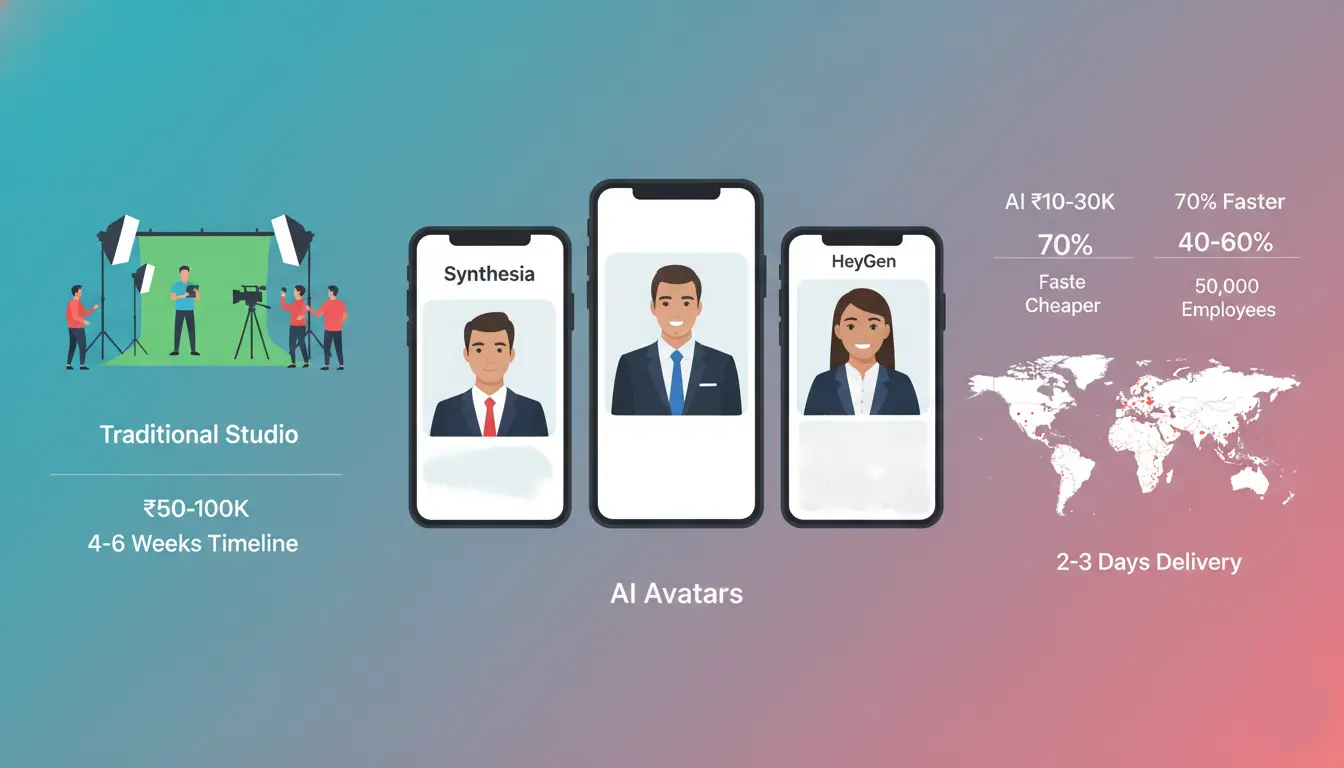
Traditional workflow: script training content → hire actor/trainer → film in studio (₹50-100K) → edit and localize → distribute.
AI avatar workflow: script training content → generate avatar → customize voiceover in 12 languages → distribute.
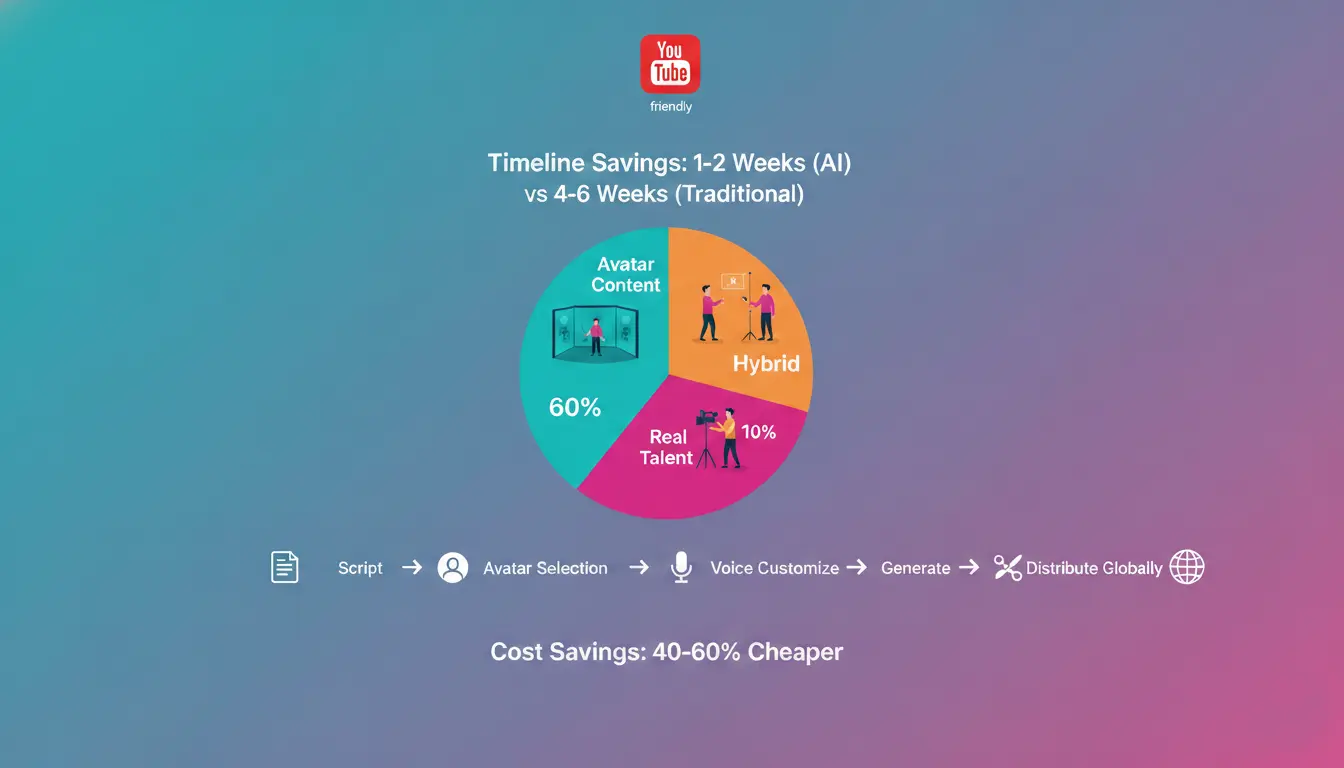
Cost: ₹10-30K. Timeline: 1-2 weeks vs 4-6 weeks.
A multinational company training 50,000 employees across 20 countries can deploy avatar-based training simultaneously. Same avatar, different languages, consistent messaging. This eliminates the 3-4 month localization delays traditional video training requires.
When you understand why traditional video production skills still matter in the AI era, you realize: script quality, pacing, emotional delivery—these remain critical. AI avatars execute your creative vision at scale; they don’t replace the human skill of storytelling architecture.
Platform-Specific Avatar Optimization
Different platforms require different avatar presentations.
LinkedIn training content: Professional, authoritative avatars in business attire. Avatars speaking with credibility cues (expertise signals in background, formal framing).
YouTube educational content: Friendly, approachable avatars. More casual attire, conversational tone, direct camera engagement.
Production houses generate one script, create 3-4 avatar variations, and distribute across platforms. This adaptability multiplies content ROI.
Creating Your First AI Avatar: Technical Requirements
Entry-level avatar creation requires:
Avatar Generation Platforms:
- Synthesia: Most user-friendly. Text-to-video with avatar selection. ₹1000-5000/month
- D-ID: Focus on digital human creation. ₹2000-8000/month
- HeyGen: Voice + avatar synthesis. Video output quality improving rapidly. ₹1500-6000/month
Voice Technology:
- Eleven Labs: Natural, emotive voice synthesis in 30+ languages. ₹500-3000/month
- Google Cloud Text-to-Speech: Affordable, broad language support. ₹0.50-2 per 1M characters
Workflow:
- Script finalized (same as traditional video)
- Avatar/voice selected and customized
- Platform generates video (5-30 minutes depending on length)
- Minor editing/graphics added
- Distribute across platforms
Timeline: 2-3 days from script to delivery.
When AI Avatars Beat Traditional Talent
Scenario 1: High-volume content production
Creating 100+ training videos quarterly? Avatars scale infinitely without hiring talent or blocking studio time.
Scenario 2: Global localization
Launching products in 30 countries simultaneously? Avatar + multilingual voice generation outpaces hiring local talent in each market.
Scenario 3: On-demand content updates
Training content needs updating after policy changes? Avatar videos regenerate in hours. Traditional video requires reshooting.
Scenario 4: Budget constraints
Small production budgets? Avatars eliminate talent costs and reduce studio time expenses.
However, when comparing AI avatars vs real actors for video content, understand that emotional authenticity and human connection still matter for certain content. Testimonials, founder messaging, performance-driven content benefit from real talent. Instructional, explanatory, scalable content benefits from avatars.
Integration with Production Strategy
Smart production houses use avatars strategically:
- 60% avatar content: Training, tutorials, explanations, localized versions
- 30% real talent: Brand messaging, testimonials, creative storytelling
- 10% hybrid: Avatar + real talent combinations for dynamic content
This hybrid approach leverages AI efficiency while preserving human authenticity where it matters most.
Conclusion
AI avatars and digital twins represent the next evolution in content production. They eliminate talent bottlenecks, accelerate localization, and reduce production costs dramatically.
Production houses embracing avatar technology in 2026 capture massive competitive advantage in training content, corporate video, and global marketing campaigns.
The question isn’t whether to use AI avatars. It’s how quickly you can master them.
FAQ’S
Q1: Do AI avatars look obviously fake?
Early avatars (2023-2024) looked noticeably synthetic. 2026 avatars are remarkably lifelike. Minor lip-sync lags remain most viewers don’t notice in professional contexts.
Q2: Can I create an avatar of myself (digital twin)?
Yes. Most platforms require biometric data capture (10-15 minutes of recording). Cost: ₹50-100K for custom digital twin. Reusable infinitely afterward.
Q3: What’s better: avatar or hiring actor for training video?
Avatar if: scaling globally, tight deadline, budget constraints, content updates frequent. Real actor if: emotional authenticity critical, testimonial/endorsement, brand personality essential.
Q4: Can I use avatar videos for client deliverables?
Yes. All major platforms grant commercial usage rights. Avatars are owned by you no licensing complications.
Q5: How long did it take to create the first avatar video?
Script-to-delivery: 2-3 days. This includes avatar customization, voice generation, minor editing. Traditional talent video: 2-3 weeks.