

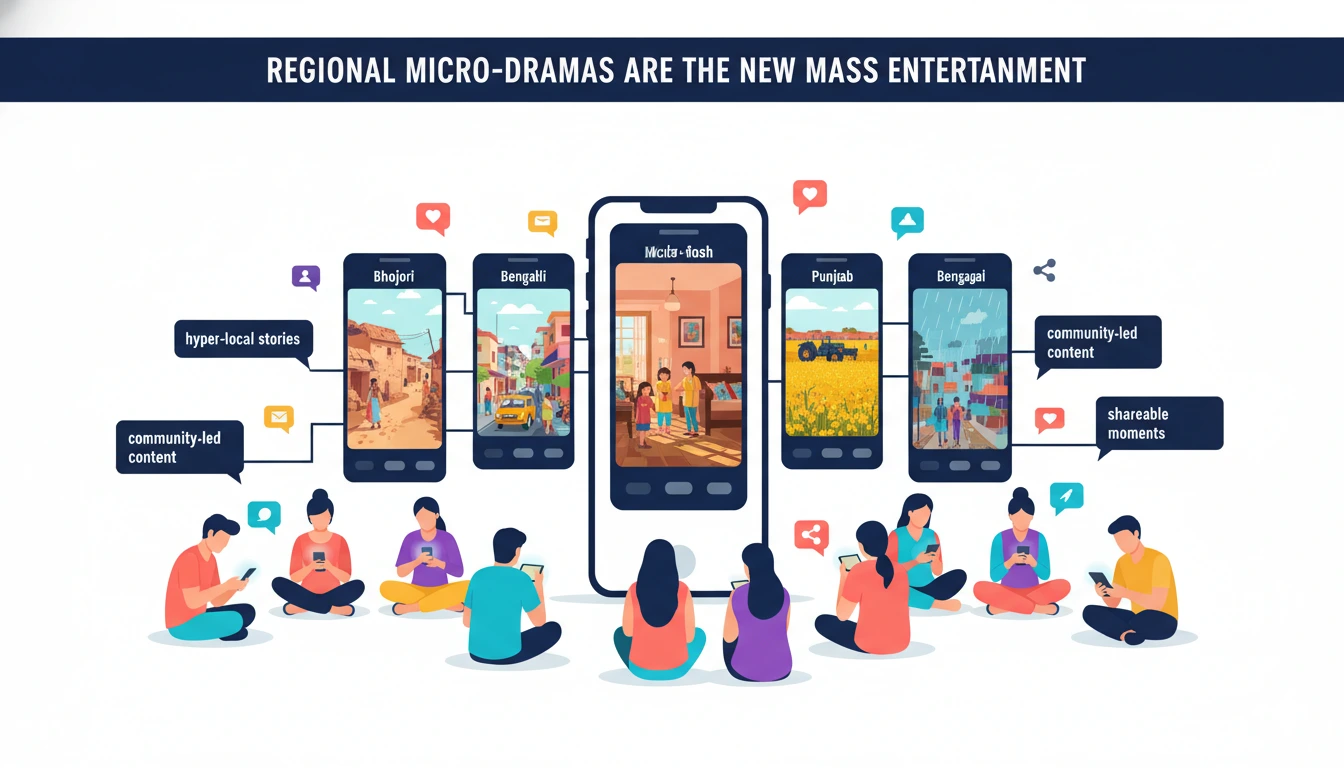
Regional Micro-Dramas Are Redefining Mass Entertainment in India
Regional micro-dramas are no longer a niche format in India; they are becoming the new mass entertainment layer for mobile-first audiences in Tier-2 and Tier-3 markets. India’s micro-drama market is projected to reach ₹4,000 crore by 2026, with regional-language content driving a major share of consumption as audiences increasingly prefer stories in the language they live in, not just the language they understand.
Why Regional Stories Are Winning
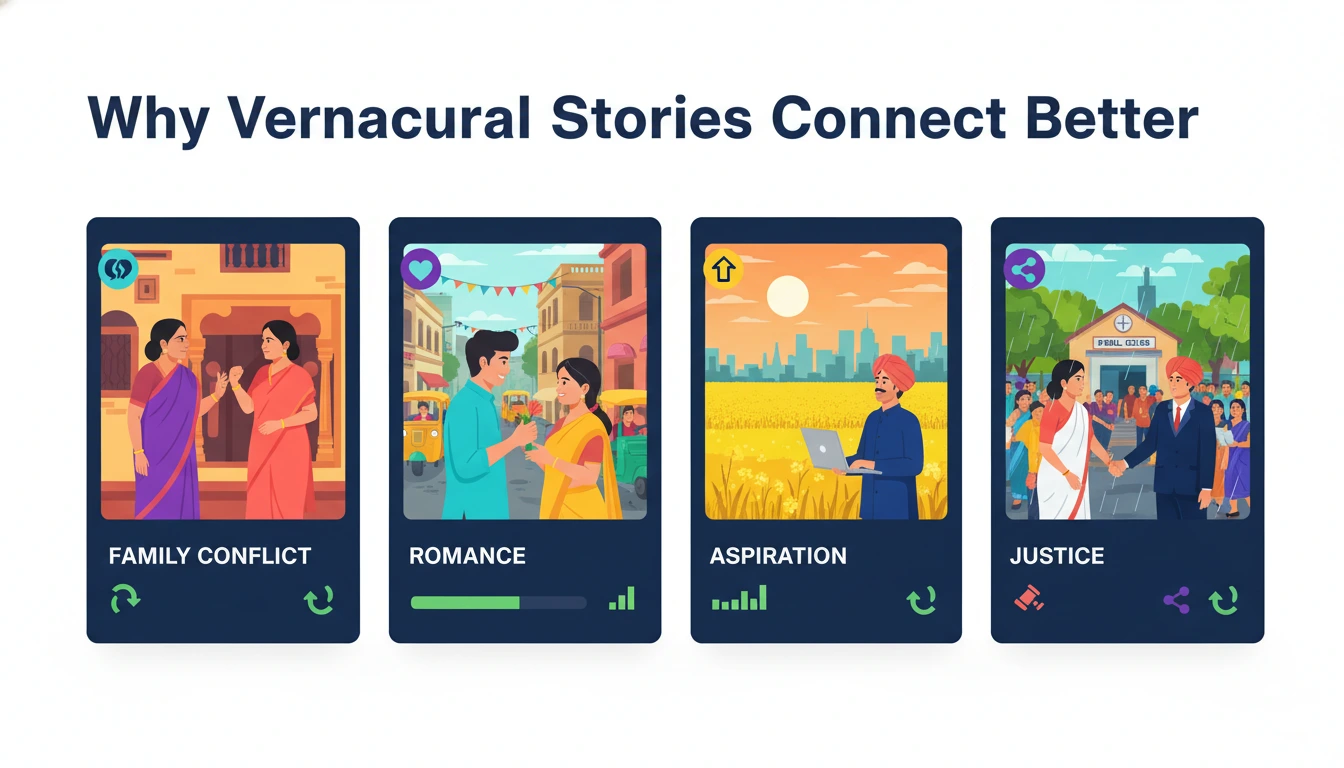
Tier-2 and Tier-3 viewers consume short-form content more often and for longer sessions than metro audiences, and they strongly prefer emotionally direct stories around family conflict, romance, aspiration, revenge, and justice. These viewers are also more likely to watch full episodes instead of dropping off early, which gives regional micro-dramas stronger repeat viewing, sharing, and monetization potential than generic urban-first content.
This shift is not just about language; it is about cultural texture. Bhojpuri, Telugu, Bengali, Marathi, Punjabi, and Malayalam content performs because the dialogue, social setting, humor, and emotional stakes feel local and recognisable. That authenticity makes vernacular storytelling far more relatable than dubbed content or metro narratives repackaged for smaller cities.
The Market Is Expanding Fast
India is expected to have 600-650 million short-form video consumers by 2026, and analysts project the wider category could scale into an $8-12 billion market by 2030. Micro-dramas have already emerged as one of the fastest-growing parts of that ecosystem, with platforms, investors, and media companies treating them as a serious entertainment business rather than a passing trend.
The platform landscape reflects that confidence. Dedicated and regional-focused players are building libraries for audiences that want quick, vertical, serialized storytelling on smartphones, while larger OTT players are also preparing to enter the segment more aggressively. This creates a strong opening for production houses that can deliver culturally sharp, cost-efficient regional stories at speed.
What Production Houses Must Understand
The biggest mistake studios make is assuming regional micro-dramas are simply low-cost Hindi dramas translated into local languages. In reality, successful regional content needs local casting, authentic accents, native emotional rhythms, and settings that feel lived-in rather than designed from a metro point of view. That is why casting strategies matter so much in this space.
Production houses also need to think in terms of volume and velocity. The economics work when teams can create fast, episodic content with sharp opening hooks and rapid post-production systems, because audience attention in this format is won in seconds and scaled through consistency. Studios using AI editing workflows gain an added advantage by reducing turnaround time while adapting content across multiple markets.
Why This Is Becoming Mass Entertainment
Mass entertainment in India has always followed reach, relatability, and repeatability. Regional micro-dramas now offer all three: they are smartphone-native, highly shareable, emotionally accessible, and designed for habitual viewing. What television once did for family audiences and what mainstream OTT did for urban binge viewers, regional micro-dramas are beginning to do for India’s next large digital audience base.
This is also changing who gets to tell stories. Writers, actors, and creators who may not fit the metro entertainment system can now build audience loyalty through regional, serialized narratives that feel closer to everyday life. As brand integrations
and platform investments grow, the format is likely to move from experimental to foundational across India’s entertainment economy.
Regional micro-dramas are not just adding another content category. They are reshaping what “mainstream” looks like in India by proving that vernacular, mobile-first storytelling can command both scale and cultural influence.
FAQ’S
Why are regional micro-dramas growing so fast in India?
Because Tier-2 and Tier-3 audiences prefer mobile-first stories in familiar languages, settings, and emotional contexts.
Which languages are leading regional micro-drama demand?
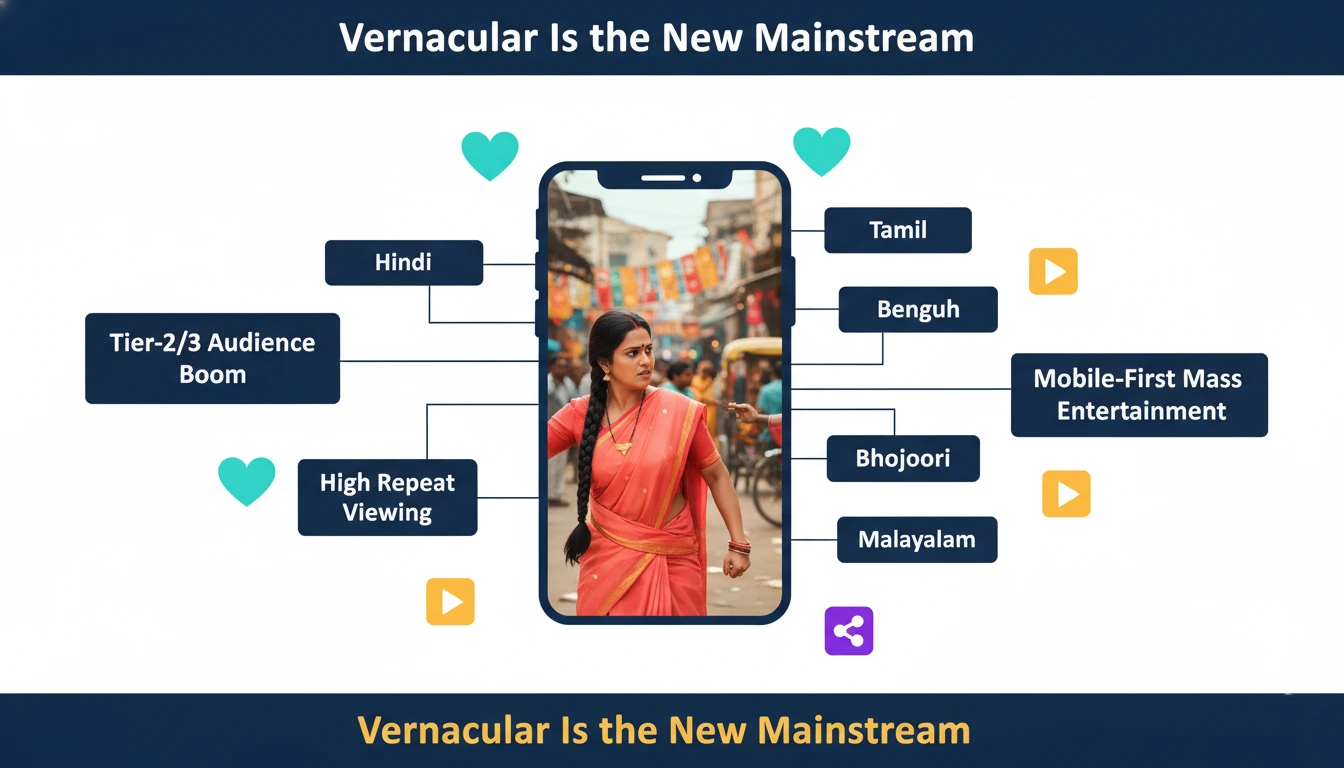
Hindi, Tamil, Telugu, Bengali, Marathi, Bhojpuri, Punjabi, and Malayalam are among the strongest performers.
What kind of stories work best in regional micro-dramas?
Family conflict, romance, aspiration, revenge, and justice-led stories perform especially well.
Are regional micro-dramas only for smaller cities?
No, but Tier-2 and Tier-3 India currently drives the strongest adoption and engagement.
How can production houses benefit from this trend?
By building authentic vernacular stories with local talent, strong hooks, and fast production systems.