

Shoppable Micro-Dramas: Turn Episodes into Revenue with Interactive Commerce
Shoppable micro-dramas represent the convergence of entertainment and e-commerce, transforming passive viewing into active purchasing through clickable hotspots, product tags, and seamless checkout experiences embedded directly within 60-90 second episodes. The global micro-series market will reach $7.8 billion in 2026—more than doubling from $3.8 billion in 2025—as platforms integrate e-commerce capabilities that convert viewers into buyers without leaving the video player. This interactive commerce model leverages micro-dramas’ traffic advantage to achieve brand-sales synergy through natural product placements and instant purchase pathways, with conversion rates significantly exceeding traditional short-video advertising.
How Shoppable Video Technology Works
Interactive video formats allow viewers to click on products featured within content to learn more or make purchases directly, eliminating the friction of searching separately for items that caught their attention. The technology layers clickable hotspots, product summary overlays, and add-to-cart functionality over video content, with AI-powered personalization serving relevant products based on viewer behavior and preferences. China’s iQIYI pioneered this model, offering over 15,000 micro-dramas with integrated e-commerce capabilities that enable viewers to purchase products featured in storylines immediately.
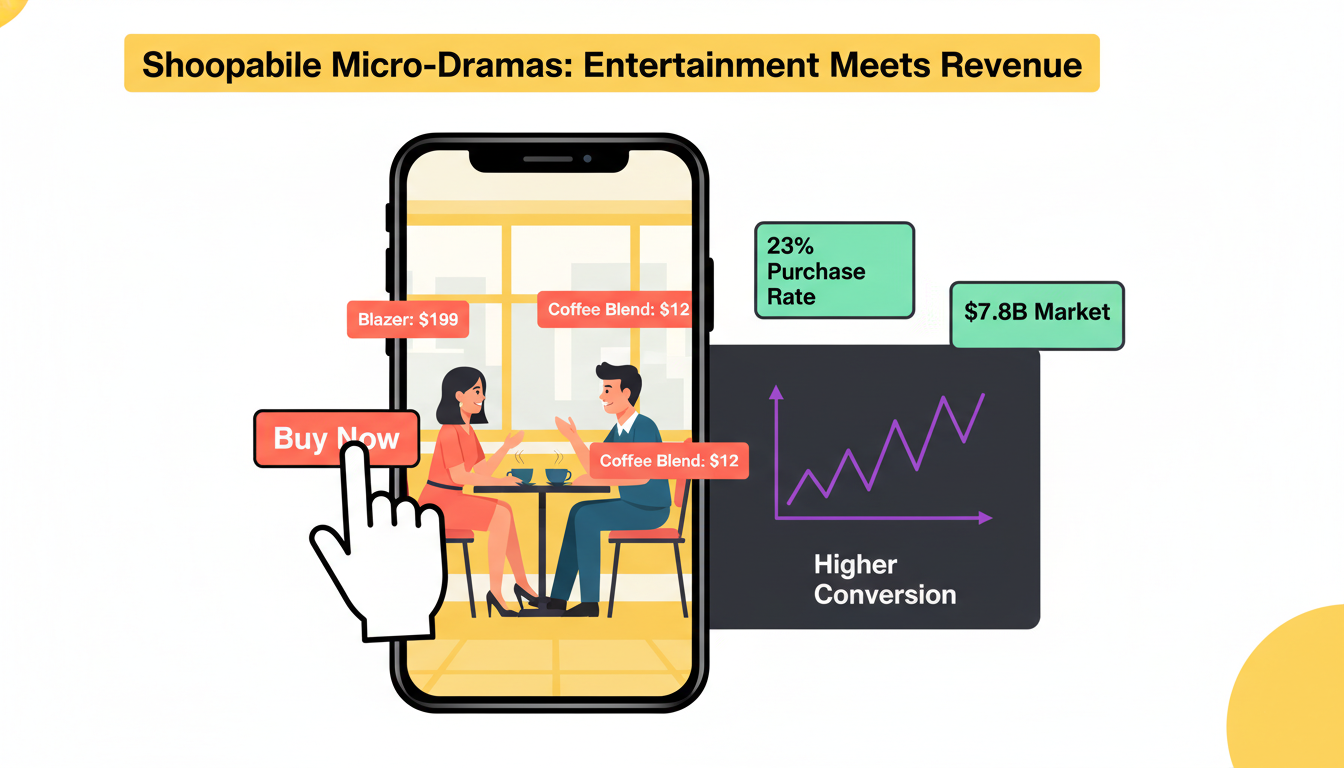
Platforms deploy three primary interactive elements: product tags that appear when relevant items display on screen, buy buttons providing instant checkout without pausing content, and 360-degree explorations allowing users to rotate products for detailed inspection. For micro-drama hooks designed to stop scrolling within three seconds, shoppable overlays transform that attention into immediate revenue opportunities. Advanced systems track which products viewers click, time spent exploring items, and completion rates—providing real-time optimization data that traditional advertising cannot match.
The E-Commerce Conversion Advantage
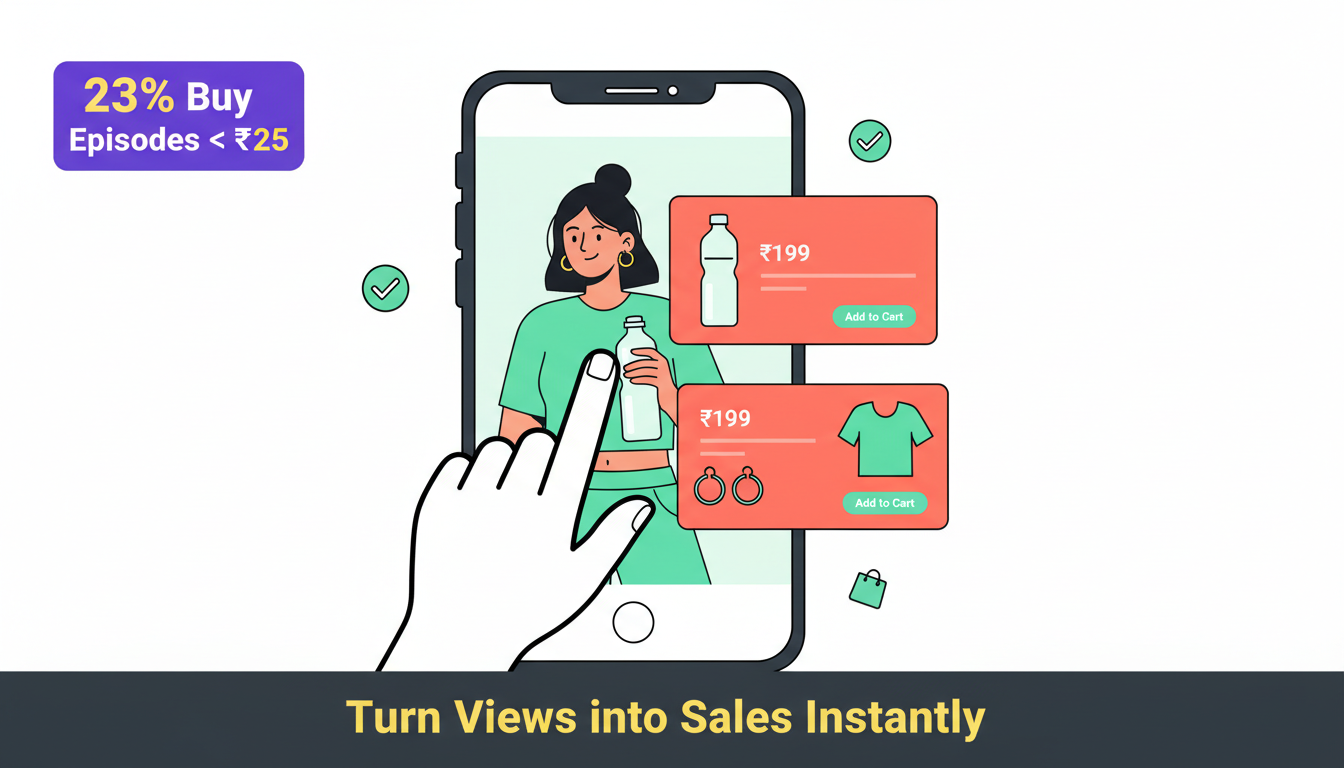
“The e-commerce conversion rate of short dramas is very high,” explains a leading short video platform executive, noting that “if a likable female character is using a certain water bottle, and a similar one pops up on the screen, many users will click on it”. This contextual product discovery outperforms traditional advertising by integrating purchases into emotionally resonant narratives where viewers already feel invested in characters and storylines. Micro-dramas blend the product placement features of long-form dramas with the sales-driving capabilities of short videos, creating efficiency in reaching e-commerce goals that makes omni-channel interest e-commerce viable.
Social commerce generated $1.2 trillion in 2024, with projections reaching $4.5 trillion by 2030 as platforms evolve interactive capabilities and AR integration. Shoppable videos shorten the customer journey dramatically—viewers discover products organically through storytelling, engage with interactive elements, and complete purchases within unified experiences that prevent the drop-off typical of multi-step buying processes. For production houses creating brand co-production deals, this measurable ROI transforms content from marketing expense into revenue-generating assets.
Revenue Models Powering Shoppable Micro-Dramas
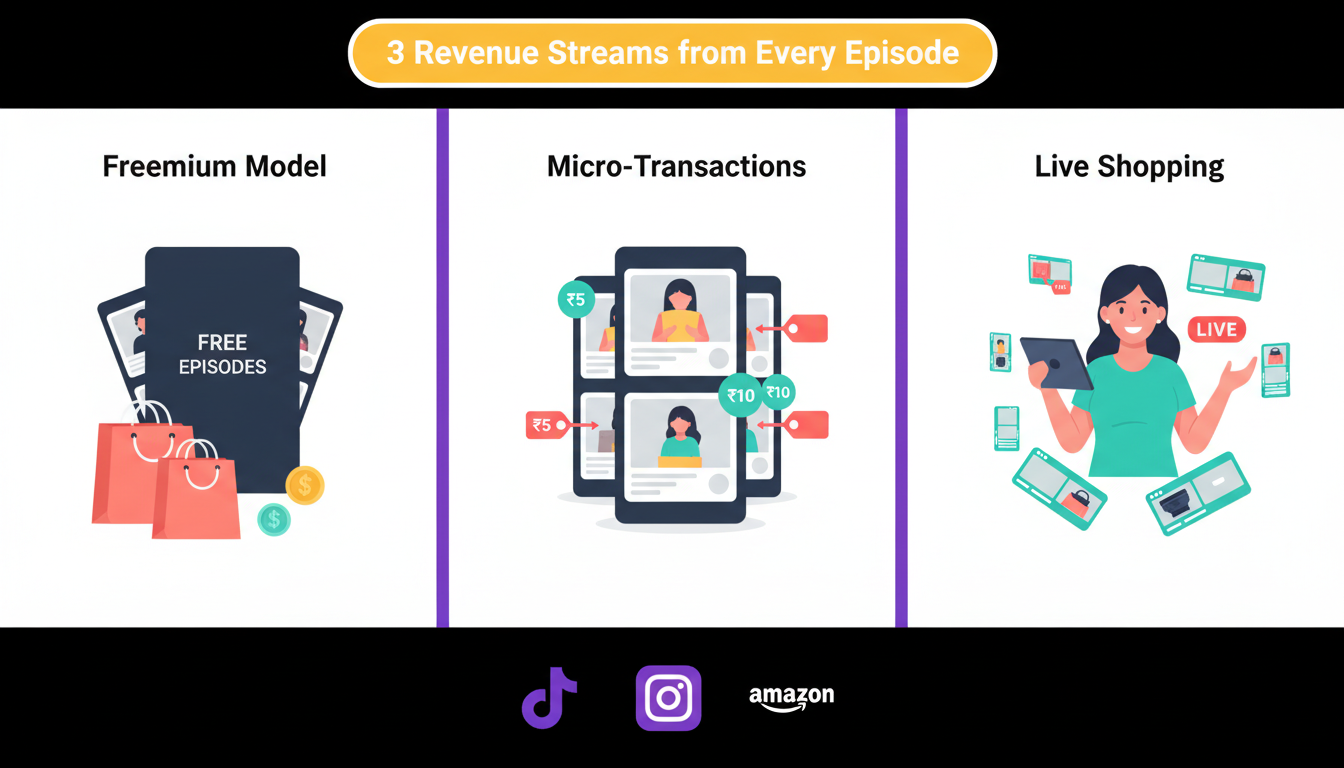
Freemium with Product Integration: The foundational model offers the first few episodes free, strategically ending on cliffhangers to incentivize continued engagement, while embedding shoppable products throughout the narrative. This approach drives user acquisition by demonstrating content value while generating immediate e-commerce revenue from engaged viewers.
Micro-Transactions Plus Commerce: Viewers pay nominal fees (₹2-10) to unlock episode batches, with shoppable overlays providing additional monetization streams from product sales and affiliate commissions. This dual-revenue model proves particularly effective in India’s price-conscious market where average revenue per user demands multiple monetization pathways.
Live Shopping Events: Real-time interactive experiences combine micro-drama storytelling with live commerce, enabling Q&A, clickable product cards, competitions, and urgency-driven sales. TikTok Shop and Instagram Shopping lead this format, with younger audiences showing particularly strong engagement with live shopping integrated into serialized narratives.
Affiliate and Commission Models: Production houses partner with e-commerce platforms, earning 10-30% commissions on sales generated through embedded links. For creators producing regional language micro-dramas with modest production budgets, these commissions can exceed direct subscription revenue while providing sustainable long-term income.
Platform Integration Strategies
TikTok Shop leads interactive commerce with short-form videos featuring buy buttons that resonate with younger audiences accustomed to discovering products through social feeds. Instagram Shopping leverages Reels for tutorials and stories with product tags, achieving high engagement by integrating commerce seamlessly into existing viewing behaviors. Amazon Live focuses on live demonstrations with Q&A and seamless checkout, capitalizing on the e-commerce giant’s existing infrastructure and consumer trust.
Pinduoduo, China’s “king of e-commerce in lower-tier markets,” recently launched a dedicated “micro drama” section on Duoduo Video alongside live streaming and recommendations, signaling that micro-dramas now hold weight comparable to direct sales channels. This strategic positioning reflects data showing micro-dramas possess both content marketing and traffic marketing attributes, making them prime candidates for integrated commerce experiences. Indian platforms like Zee Entertainment and Kuku FM report doubled daily watch times following short-form content introduction, with hybrid subscription-advertising models incorporating shoppable elements as core monetization strategies.
Content Strategy for Commerce Integration
Natural Product Placement: Integrate products as plot devices driving story forward—a character’s transformation begins with purchasing specific fashion items, or a romantic connection forms around sharing a branded beverage. This narrative integration feels organic rather than commercial, maintaining the emotional engagement that makes micro-drama storytelling effective while creating clear purchase pathways.
Strategic Tagging Moments: Place clickable hotspots during emotionally resonant scenes when viewer attention peaks—the reveal moment, climactic confrontation, or romantic gesture. These high-engagement moments maximize click-through rates as viewers seek to emulate characters they’re emotionally invested in.
Character-Driven Recommendations: Use trusted characters as implicit product endorsers where their usage creates aspirational purchasing desires. For casting relatable faces rather than celebrities, this authenticity translates to higher conversion as audiences perceive recommendations as genuine rather than paid endorsements.
Tutorial and How-To Integration: Fashion styling videos with tagged outfits, makeup demonstrations with clickable products, or home organization content featuring purchasable storage solutions provide immediate utility that justifies commercial integration. This educational approach particularly suits regional content where audiences seek practical value alongside entertainment.
Technical Implementation for Production Houses
Deploy platforms like Smartzer that transform any product, campaign, or lifestyle video into conversion touchpoints through clickable hotspots and product summary overlays. These technologies integrate with existing video players, requiring minimal technical infrastructure while providing comprehensive analytics tracking click-through rates, product views, cart additions, and completed purchases. For producers already using text-based editing workflows, adding shoppable layers becomes a post-production step rather than fundamental production requirement.
Mobile optimization proves critical, as 70% of e-commerce occurs on mobile devices, demanding formats optimized for vertical viewing and silent playback via captions. This aligns perfectly with micro-drama’s mobile-first design philosophy where every element—from 3-second hooks to interactive commerce layers—prioritizes thumb-friendly interactions. Successful implementations ensure product tags don’t obstruct critical visual storytelling while remaining discoverable during natural pause points or object focus moments.
AI-Powered Commerce Optimization
Generative AI analyzes viewing patterns to automatically suggest optimal product placement timing, personalize which products appear based on individual viewer preferences, and A/B test different product configurations to maximize conversion rates. This data-driven feedback loop helps short-drama studios test multiple commerce strategies and double down on high-performing integrations.
AI voice cloning extends this capability by enabling product descriptions in multiple regional languages without re-recording, expanding commerce reach across India’s linguistic diversity.
Real-time analytics track completion rates, average episodes watched per user, product click-through rates, and story-specific ROI—measuring whether a series drives merchandise sales or increases platform watch time beyond pure engagement metrics. These insights transform content decisions from creative intuition into systematic optimization, identifying which product categories, placement strategies, and call-to-action formats generate superior commercial outcomes.
Monetization Benchmarks and Projections
Deloitte predicts U.S. micro-series revenue will reach $3.1 billion in 2026 (40% of global $7.8 billion market), with other markets converting more views and downloads into cash through aggressive shoppable integration. Chinese micro-drama platforms demonstrate the model’s potential, with 662 million users generating substantial commerce revenue through seamless product integration that feels entertainment-first rather than commercial. India’s $10 billion micro-drama boom positions the market for similar commerce integration, particularly as platforms experiment with micro-payment options and flexible subscription plans that accommodate price-conscious consumers.
Episode-level micro-transactions priced under $0.30 show 23% purchase rates on platforms like WeVideo, while YouTube Shorts tests episodic ad breaks achieving 94% completion rates—dramatically higher than traditional pre-roll advertising. These metrics prove audiences tolerate well-executed commercial integration when content quality justifies the exchange, validating the shoppable micro-drama model for sustainable long-term monetization.
The Creator Economy Transformation
Independent creator studios leverage shoppable integration as primary revenue streams, building closer relationships with brands while reducing dependency on platform algorithms and advertising revenue-sharing. This shift enables creators to own their economic destinies—producing high-quality, addictive micro-dramas that generate direct commerce income through affiliate partnerships, sponsored product placements, and platform-native shopping features. For production houses mastering this model, shoppable micro-dramas become self-sustaining businesses where content creation directly funds future production through integrated commerce rather than relying solely on subscriptions or advertising.
The convergence of entertainment and commerce transforms micro-dramas from pure content plays into comprehensive business ecosystems where storytelling, audience building, and revenue generation occur simultaneously within unified viewer experiences.
FAQ’S
Q1: What are shoppable micro-dramas?
Interactive video series where viewers click on products featured in 60-90 second episodes to purchase directly without leaving the player, blending storytelling with instant commerce.
Q2: How much revenue can shoppable micro-dramas generate?
The global market will reach $7.8 billion in 2026, with platforms showing 23% purchase rates on episodes priced under $0.30 and high affiliate commissions.
Q3: Which platforms support shoppable video integration for micro-dramas?
TikTok Shop, Instagram Shopping, Amazon Live, Smartzer, and Chinese platforms like iQIYI and Pinduoduo lead with clickable hotspots and seamless checkout.
Q4: Do viewers find shoppable elements disruptive to storytelling?
When integrated naturally into emotionally resonant scenes, shoppable overlays achieve high engagement—viewers seek to emulate characters they’re invested in emotionally.
Q5: How do production houses implement shoppable features in micro-dramas?
Use platforms like Smartzer for clickable hotspots, partner with e-commerce platforms for affiliate integration, and optimize placement timing using AI-powered analytics.