

Co-Production Deals: How Brands Are Funding Micro-Drama IP in India
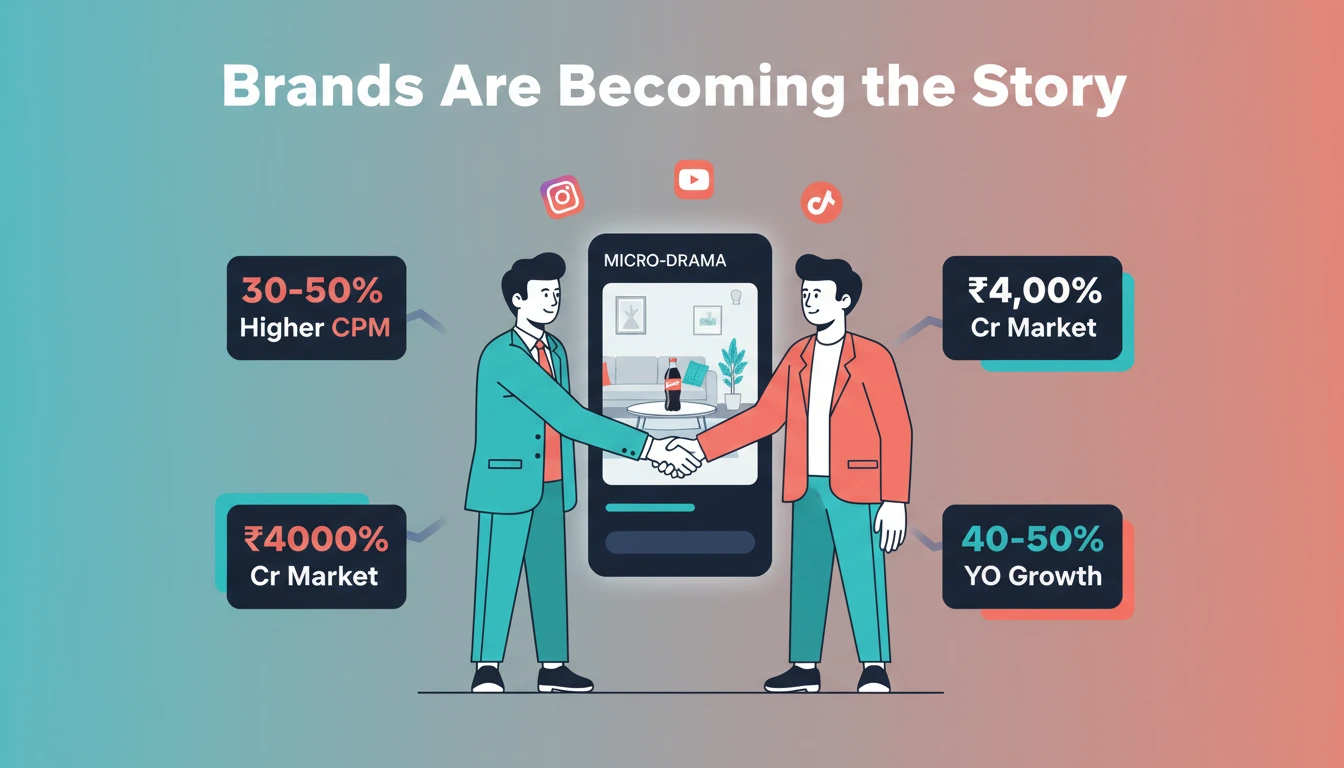
Brands are moving beyond traditional advertising to co-create intellectual property and long-term story integrations as India’s micro-drama market races toward ₹4,000 crore by 2026, growing 40-50% year-over-year. This fundamental shift from one-off product placements to owning entire content formats represents the deepening of advertiser relationships, where brands become characters shaping narratives rather than interrupting them. Branded content deals for micro-dramas now command 30-50% higher CPM rates than standard influencer sponsorships due to superior narrative integration and distraction-free mobile environments.
Why Brands Are Choosing Co-Production Over Ads
Traditional 60-90 second micro-drama episodes create insertion challenges where ads feel intrusive—similar to advertisements popping up between cricket deliveries, generating viewer annoyance rather than engagement. Smart brands recognize that sponsoring entire micro-series or integrating naturally into storylines delivers far more effectiveness than banner ads or interruptive advertising. This strategic shift enables brands to own the format itself, where even if celebrities appear, recall remains tied to the brand’s IP rather than the talent.
Micro-dramas’ serialized narrative structure enables seamless brand integration where products appear naturally within storytelling contexts rather than obvious advertisements. The format favors sharper storytelling over louder messaging, making every moment emotionally resonant while allowing brands to act like characters without overtly selling. For regional content creators producing volume-based series, these co-production deals provide crucial funding while maintaining creative control.
The Integration Advantage: Format Ownership
“What a micro-series lets a brand do is own the format,” explains Viren Sean Noronha, co-founder of creative agency The New Thing. This ownership creates persistent brand recall as audiences recognize and return to formats emotionally invested in, transforming passive viewers into active participants in brand narratives. Myntra recently launched a six-episode micro-drama series with digital creators to capture wedding season traffic while promoting affordable fashion for every event, demonstrating how brands align content with commercial objectives.
Instagram launched “Party of Two,” a micro-drama series in India specifically designed to engage Gen Z and encourage platform creativity while subtly reinforcing Instagram’s positioning as a storytelling destination. These brand-owned formats perform exceptionally well because audiences seek the story itself, with brand presence feeling contextual rather than forced. Production houses creating viral hooks benefit from brand funding that elevates production quality without compromising creative vision.
Co-Production Models Gaining Traction
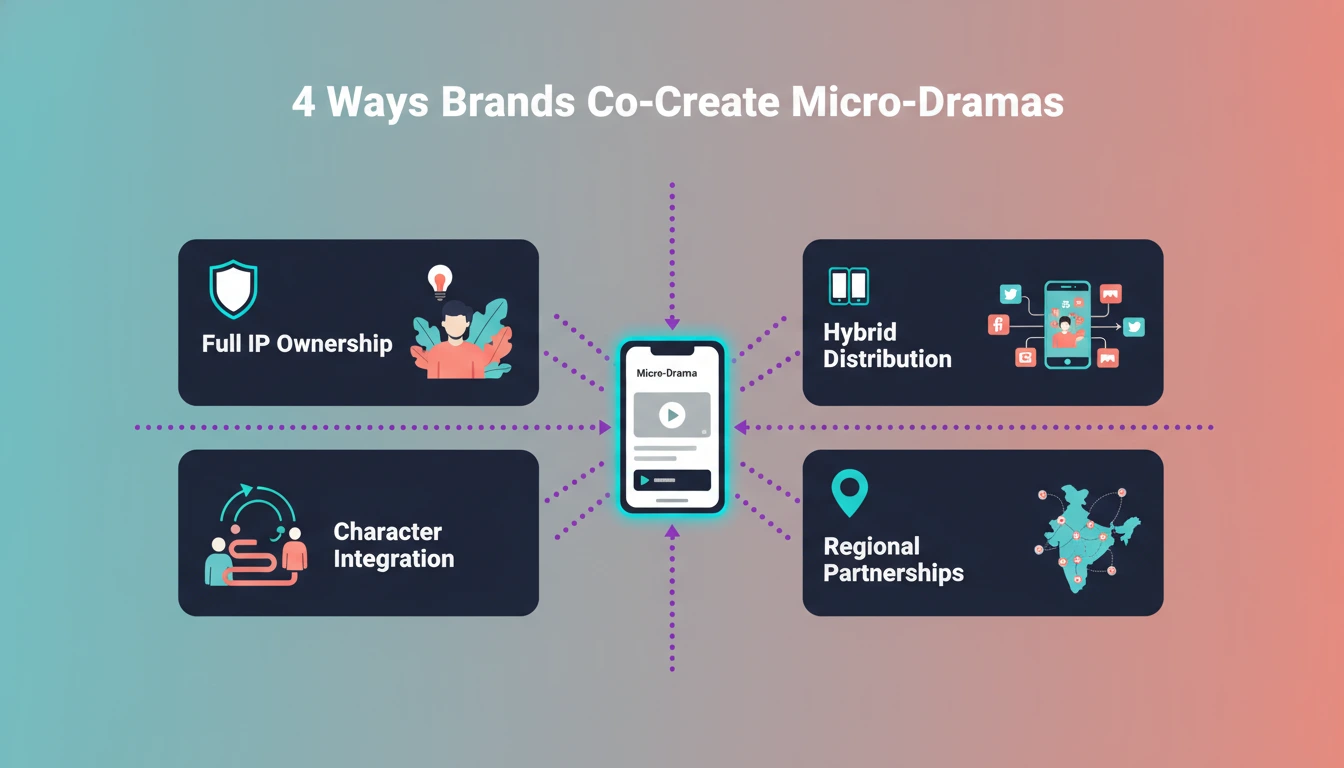
Full IP Ownership: Brands commission entire series where they own all intellectual property rights, controlling storylines, character development, and distribution strategies while production houses execute creative vision. This model works best for brands with strong digital presence targeting specific demographics through culturally rooted narratives.
Hybrid Distribution Partnerships: Platforms like Zupee Studio follow hybrid models distributing short teasers, trailers, and narrative hooks across multiple platforms to spark interest while keeping full-length stories exclusive to their apps. This balances reach with exclusivity, achieving scale in user acquisition plus strong retention through sustained engagement.
Character-Integrated Sponsorships: Rather than episodic product placements, brands integrate into character arcs where their products become plot devices driving story forward. A beverage brand might sponsor a romance series where characters’ first meeting occurs at a café featuring the product, making integration feel organic rather than commercial.
Regional Creator Partnerships: Brands collaborate with regional creators opening content studios in Tier-2/3 cities, co-funding productions that empower local storytelling while accessing authentic cultural insights. When brands partner with regional creators, it becomes a movement uplifting communities and creating grassroots impact beyond simple campaigns.
Why FMCG Brands Remain Cautious
Despite explosive audience growth, India’s biggest FMCG advertisers maintain wait-and-watch positions, preferring experimentation over commitment. Lloyd Mathias, angel investor and independent director, notes that while micro-dramas reach inflection points with dedicated platforms gaining serious traction, brands struggle understanding how advertising fits into 60-90 second formats. The primary concern: whether inserting ads into ultra-short episodes creates viewer irritation that damages brand perception.
Micro-dramas’ hyper-local popularity—often varying dramatically region to region or even within specific state geographies—creates reach challenges for national FMCG brands requiring mass distribution. Fragmented audiences concentrated in Tier-2/3 cities complicate traditional media planning frameworks, as agencies work to ascertain audience size, distribution, and consumption habits with measurement tools designed for conventional media. Production houses creating regional language content navigate these concerns by offering portfolio approaches where brands sponsor multiple series simultaneously, spreading risk while building comprehensive reach.
The D2C and Digital-First Advantage
Early co-production adopters skew heavily toward D2C brands with short decision cycles—beauty, fashion, quick commerce—that operate with entertainment-style production logic rather than legacy FMCG playbooks. These brands understand that micro-dramas demand episodic writing, character arcs, rapid iteration, and platform-native thinking that differs fundamentally from campaign-based advertising. Their willingness to commit to multiple episodes enables proper testing of whether stories work, accepting unpredictability as inherent to the medium.
Skoda exemplifies this strategic precision: their buyers aren’t in remote villages watching television but on digital platforms consuming mobile-first content, making micro-drama co-productions logical budget allocations. This audience clarity enables confident investment in formats where traditional advertisers hesitate, creating first-mover advantages in emerging entertainment categories.
Monetization Models Beyond Traditional Advertising
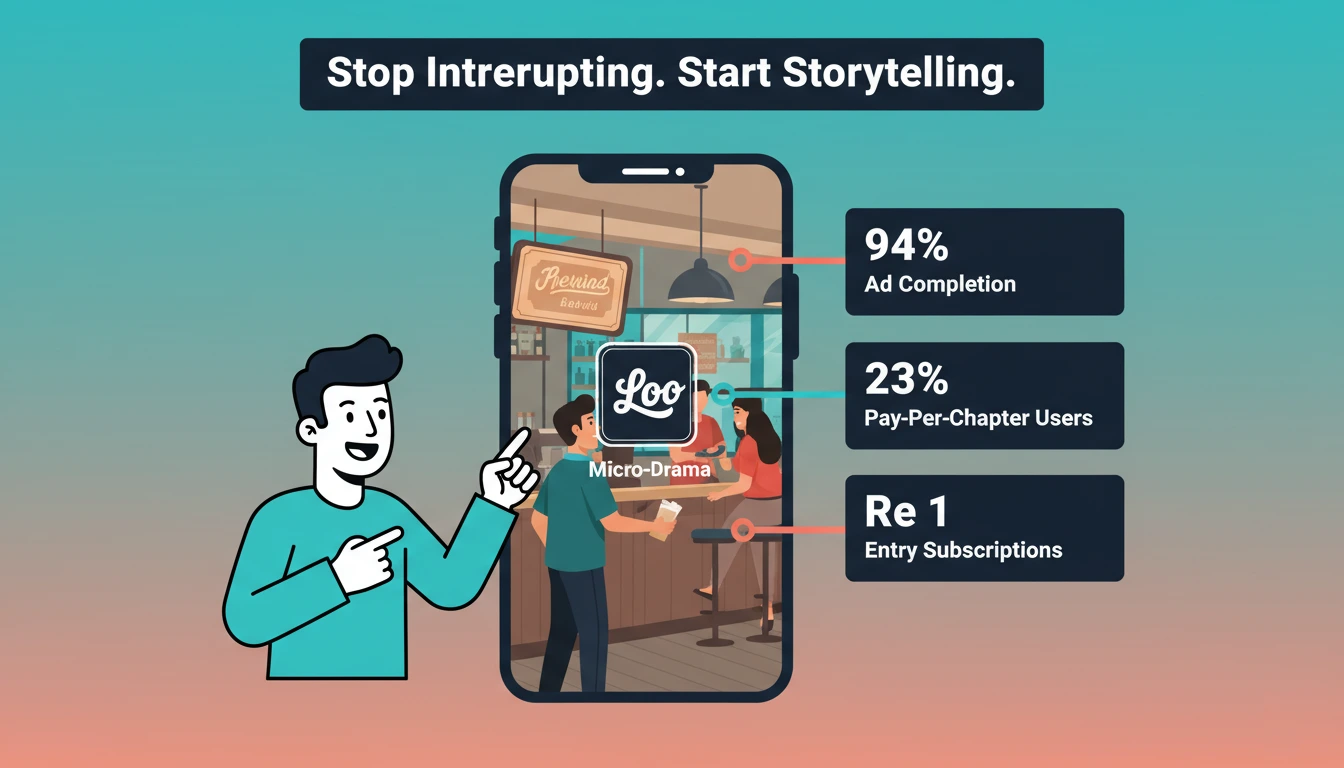
Pay-per-chapter microtransactions demonstrate commercial viability, with Tencent’s WeVideo platform reporting 23% of users purchasing premium episode unlocks priced under $0.30. YouTube Shorts tests episodic ad breaks within micro-drama series, with early results showing 12-second mid-roll ads achieving 94% completion rates—dramatically higher than traditional pre-roll advertising. These emerging models prove audiences tolerate well-executed commercial integration when content quality justifies the exchange.
Platforms combine subscription tiers with strategic sampling: Quick TV offers Re 1 introductory subscriptions (regular ₹699/month), while Kuku TV enables watching first ten episodes for ₹2 with subsequent batches at identical pricing. This low-friction entry combined with narrative CTAs—stitching reactions, POVs, or cliffhangers that naturally lead to “watch the rest on the app”—converts curiosity into paying subscribers without feeling coercive.
AI-Assisted Co-Production Scaling
AI-assisted storytelling spanning scripting, localization, and hook optimization enables rapid A/B testing across tropes, titles, and regions, accelerating content decision-making at scale. This technological capability particularly benefits brands co-producing regional micro-dramas where cultural nuances demand localization beyond simple translation. Zupee Studio’s post-Nucanon AI storytelling vision exemplifies how production houses leverage technology to deliver brand partners data-driven creative optimization.
Smart cut detection, text-based editing, and automated color grading reduce post-production costs by up to 70%, making co-production deals financially viable for smaller brands and regional players. These efficiency gains democratize high-quality production, enabling brands to test multiple series concepts simultaneously without catastrophic financial exposure.
The Future of Brand-Funded Content
As the micro-drama market matures with clearer measurement frameworks, repeatable formats, and proven brand lift evidence, FMCG adoption will accelerate beyond current experimental phases. Brands increasingly recognize that co-producing IP provides ownership and control impossible through traditional media buying, transforming marketing from expense centers into content assets generating long-term value. Production houses positioned to facilitate these partnerships—offering turnkey solutions from concept through distribution—will capture disproportionate value as India’s ₹4,000 crore market scales toward projected ₹80,000 crore valuations.
Co-production deals represent the evolution from brands interrupting entertainment to brands becoming entertainment, where authentic integration drives superior commercial outcomes in mobile-first, attention-scarce environments.
FAQ’S
Q1: Why are brands co-producing micro-drama IP instead of buying traditional ads?
Co-production enables format ownership and natural integration, commanding 30-50% higher CPM rates than standard advertising while avoiding viewer irritation from interruptive placements.
Q2: Which types of brands are leading micro-drama co-production deals in India?
D2C brands in beauty, fashion, and quick commerce lead adoption due to short decision cycles, while FMCG brands remain cautious awaiting clearer measurement frameworks.
Q3: How much does it cost for brands to co-produce a micro-drama series?
Investment varies by production quality and episode count, but micro-dramas offer significantly lower costs than traditional campaigns while generating higher eyeballs and engagement.
Q4: What integration models work best for brand co-productions?
Character-integrated sponsorships where products become plot devices, full IP ownership with distribution control, and hybrid models balancing reach with platform exclusivity deliver strongest results.
Q5: How do brands measure ROI from micro-drama co-productions?
Completion rates, next-episode clicks, binge behavior, and cost-per-acquisition metrics tracked in near real-time, with successful series generating viral sharing that dramatically reduces attention costs.