

How to Start a High-Engagement Video Podcast That Brands Absolutely Love in 2026
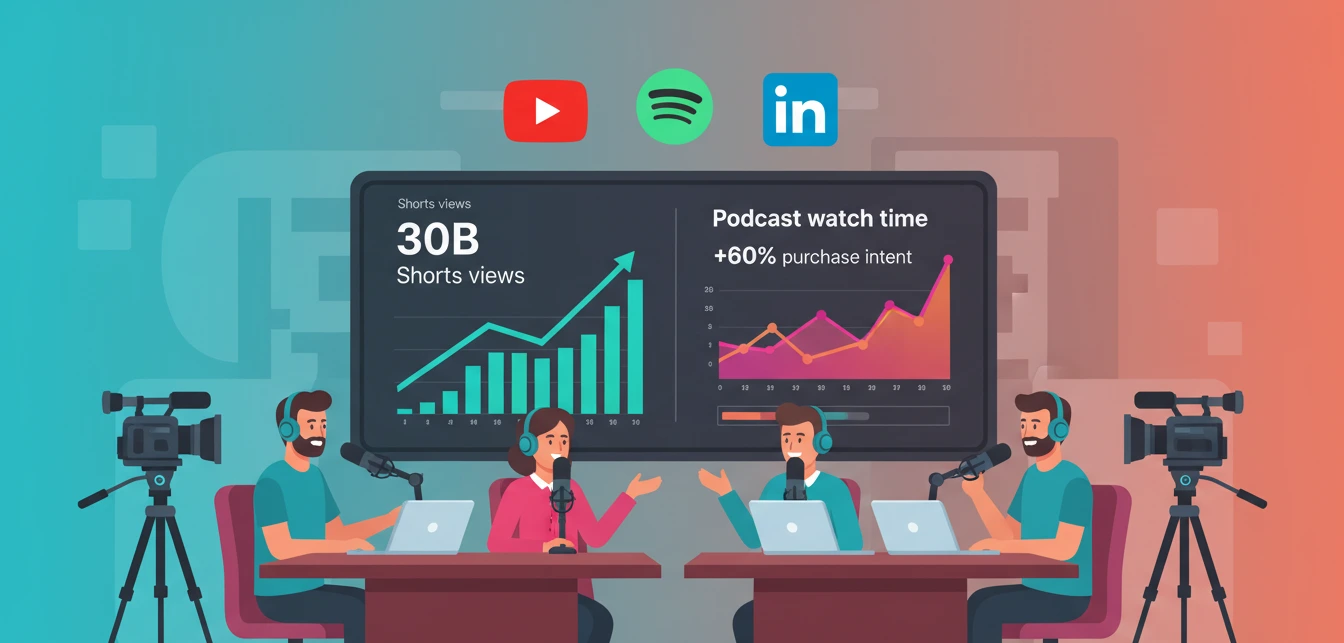
Video podcasts are the fastest-growing content format in 2026. YouTube reports 30 billion daily views on Shorts, but long-form video content (20+ minutes) generates 60% higher purchase intent among B2B audiences and 3x longer average watch time.
Here’s the paradox: while short-form reels dominate social feeds, video podcasts capture the most engaged, committed viewers. These are the audiences brands desperately want to reach.
At production houses in Noida and Delhi, most teams chase short-form viral metrics. The winners are building video podcasts that generate sustainable audience loyalty and recurring brand partnerships.
Why Brands Love Video Podcasts in 2026
Traditional TV advertising fragmented into hundreds of platforms. But video podcasts have recreated what TV once offered: dedicated audience attention.
A viewer watching your 45-minute podcast episode is choosing to invest 45 minutes with your content. They’ve already scrolled past 10,000 options and selected yours. This intentional consumption creates parasocial connection—the sense that they’re having a conversation with you personally.
Brands understand this. A podcast with 10,000 loyal weekly listeners is worth more to sponsors than a TikTok with 1 million random viewers. Targeted attention beats algorithmic distribution.
When brands evaluate sponsorship opportunities, they measure listener quality over quantity. Understanding the creator economy and sustainable revenue models clarifies this: your 1,000 loyal podcast listeners might generate ₹2-5 lakhs in annual sponsorship. Your 100,000 random followers generate nothing.
Format Strategy: Where Video Podcasts Win
Unlike the great video format debate between short vs long-form content, video podcasts occupy a unique position. They’re intentionally long-form (30-120 minutes), intentionally intimate, and intentionally focused on depth over novelty.
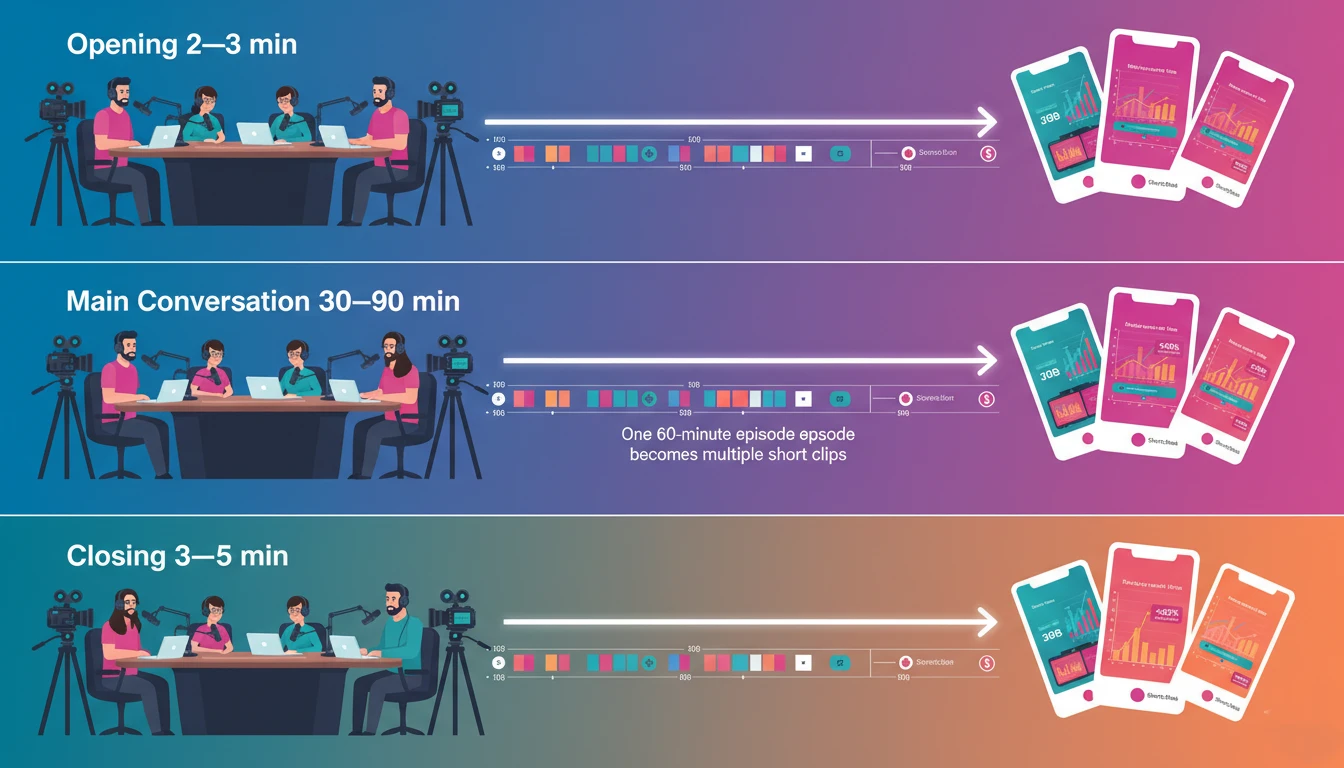
Optimal video podcast structure:
- Opening (2-3 minutes): Hook, episode premise, sponsor mention
- Main content (30-90 minutes): Conversation, storytelling, expert insights
- Closing (3-5 minutes): Call-to-action, next episode teaser, merch plug
This format works because:
- Long enough for depth (you can develop ideas, build narrative tension, create genuine connection)
- Short enough for consumption (45-60 minutes fits a commute or workout)
- Repurposable (one 60-minute episode generates 8-10 short-form clips for social distribution)
Audio Quality is Everything
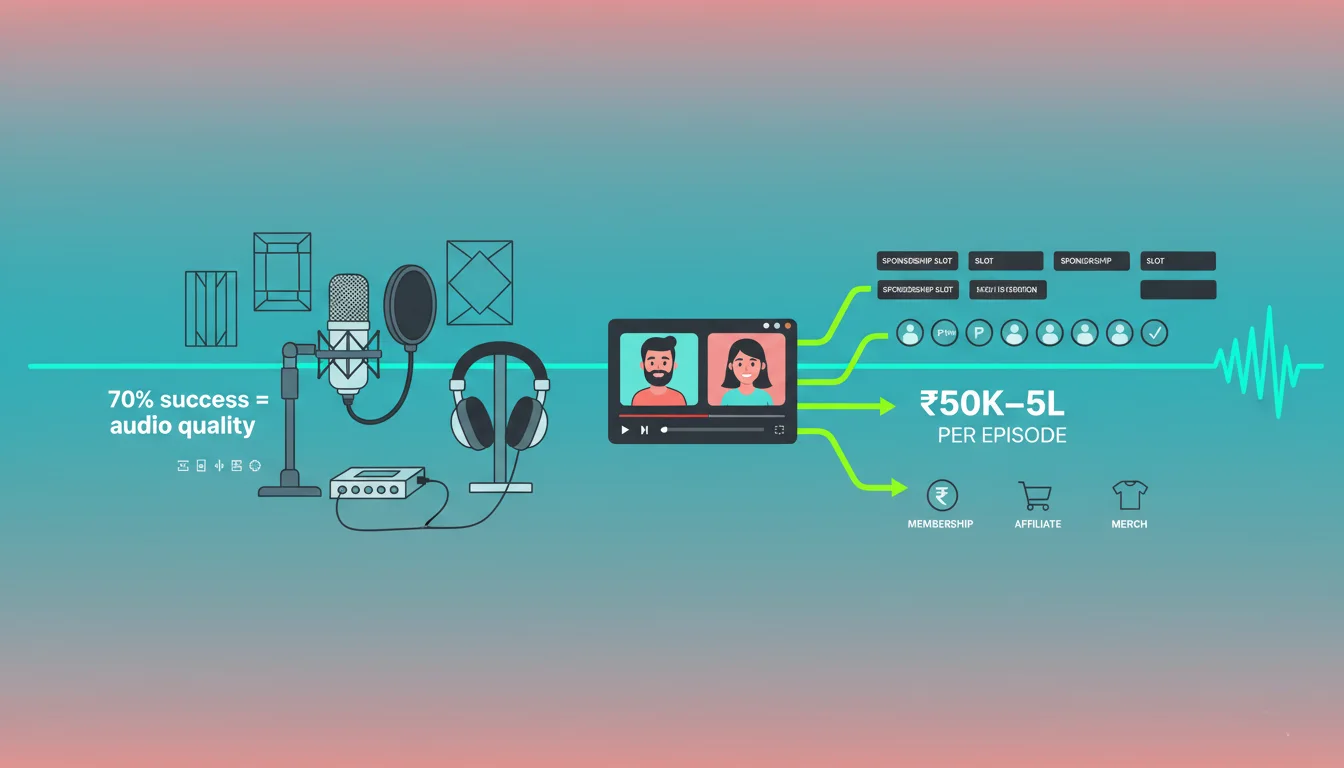
Video podcast success depends 70% on audio quality, 30% on visual quality. Yet most beginners invest in expensive cameras and lighting while recording on phone mics.
This is backwards. Understanding sound design for audio-first consumption reveals that podcast listeners are hyper-sensitive to audio defects. Inconsistent levels, background hum, or poor mic technique kill retention faster than amateur lighting.
Podcast audio minimum:
- Microphone: ₹10-20K (Audio-Technica AT2020, Rode Procaster)
- Interface: ₹8-15K (Scarlett Solo, Audient iO|Mix)
- Acoustic treatment: ₹5-10K (foam panels, bass traps)
- Backup microphone: ₹5-10K (for guest interviews)
Total investment: ₹30-50K. Compare this to a camera setup (₹1-5L) and you see the ROI imbalance.
Production Strategy for Consistency
The definition of a successful podcast isn’t viral episodes. It’s consistent episodes with growing audience loyalty.
Brands want predictability. They sponsor shows releasing every Tuesday at 10 AM because they know placement timing. They sponsor because audiences expect content and return weekly.
Production timeline for sustainable podcasts:
- Week 1: Record 4 episodes (batching maximizes efficiency)
- Week 2: Edit, add graphics, prepare social clips
- Week 3: Release episode 1; begin planning next batch
- Week 4: Release episodes 2-4; repeat cycle
This batching approach means you record 48 episodes in a month and release them across 12 weeks with consistency.
Monetization: Where Video Podcasts Generate Real Revenue
Video podcasts monetize through:
- Sponsorships: ₹50K-5L per episode depending on listener count
- Patreon/memberships: ₹30-100 per fan monthly
- Affiliate revenue: Linking products, courses, services
- Merchandise: T-shirts, mugs, digital products
- Licensing: Repurposing episodes for clients
A podcast with 5,000 weekly listeners typically generates ₹10-20L annually through sponsorships alone. Scale to 20,000 listeners and revenue reaches ₹50L+.
Distribution: Leveraging Multi-Platform Strategy
Video podcasts should leverage multi-platform distribution strategy across release cadences:
- YouTube: Full 60-minute episode
- Spotify/Apple Podcasts: Audio-only version
- TikTok/Instagram Reels: 15-30 second clips extracted
- LinkedIn: Professional insights extracted
- Blog: Transcribed and SEO-optimized
One 60-minute recording becomes 15+ pieces of distributed content.
Conclusion
Video podcasts represent the intersection of intimate storytelling and scalable business model. Brands investing in audio-first, consistent, depth-focused content build sustainable media companies in 2026.
Production houses mastering video podcast production transition from service providers to media owners.
FAQ’S
Q1: How many listeners do I need before brands sponsor?
Sponsorship typically starts at 1,000-2,000 weekly listeners. Niche audiences with strong engagement convert at lower listener counts.
Q2: Should I release video or audio-only podcasts?
Start video (YouTube as discoverability). Distribute audio-only to podcast platforms. Video drives reach; audio drives loyalty.
Q3: How do I repurpose one podcast into social content?
Extract 8-10 clips (15-60 seconds each). Create text overlay cards. Add captions. Distribute across TikTok, Instagram, LinkedIn weekly.
Q4: What’s realistic revenue from a beginner podcast?
0-3 months: ₹0 (audience building). 3-6 months: ₹10-30K monthly (first sponsorships). 6-12 months: ₹50-100K monthly (sponsorships + memberships).
Q5: How much time does podcast production require weekly?
Recording: 4 hours (batched monthly). Editing: 8-10 hours. Graphics/captions: 4-6 hours. Total: 16-20 hours monthly for consistent weekly release.