

The Micro-Drama App Economy: Building OTT Platforms and White-Label Solutions
The micro-drama boom has created unprecedented opportunity for production houses willing to build beyond YouTube.
In 2025, platforms like Dashverse processed 26.5 million views in weeks. JioHotstar’s mythology series generated massive engagement. But here’s the insight production companies at Noida and Delhi often miss: these platforms didn’t distribute existing content—they owned the distribution layer.
This is the micro-drama app economy. And it’s where production houses transition from service providers to platform owners and revenue generators.
Why Platform Ownership Changes Everything
Traditional production house models are linear: create content → sell to brands or platforms → collect payment → start again.
Platform ownership models are exponential: build audience → monetize through multiple revenue streams → compound growth.
A production house creating 50 micro-drama episodes per year earns project fees. That same production house owning a platform distributing those episodes generates revenue from subscriptions, advertising, licensing, brand partnerships, and merchandise—simultaneously.
Understanding the creator economy and monetization models is foundational. But platforms multiply these models. A creator earning ₹5 lakhs annually through fan support, sponsorships, and licensing could earn ₹20+ lakhs annually by owning the platform distribution layer.
Three Platform Models for Production Houses
Model 1: Proprietary OTT Platform
Build your own app, aggregate your micro-dramas, and charge subscribers. Think: Netflix, but focused on micro-content from your production house and exclusive creators you contract.
Investment: ₹15-40 lakhs for MVP (Minimum Viable Product)
Timeline: 4-6 months from concept to launch
Revenue: ₹2-5 per subscriber/month or subscription at ₹99-299 monthly
This works if you have:
- Consistent content pipeline (minimum 100+ episodes annually)
- Audience already built on YouTube/Instagram (seeding for platform migration)
- Marketing budget to drive app downloads
Model 2: White-Label OTT Solutions
License your platform technology to other production houses, creators, or brands. You retain the technical backend; they rebrand and populate with their content.
Investment: ₹20-60 lakhs for white-label platform development
Timeline: 6-9 months
Revenue: ₹50K-2L per white-label deployment; recurring revenue from SaaS licensing
This scales exponentially. One platform serving 5-10 production houses generates recurring revenue without requiring you to create new content.
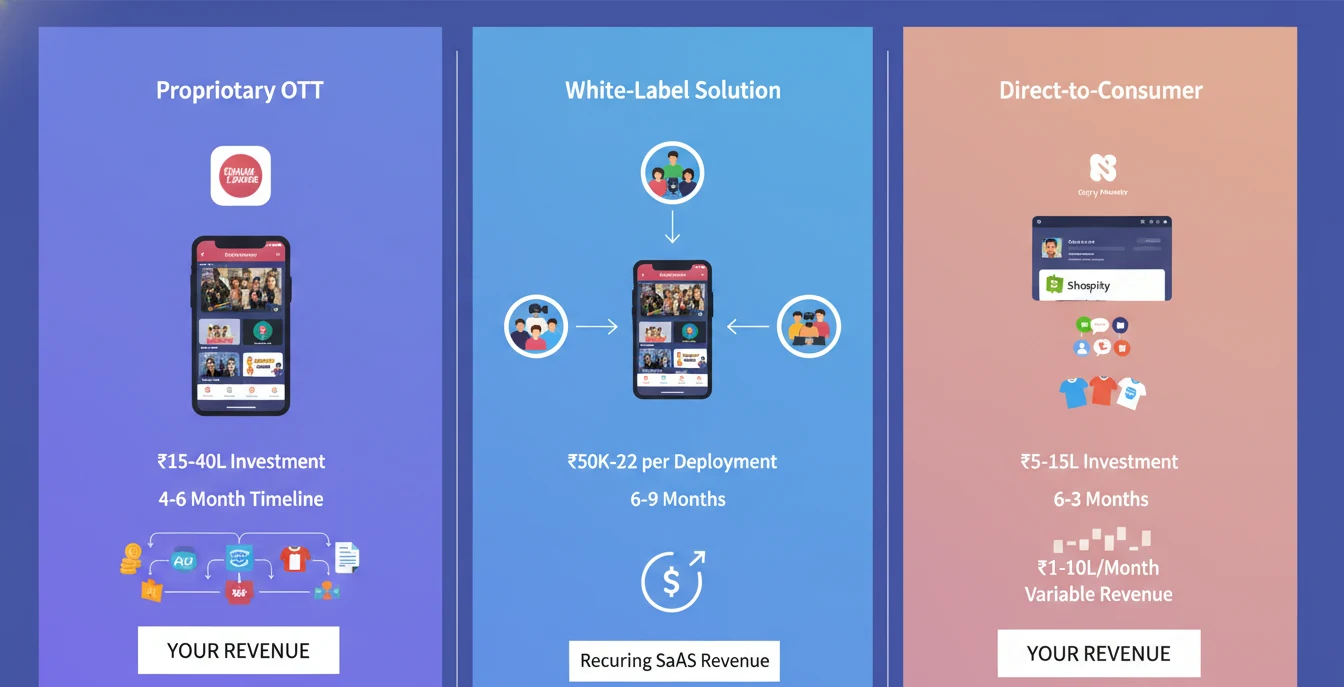
Model 3: Hybrid Direct-to-Consumer (D2C) Model
Skip the app. Use Shopify, Mighty Networks, or custom web platforms to sell subscriptions directly. Build community, sell merchandise, offer exclusive episodes, and generate Patreon-style recurring revenue.
Investment: ₹5-15 lakhs
Timeline: 2-3 months
Revenue: Highly variable (₹1-10 lakhs/month depending on community size)
This model works fastest for established creators with existing fan bases. It requires less technical infrastructure than full apps but demands robust community management.
The Production Strategy Behind Platform Success
Successful platforms aren’t just distribution channels—they’re content factories.
When producing micro-dramas on micro-budgets, production houses can generate 100+ episodes annually for ₹50-80 lakhs. Traditional models would distribute this to YouTube/Instagram. Platform models monetize this through subscriptions, ads, and licensing simultaneously.
The production house in Noida leveraging vertical cinema techniques gains competitive advantage. Vertical video is native to mobile platforms. Apps designed for vertical consumption create superior UX compared to horizontal content forced onto phone screens.
Technical Requirements & Partnerships
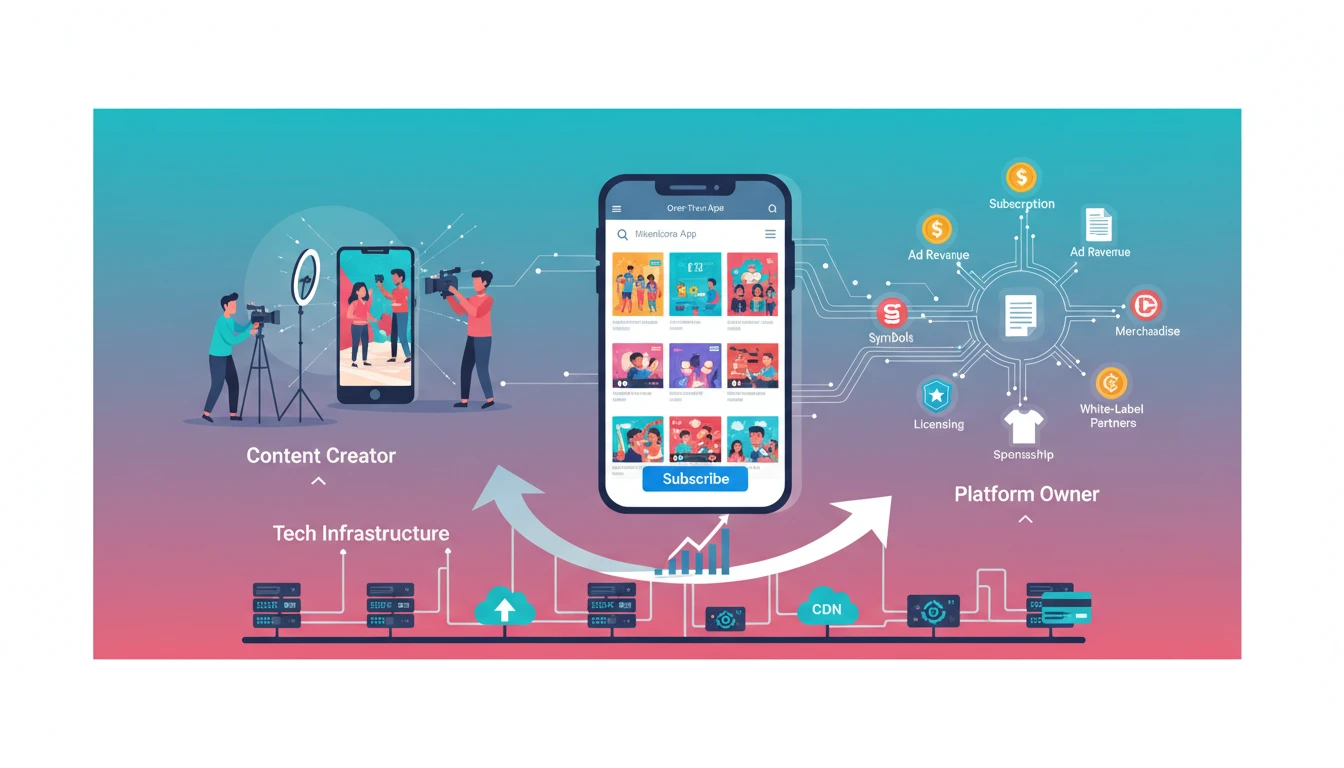
Building micro-drama platforms requires expertise beyond production:
- Backend infrastructure: Streaming servers, CDN, payment processing
- Frontend design: Intuitive app navigation optimized for binge-watching
- Content management system: Upload, organize, monetize content easily
- Analytics: Track engagement, retention, and revenue per episode/series
Most production houses outsource this. Platforms like MUX, Vimeo, or custom Wix integrations provide turnkey solutions. Cost-conscious houses use white-label providers like Bunim or Pod Digital.
The key: partner with tech providers, not build in-house. Your competitive advantage is content creation, not software engineering.
Revenue Stacking in Platform Models
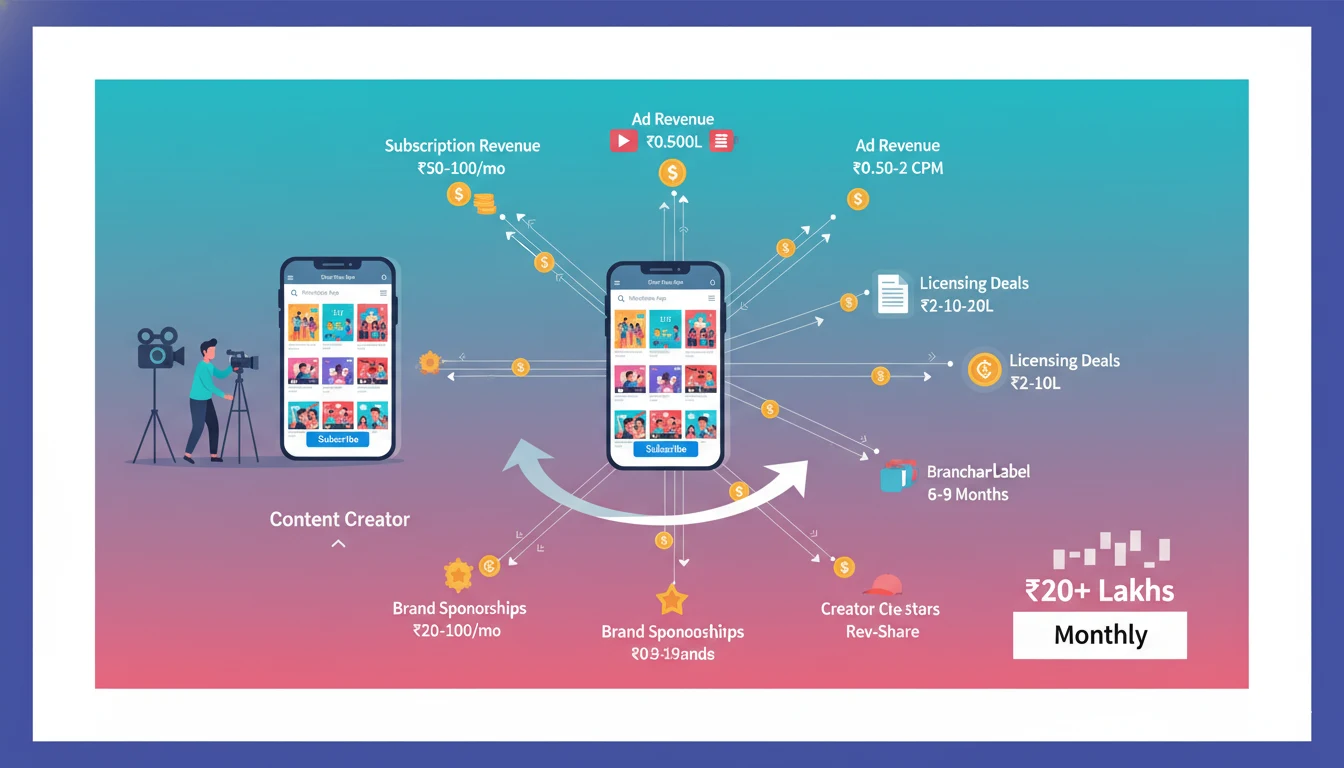
The genius of platform ownership: multiple revenue streams compound.
A micro-drama series generates:
- Subscription revenue: ₹50-100/month from viewers
- Ad revenue: ₹0.50-2 per 1000 views
- Licensing: Syndication to other platforms (₹2-10L per deal)
- Merchandise: Character products sold in-app
- Sponsorships: Integrated brand partnerships
- Creator revenue share: Revenue from white-label creators using your platform
One hit series might generate ₹20+ lakhs monthly across these streams. Traditional production models cap revenue at project rates.
Implementation Timeline for Production Houses
Months 1-3: Choose platform model; secure tech partnerships; build content pipeline
Months 4-6: Develop MVP; seed with existing content; beta test with audience
Months 6-9: Launch publicly; implement monetization; iterate based on user data
Month 9+: Scale to profitability; expand white-label partnerships; build creator network
Conclusion
The micro-drama app economy is where production houses become media companies. OTT platforms, white-label solutions, and D2C models create exponential revenue growth compared to traditional service models.
Production houses in 2026 choosing to remain content-creation-only are leaving 70% of potential revenue on the table.
FAQ’S
Q1: Is building a micro-drama app costly?
MVP apps range ₹15-40L. White-label solutions cost ₹20-60L. D2C platforms via Shopify cost ₹5-15L. ROI typically reaches 12-18 months with consistent content.
Q2: How many episodes do I need to launch a platform?
Minimum 50-100 episodes to create perceived value. Ideally 200+ episodes for strong subscriber retention.
Q3: Should I build proprietary or use white-label?
Start white-label or D2C (faster, cheaper). Scale to proprietary only after pro ving audience demand.
Q4: What’s the typical subscriber acquisition cost?
₹50-200 per subscriber depending on marketing spend. Payback through annual subscriptions (₹1200-3600) within 3-6 months.
Q5: Can I combine app revenue with YouTube/social distribution?
Yes—use YouTube for discovery, drive premium content to your app. This is the optimal hybrid strategy.