

Sound Design for Vertical Video: Audio Strategy, Music Selection for Mobile-First Storytelling
Here’s a sobering statistic: 85% of vertical video content is consumed without sound. Viewers scroll through social feeds in silent mode, at work, or in public spaces where audio is impractical.
Yet paradoxically, sound design has become more critical than ever.
Why? Because the 15% who do enable audio become hyper-engaged audiences. They’re choosing to invest auditory attention—a scarcer resource than visual attention. A micro-drama with premium sound design creates emotional resonance that silent viewers miss. But more importantly: the algorithms know this. Platforms measuring audio unmutes, audio replays, and auditory engagement reward creators prioritizing sonic strategy.
At production houses in Delhi NCR, sound design remains the most underinvested production element. Teams spend 60% of budget on cinematography and 5% on audio. Then they wonder why engagement plateaus.
Why Sound Matters More in Vertical Video
Vertical video forces intimate, mobile consumption. Audiences watch on phone speakers—devices with tiny, tinny audio reproduction. Yet this constraint creates opportunity.
Intimate audio design works better on small speakers than on large. A whispered conversation on a micro-drama, layered with subtle ambient sound, creates visceral connection on phone audio. A booming orchestra on phone speakers becomes muddled and overwhelming.
When crafting vertical cinematography, sound design isn’t an afterthought—it’s a primary storytelling tool. Visual framing pulls viewers in; audio keeps them there.
Audio Architecture: The Three-Layer Strategy
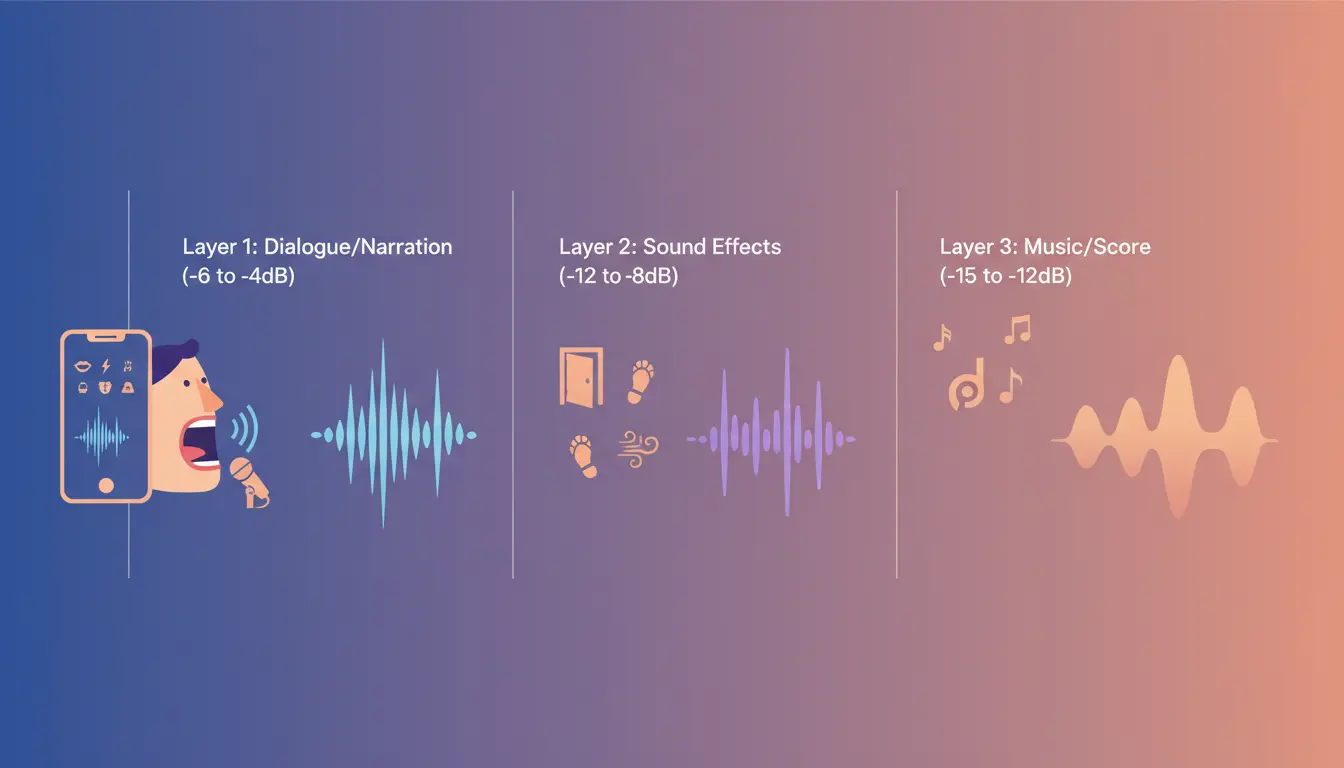
Layer 1: Dialogue/Narration (Lead)
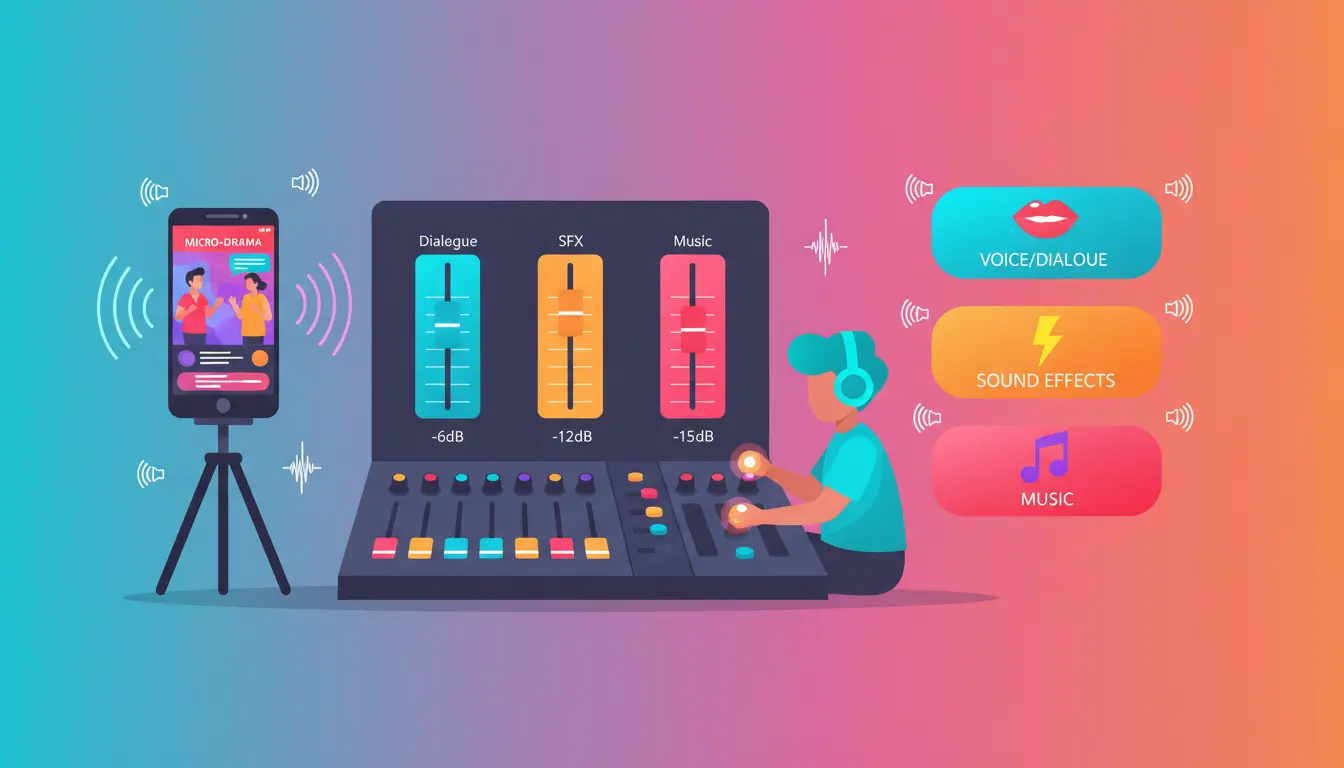
Voice should sit at -6 to -4 dB in your mix. Clear, intelligible, dominant. On mobile speakers, dialogue must cut through without distortion.
Layer 2: Sound Effects (Texture)
Ambient sounds and specific effects sit at -12 to -8 dB. Door creaks, footsteps, environmental ambience. These create immersion and prevent the “hollow” feeling of dialogue-only audio.
Layer 3: Music/Score (Emotional Carrier)
Underscore sits at -15 to -12 dB. It shouldn’t compete with dialogue but should amplify emotional intent. In the harsh reality of the 3-second hook, your opening sound spike—music or SFX—determines whether viewers keep watching. A sudden, unexpected audio cue in the first second creates neurological attention that visual changes alone cannot match.
Music Selection Strategy for Mobile Audiences
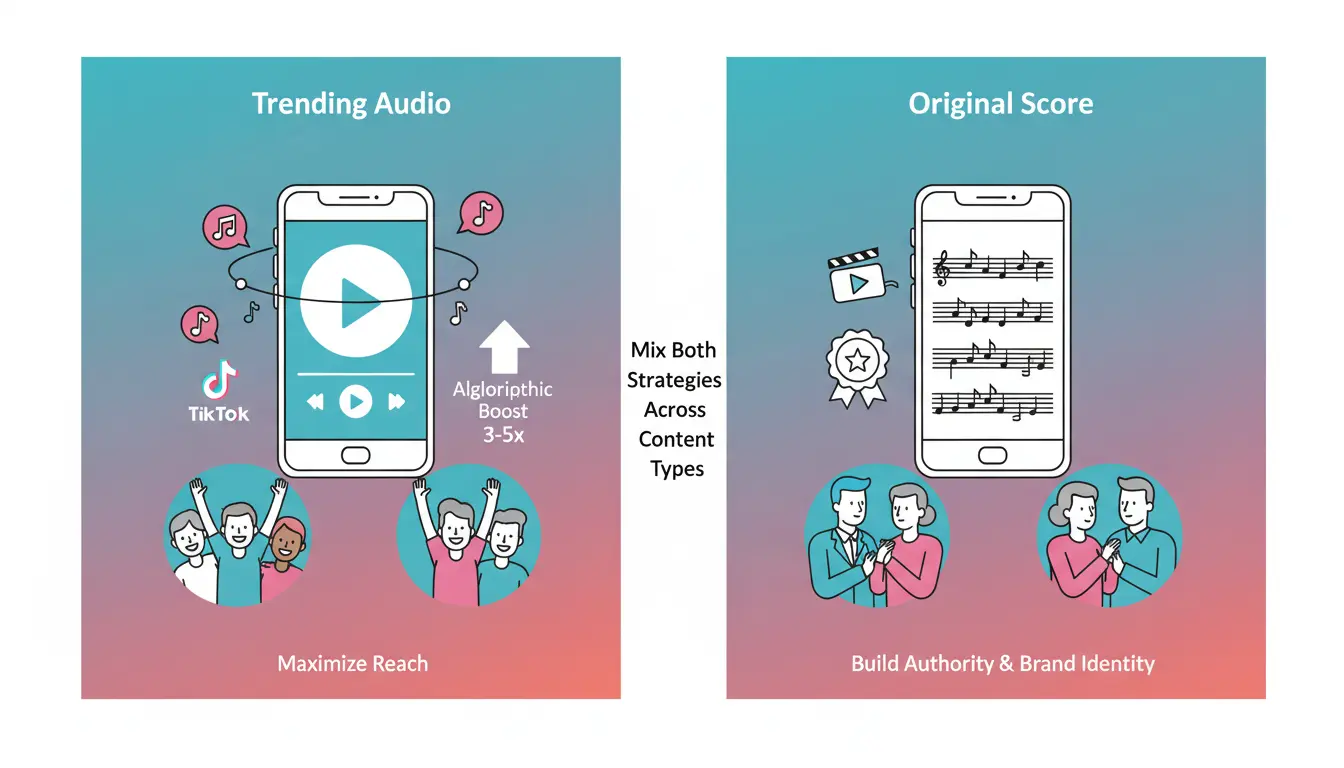
Music drives algorithmic distribution. Platforms like Instagram and TikTok weight trending audio heavily. A micro-drama using trending sounds receives 3-5x more algorithmic promotion than identical content using library music.
But here’s the production strategy: trending audio works for discovery; original audio builds authority.
The winning approach: use trending sounds for short-form content driving reach, original underscore for long-form authority pieces. A creator building a vertical cinema narrative might use trending audio in TikTok clips while reserving original score for YouTube long-form versions. This dual strategy leverages algorithm benefits while building brand audio identity.
Music selection principles:
- Tempo: 100-120 BPM for high-energy content, 60-80 BPM for emotional beats
- Frequency: Avoid overly “bright” music on mobile speakers; it fatigues quickly
- Familiarity: Trending audio gives algorithmic boost; unknown audio won’t
- Licensing: Always secure rights; royalty-free libraries offer broad catalogs
Sound Effects: Creating Mobile Immersion
SFX on mobile speakers must be clean and purposeful. Generic library sounds often sound cheap. Strategic, specific sounds create production value.
Instead of generic “door knock,” record an actual door knock in the location you’re filming. Instead of stock “footsteps,” record footsteps on the exact surface your character walks. This specificity creates authenticity that elevates perceived production quality.
For short-form video production, sound effects serve double duty: they prevent silence (which kills engagement) and they underscore key moments. A text overlay appearing on screen simultaneously with a subtle “pop” SFX makes the moment feel intentional and polished.
Technical Optimization for Mobile Delivery
Mobile delivery changes audio requirements:
- Normalize audio to -14 LUFS for YouTube, -16 LUFS for social platforms
- Avoid extreme frequency peaks (harsh highs above 12 kHz distort on phone speakers)
- Layer quiet ambient sound to prevent dead silence between dialogue
- Test on phone speakers before publishing; laptop speakers mask mixing issues
The Production House Advantage
Production houses investing in sound design capture 40% higher engagement rates than competitors ignoring audio strategy. This translates to algorithmic amplification, better retention metrics, and stronger conversion potential.
In 2026, sound design isn’t luxury—it’s competitive necessity.
Conclusion
Sound design for vertical video requires understanding mobile consumption, strategic audio layering, and platform-specific music selection. Masters of sonic strategy create immersive mobile experiences that transcend the limitations of tiny speakers and silent audiences.
The production houses winning in Delhi NCR and across India treat sound as primary narrative architecture, not secondary embellishment. When audiences choose to enable audio, they experience storytelling depth that silent viewers miss entirely.
FAQs
Q1: Should I prioritize trending music or original score?
Use trending audio for reach (algorithmic boost); original score for authority. The optimal strategy layers both across different content types.
Q2: How loud should dialogue be mixed compared to music?
Dialogue at -6 to -4 dB, music at -15 to -12 dB. This ensures dialogue clarity while music amplifies emotional resonance without competing for attention.
Q3: What audio format works best for vertical video on Instagram/TikTok?
Stereo MP4 audio at 48 kHz, 128-192 kbps. Normalize to -16 LUFS for social platforms.
Q4: Can I use free sound effects, or do I need premium SFX?
Free libraries work, but specific, context-recorded sounds create higher perceived production value. Mix both strategically.
Q5: How does sound design impact algorithmic distribution?
Platforms measure audio unmutes, replays, and engagement. High-quality audio design increases these metrics, boosting algorithmic reach 3-5x versus poor audio.