

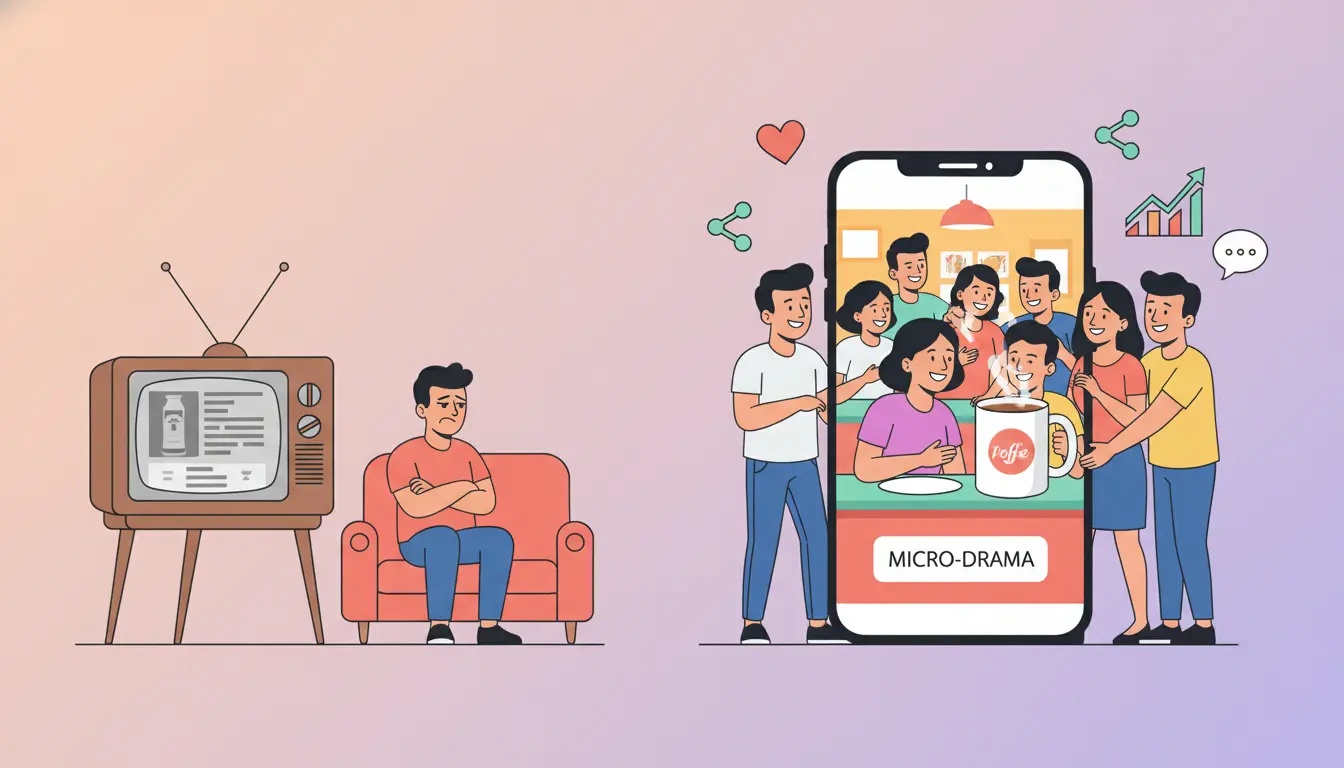
The 30-Second TVC Is Dead: Welcome to the Ad-Ver-Tainment Era
In 2019, if you wanted brands to remember you, you bought prime-time television. A 30-second slot during an evening news broadcast cost ₹50,000-500,000 depending on channel reach, and that was considered efficient media buying. By 2024, the economics had inverted completely.
Indian TV households dropped 24% from 2019 to 2024. More critically, the average household viewer count plummeted from 4 people (family co-viewing) to 1.8 people (solo OTT consumption). Traditional 30-second commercials designed for distracted family audiences simply don’t fit modern consumption patterns anymore.
Yet brands haven’t disappeared from screens. They’ve evolved. Welcome to ad-ver-tainment—the strategic fusion of advertising and entertainment where brands become storytellers, not interrupters.
The Numbers Behind the Shift: TV Advertising in Freefall
The data is unambiguous. Film trailers, once dominant on Indian TV, have seen advertising volume plummet by 38.6% from 2019 to 2024. Travel and tourism brands have cut TV advertising to just 57.3% of pre-COVID levels. Traditional quick-reaction categories are hemorrhaging TV budgets.
Meanwhile, a seismic shift is underway elsewhere. Digital advertising now commands 57% of total advertising spend in India. D2C brands—companies that barely touched television five years ago—have grown from 0.8 million seconds of annual TV ad time in 2017 to 38.4 million seconds in 2024: a 4,700% increase.
But here’s the strategic inflection point: those D2C brands aren’t buying traditional 30-second TVCs. They’re investing in micro-dramas, branded content, and scripted series distributed across platforms where their audiences actually are.
The Micro-Drama Case Studies: Proof That Storytelling Works
Starbucks’ “Running a Starbucks in Ancient Times”
In 2024, Starbucks launched a six-episode micro-drama series, each episode introducing a new seasonal drink through narrative integration rather than product pitch. The series logged 2 million views on its first day alone. No 30-second TV spot generates that engagement. The episodes were designed to be shared, discussed, clipped, and binge-watched—behaviors that algorithmically amplify reach far beyond paid media spend.
When exploring the rise of vertical cinema and micro-dramas, you’ll recognize how platform-native formats create audience expectations that traditional TVCs cannot satisfy.
KFC’s Ancient Empress Series
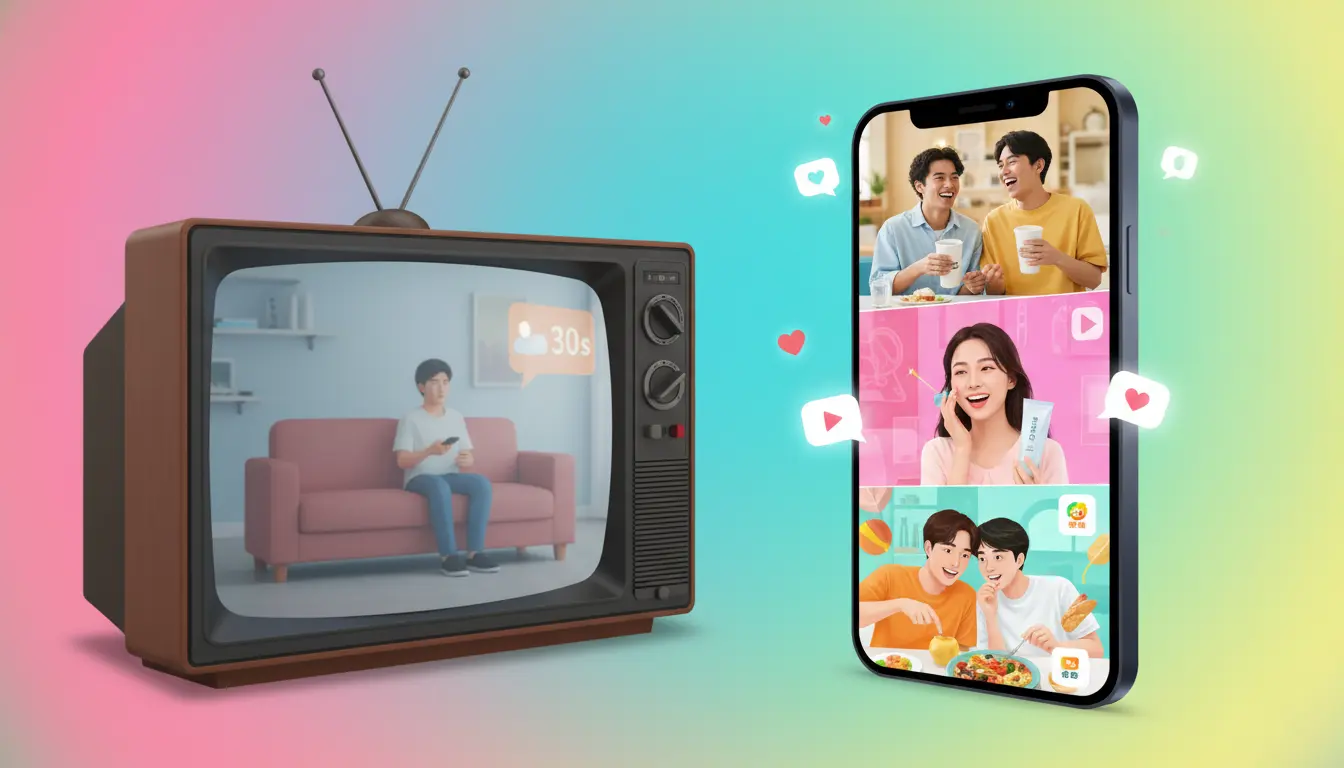
KFC released a micro-drama where an ancient Chinese empress searches for a legendary drumstick in the royal kitchen, gets mysteriously transported to modern-day China, and discovers KFC as her favorite food. The narrative feels like entertainment first, advertising second. That psychological shift—where audiences choose to watch because the story compels them, not because they’re forced to tolerate a commercial—is the core insight behind ad-ver-tainment success.
Kans Skincare’s Five-Billion-View Phenomenon
A Chinese skincare brand created multiple micro-drama series with products integrated throughout the plotline. The series generated over 5 billion views and drove measurable sales growth. This isn’t vanity metric inflation. These numbers correlate with retail conversion and customer acquisition cost efficiency that traditional TV advertising simply cannot match.
Why Micro-Dramas Beat 30-Second TVCs: The Psychology
The “Waiting Room Gratification” Factor
Marketing strategists describe micro-dramas as “waiting room gratification.” Think back to television’s golden age: afternoon slots (1-3 PM) when housewives watched their favorite shows. Today, the context has shifted. Whether waiting at a bus stop or railway station, audiences instinctively scroll. But scrolling rarely offers true engagement with brands.
Micro-dramas change that equation. Every 15 seconds delivers a new emotional beat—a plot twist, a character revelation, a comedic moment. This creates continuous gratification that makes people want to invest time, not scroll past. Understanding why micro drama is the future of digital storytelling reveals this engagement mechanism in depth.
Emotional Connection Over Product Features
Traditional TVCs hammer home features: “New formula,” “50% stronger,” “Clinically proven.” Micro-dramas abandon that language entirely. Instead, they ask: What does this product mean in someone’s life? What story does it enable?
This distinction fundamentally changes memory retention and brand affinity. When audiences experience emotional resonance through narrative—through the power of storytelling in advertising—they don’t just remember the brand. They develop psychological attachment to it.
Seamless Product Integration
In scripted micro-series, brands aren’t placed awkwardly; they’re woven into narrative fabric. A character using a payment app feels natural if the scene demands a transaction. A character reaching for a skincare product feels authentic if it solves a plot-relevant problem. This organic integration respects audience intelligence and eliminates the cognitive jarring that interrupts modern content consumption.
The Platform Reset: Where Audiences Actually Live
Here’s what changed: connected TV is now a major distribution channel. YouTube commands 12.4% of audiences’ time spent watching television—its largest share to date. This matters because it means audiences consuming vertical, episodic micro-dramas on their phones often transition to watching them on living room screens.
This platform fluidity changes production strategy completely. Vertical formats optimized for short-form video production in 2025 perform identically across phone, tablet, and TV when narratively designed for connected viewing.
The Creator-Led Infrastructure Shift
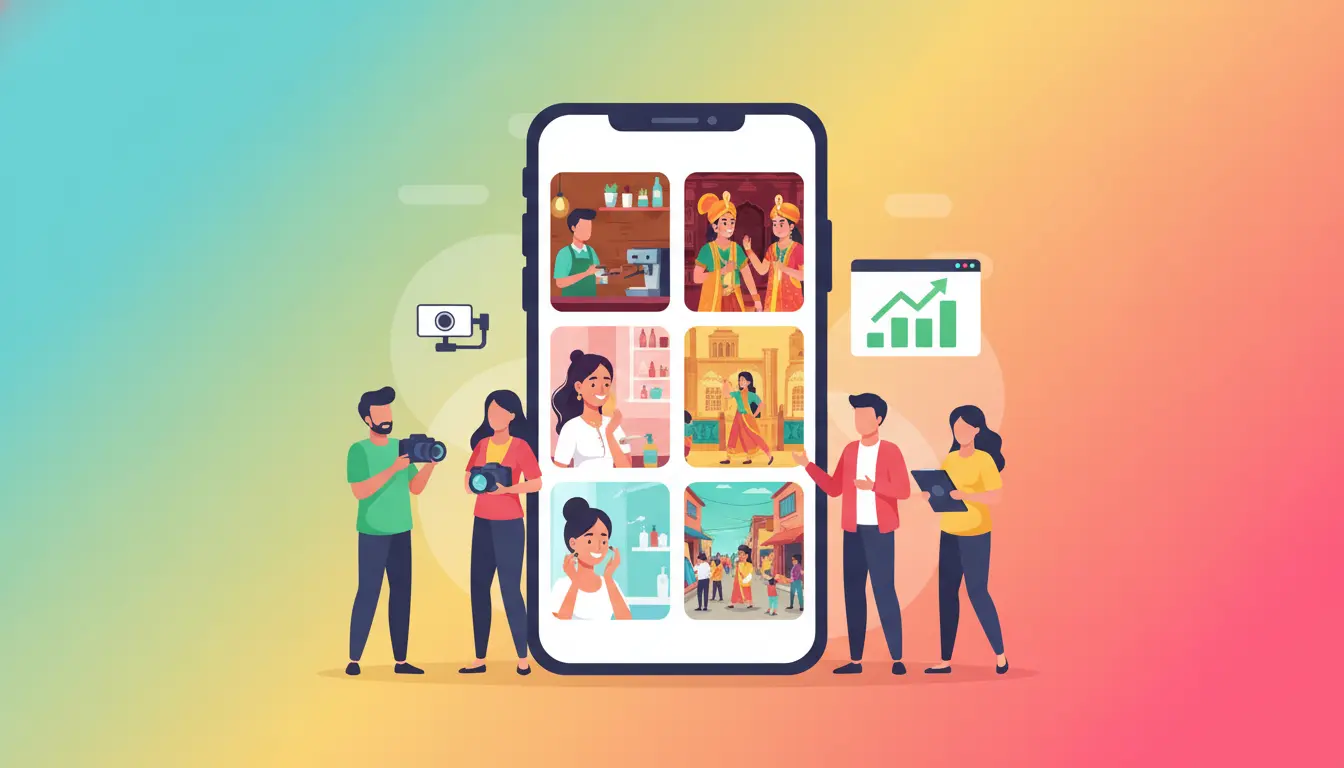
Traditional advertising relied on agencies and production houses creating content, then distributing it through media buys. The 2025 model is inverted: brands now build creator supply chains. They identify top-performing creators, provide creative briefs, collect content, then amplify the highest-performing pieces at scale.
This approach outsources audience understanding to creators who live within those communities. A micro-drama about Rajasthani storytelling traditions carries more authenticity from a regional creator than a Mumbai agency’s interpretation. Production houses thriving in this era become facilitators of creator ecosystems, not just content vendors.
Conclusion
The TVC didn’t die because audiences ran out of patience with advertising. It died because the medium itself became incompatible with modern life. Audiences don’t gather around TVs at 8 PM anymore. They consume content in fractured moments throughout their day, on multiple screens, in algorithmic flows they don’t control.
Brands that thrived in 2025 recognized this seismic shift and embraced ad-ver-tainment. They stopped interrupting stories and started telling them. They stopped counting reach and impressions; they started measuring engagement, shareability, and conversion. The future of advertising isn’t less intrusive—it’s more entertaining, more culturally resonant, and more deliberately chosen by audiences.
FAQ’S
Q1. Why are brands abandoning 30-second TVCs for micro-dramas?
TV households dropped 24% (2019-2024), making traditional spots inefficient. Micro-dramas earn engagement through storytelling, generating 2M+ views vs passive TVC exposure.
Q2. How does product placement work in micro-dramas without feeling forced?
Seamless integration within narrative (character solves problem using product). Organic placement respects audience intelligence versus disruptive traditional ads.
Q3. What ROI metrics matter for branded micro-dramas?
View completion rates, social sharing, clip virality, organic reach amplification, and measurable conversion correlations—not just impressions or reach.
Q4. Can small brands afford micro-drama production versus traditional TVCs?
Yes. AI-powered production reduces costs 75%; creator-led content crowdsourcing is cost-efficient; micro-budget quality acceptable for authentic narratives.
Q5. Which brands are seeing success with advertainment strategies?
Starbucks (2M views day 1), KFC (viral Ancient Empress series), Kans (5B views, sales growth), Maybelline (cultural authenticity focus), regional D2C brands.