

Vertical Cinema in India: The Micro-Drama Revolution
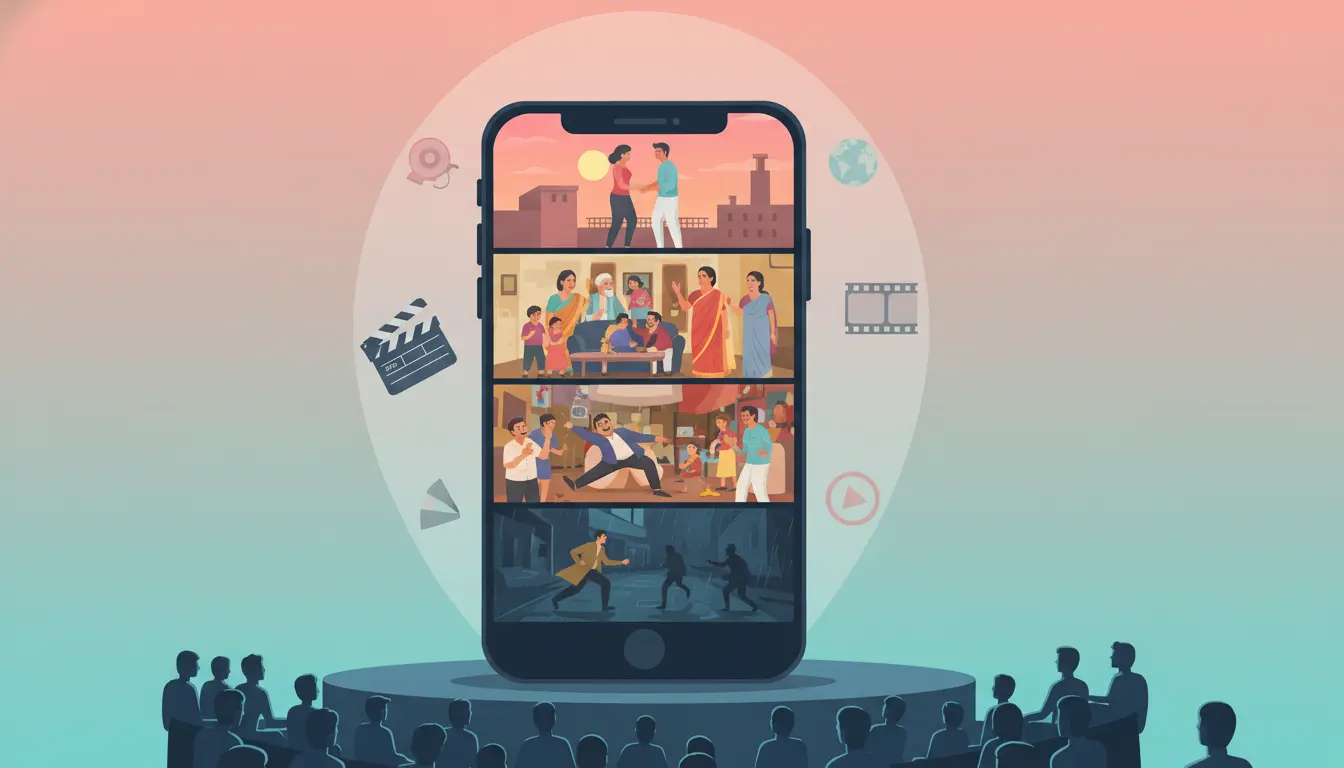
If you’ve scrolled through Instagram Reels or YouTube Shorts in the last year, you’ve witnessed a quiet revolution. Gone are the days when cinema meant wide screens, 24-frame storytelling, and horizontal aspect ratios. Welcome to vertical cinema—a format so native to mobile phones it feels like storytelling was reinvented for your palm.
In India, this shift isn’t just a trend. It’s an economic movement. The micro-drama market—India’s fastest-growing content format—has exploded from essentially zero three years ago to a $400-500 million industry in 202-2025. By 2030, projections suggest it could touch $10 billion. To put that in perspective, this is outpacing the growth trajectory that established OTT platforms took decades to build.
But is India truly ready for this vertical cinema wave? The data suggests not just ready, but ravenous.
Why Vertical Cinema Is Taking Over India
The Mobile-First Consumer Reality
India has 750+ million smartphone users, and they’re consuming video like never before. But here’s the key insight: they’re holding those phones vertically 94% of the time. This simple behavioral reality has forced content creators to rethink everything.
The numbers validate this shift. Vertical videos generate 130% more views than horizontal formats. On Instagram Reels, vertical video content drives significantly higher engagement than horizontal alternatives. It’s not because vertical is novelty—it’s because it matches how humans naturally interact with their devices.
For video production houses in Delhi NCR and beyond, this represents a fundamental shift in production methodology. No longer is horizontal the default with vertical as an afterthought. Vertical is the primary format.
The Geography of Opportunity
What makes India’s micro-drama boom particularly unique is its geographic distribution. Unlike traditional OTT platforms that skew heavily urban and affluent, micro-drama audiences are 55% from rural markets. This democratization of content consumption is crucial.
Consider this: 68% of short-form video platform users now hail from tier-2 and tier-3 cities like Jaipur, Patna, Kanpur, and Lucknow. These are audiences previously underserved by Bollywood and mainstream OTT, now discovering stories made specifically for their viewing habits and cultural contexts.
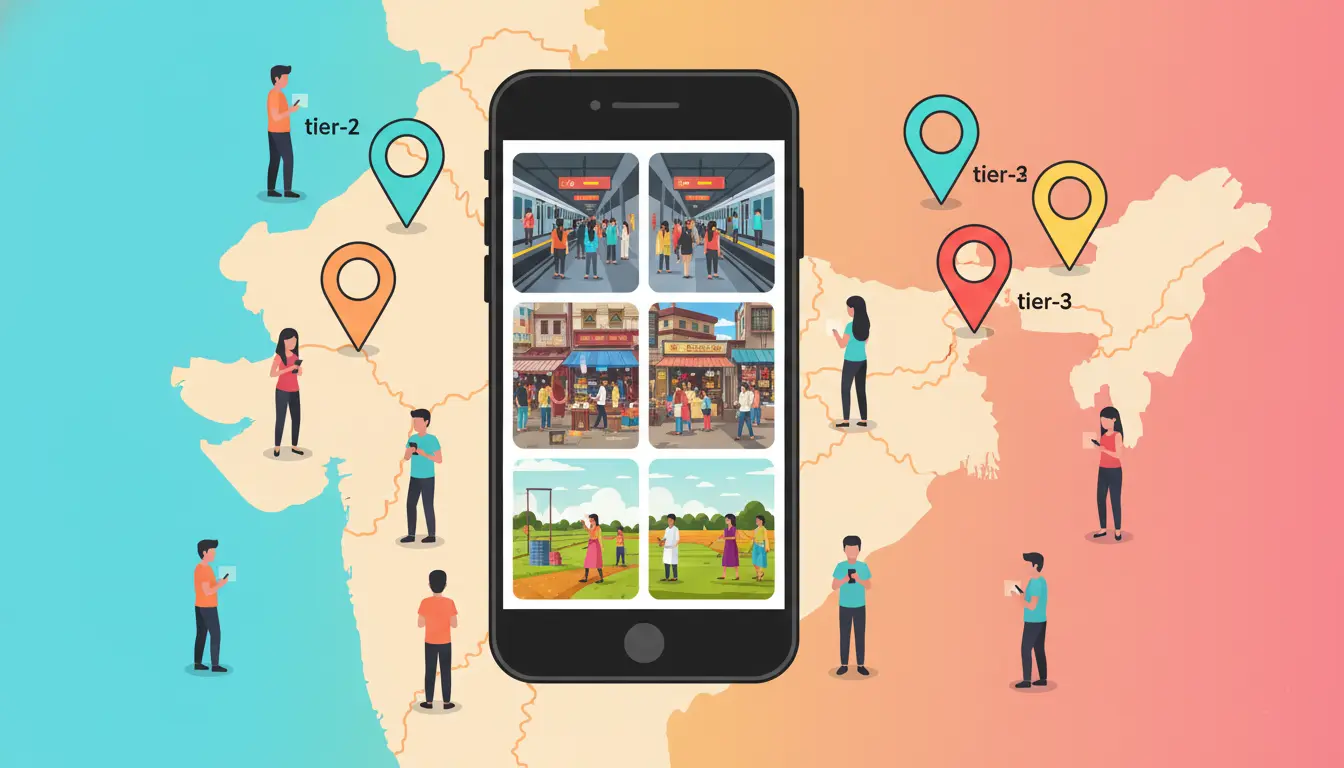
For creators and production companies, this means the micro-drama market isn’t cannibalizing existing digital audiences—it’s expanding the addressable market significantly.
The Format That Fits Modern Life
Micro-dramas are typically 1-5 minute episodes, serialized across 70-80 installments per season, totaling roughly 1.5-2 hours of watchable content. This structure does something traditional television and long-form OTT cannot: it respects the attention economy while maintaining narrative depth.
When you explore why micro drama is the future of digital storytelling, you’ll discover how emotionally charged narratives compress into bite-sized formats. Average daily video engagement in India already exceeds 55 minutes. Micro-dramas slot perfectly into those fragmented viewing moments—commutes, lunch breaks, late-night scrolls.
The Production Opportunity: From Concept to Scale
India’s vertical storytelling infrastructure is already maturing at remarkable speed. More than 550 micro dramas are currently in production across Mumbai alone, with at least 20 new dedicated apps launching by year-end.
This acceleration matters because it signals sustainability. When 15+ platforms operate simultaneously with 550+ active productions, you’re no longer looking at a format. You’re looking at an industry. The teams mastering short-form video production in 2025 are positioning themselves at the center of this explosion.
For production teams, this means the barrier to entry is democratized. Unlike film and television production, which require substantial capital and distribution networks, micro-drama production leverages existing digital infrastructure. High-quality vertical content can be shot with smartphones, edited on laptops, and distributed globally.
Key Metrics Proving India’s Readiness
The evidence of India’s readiness is compelling. The micro-drama market achieved a $500 million annual revenue run rate, with a 113% surge in app downloads in Q1 2025 alone. Geographic data shows strength: 55% of micro-drama viewers from rural India, indicating penetration beyond metros. Demographic alignment is perfect—65% of India’s population is under 35, precisely the mobile-native generation fueling consumption.
The Missing Piece: Quality Storytelling
Yet here’s the challenge: rapid growth often sacrifices quality. While China’s micro-drama market matured through 830 million viewers (60% paying subscribers), India’s industry still leans heavily on ad-supported models.
This presents an opportunity for production houses willing to invest in narrative depth. The evolution from viral clips to emotionally resonant stories requires creators who understand both short-form pacing and character development. This is where the power of storytelling in advertising intersects with emerging formats.

Conclusion
India isn’t just ready for the vertical cinema wave—it’s actively building it. With a market already valued at half a billion dollars, demographic tailwinds favoring mobile-first consumption, and geographic diversity creating hungry audiences, the question isn’t whether vertical cinema will succeed in India. The question is which creators and production teams will lead it.
The future belongs to storytellers fluent in vertical cinema’s unique language—fast hooks, emotional arcs compressed into minutes, narratives designed for the scroll. The time to establish expertise is now.
FAQ’S
Q1. What exactly is a micro-drama?
A serialized vertical video series with 1-5 minute episodes that tell emotionally engaging, cliffhanger-driven stories across 70-80 episodes per season.
Q2. Why is the vertical format better for mobile audiences?
Vertical videos generate 130% more views because they occupy more screen space on phones, matching the natural 94% vertical-held device usage pattern.
Q3. How large is India’s micro-drama market currently?
$400-500 million in 2024-2025, projected to reach $10 billion within five years as adoption accelerates across rural and urban markets.
Q4. Which audiences are driving micro-drama growth in India?
55% come from rural markets and tier-2/3 cities, representing untapped audiences previously underserved by traditional OTT platforms.
Q5. What advantages do production teams have entering the micro-drama space now?
Early-mover positioning, lower production barriers compared to film/TV, democratized distribution through platforms, and massive underserved creator demand.