

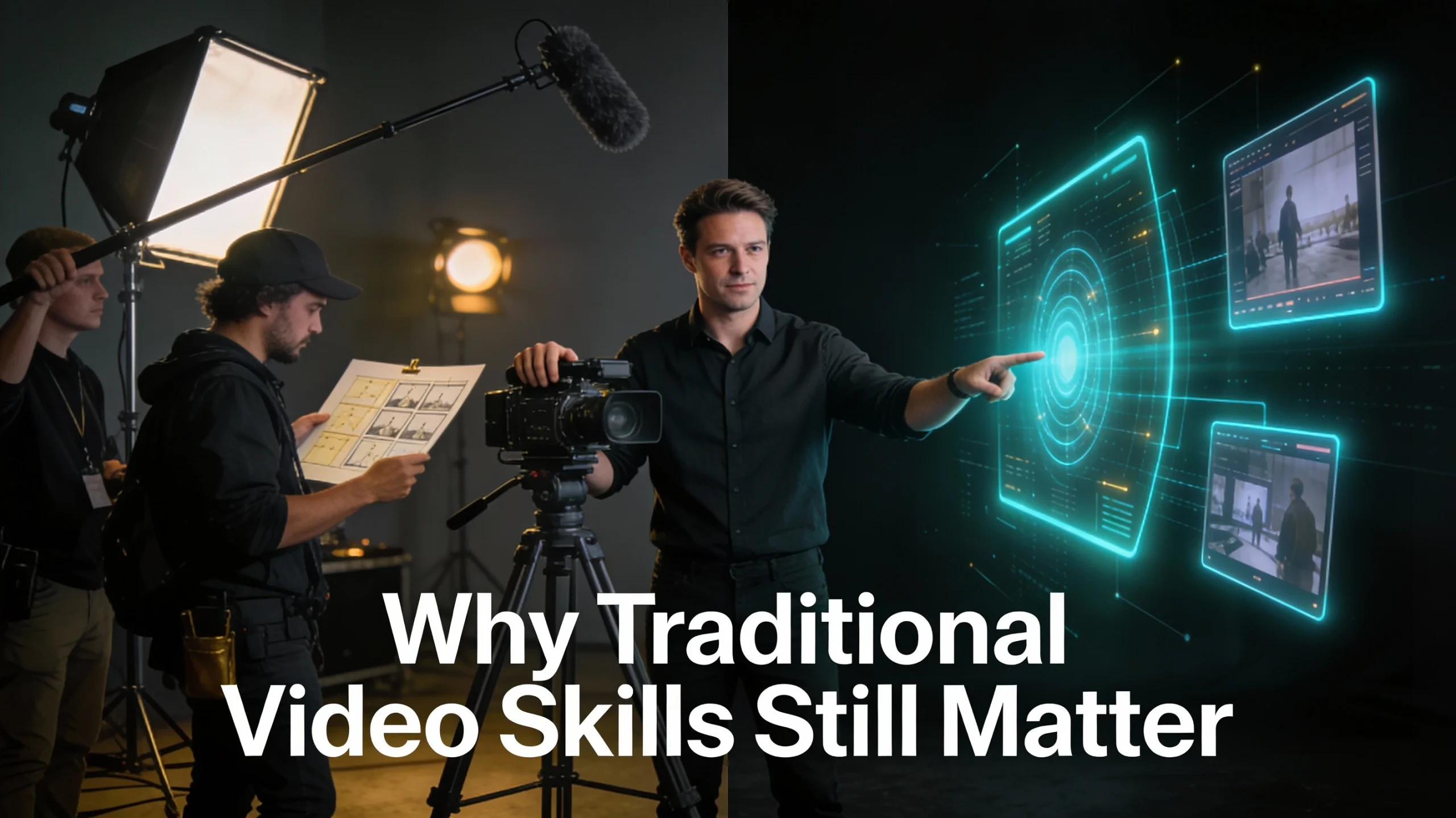
Why Traditional Video Production Skills Still Matter in the Age of AI: A Production House Perspective
The rise of AI video generation tools has sparked an inevitable question in the creative industry: Do professional filmmakers and video producers still matter? The short answer is yes—more than ever. While AI video generation technology offers remarkable efficiency gains, it cannot replicate the nuanced human creativity, emotional intelligence, and problem-solving expertise that separates mediocre content from masterpieces.
At Garage Productions, we’ve witnessed firsthand how AI tools complement rather than replace traditional production skills. Let’s explore why craftsmanship remains the backbone of professional video production in 2026.
Understanding the AI Video Generation Landscape
AI video generation tools have democratized content creation. Today, anyone with a prompt can generate basic videos in minutes—a task that once required teams of specialists and weeks of work. Tools like RunwayML, Synthesia, and D-ID promise speed and accessibility.
However, democratization of tools doesn’t democratize quality. These platforms excel at creating template-based content, corporate explainers, and straightforward visual assets. They struggle with nuance, cultural context, and emotional resonance—the very elements that make content memorable and effective.
The Irreplaceable Value of Human Craftsmanship
1. Storytelling Transcends Technology
The importance of storytelling in video production cannot be overstated. Crafting a narrative that resonates emotionally with audiences requires understanding human psychology, cultural nuances, and audience psychology—something AI cannot fully grasp.
A skilled filmmaker knows how to structure a story arc, build tension, reveal information strategically, and create emotional payoff. They understand pacing, silence, and visual metaphor. These elements are learned through years of practice, failure, and refinement—not through algorithms.
When you work with professional video production teams, you’re accessing decades of accumulated experience in what works, what doesn’t, and why audiences connect with certain stories over others.
2. Technical Mastery Still Drives Quality
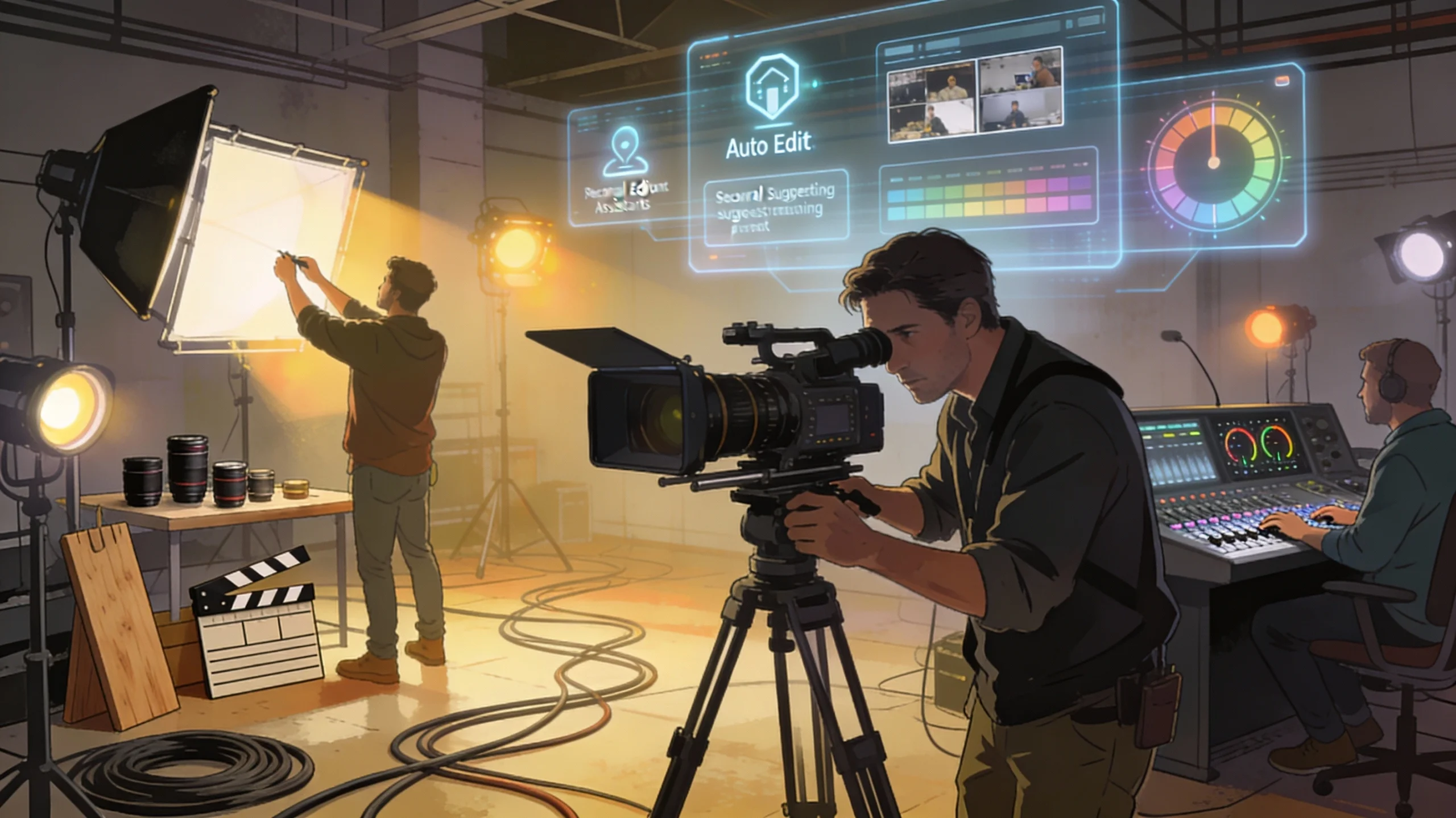
Traditional video production skills encompass cinematography, lighting design, sound engineering, color grading, and editing. While AI can automate elements of these processes, the artistic decisions require human judgment.
Consider lighting design: AI might place lights algorithmically, but it doesn’t understand how light communicates mood, directs viewer attention, or reveals character through shadows. A cinematographer with traditional training understands these principles intuitively.
Similarly, sound design in video production remains an art form where professionals create immersive audio landscapes that transform the viewer’s experience. This requires training that extends beyond what current AI can replicate.
3. Problem-Solving in Real-World Production
Production houses don’t operate in controlled environments. Budget constraints, difficult locations, unexpected weather, equipment failures, and client changes are realities.
The production house perspective on creative problem-solving is invaluable.
Experienced production teams adapt on the fly, finding creative solutions with limited resources. They know how to maximize impact with what’s available. This pragmatic creativity—born from real-world challenges—cannot be replicated by AI systems trained on ideal scenarios.
4. Strategic Creative Direction
Before a single frame is shot, strategic decisions shape the entire production. What’s the core message? Who’s the audience? What emotional response do we want? What’s the competitive landscape?
AI can process data, but it cannot truly understand strategic creative direction. Professional producers and directors synthesize business objectives, creative vision, audience psychology, and market conditions into a cohesive strategy. This synthesis requires human intelligence and experience.
Where AI Enhances Traditional Skills
Rather than viewing AI as a threat, progressive production houses see it as a force multiplier. AI excels at:
- Automating repetitive tasks (rotoscoping, basic color correction, video transcription)
- Speeding up tedious processes (background removal, multi-language dubbing, social media cuts)
- Generating rough concepts (storyboard mockups, animation tests, rough cuts)
- Analyzing and optimizing (audience sentiment analysis, A/B testing variations)
In each case, AI handles the grunt work, freeing human professionals to focus on strategic and creative decisions where human judgment remains superior.
The Future: Collaboration, Not Competition
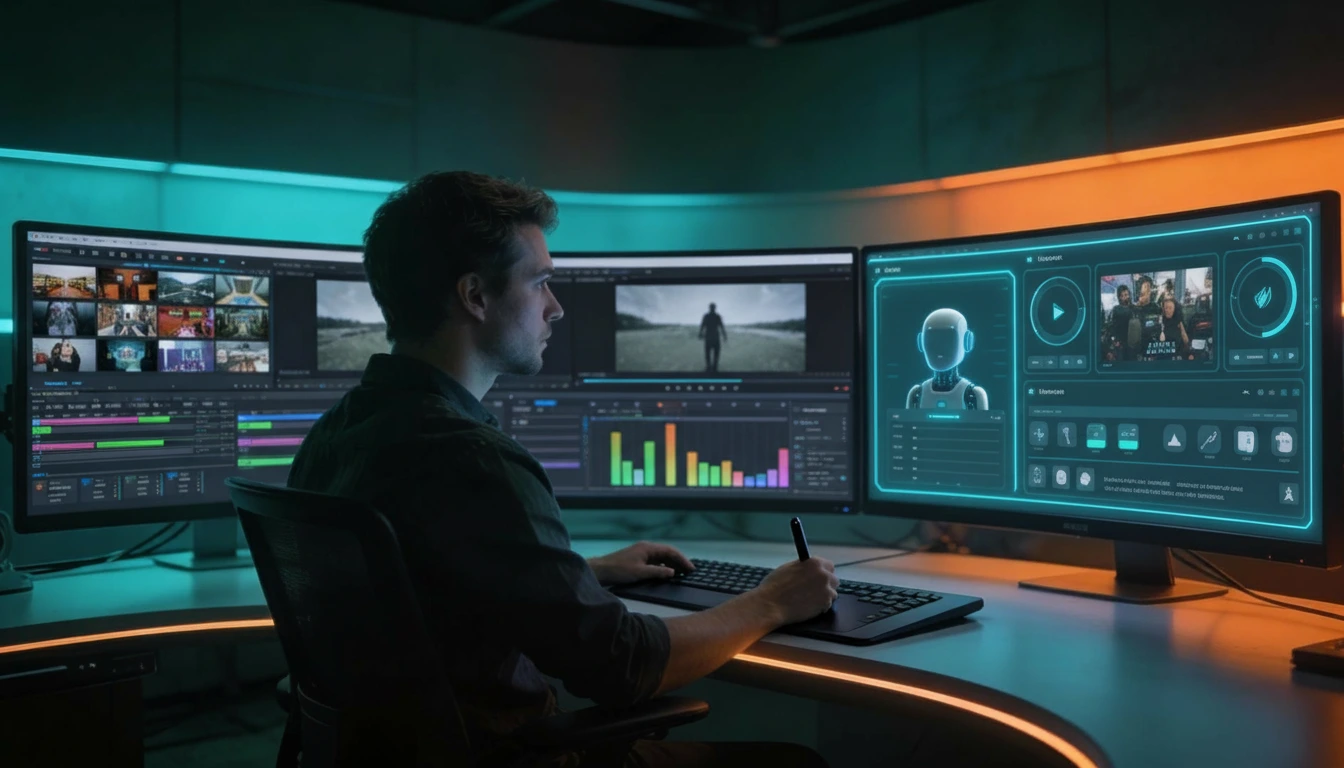
The most forward-thinking production houses aren’t choosing between traditional skills or AI—they’re combining both. A cinematographer uses AI tools to manage color grading iterations. An editor uses AI to quickly generate rough cuts for client review. A producer uses AI to analyze which narrative approaches resonate most with target audiences.
This hybrid approach delivers superior results: the creative vision and strategic thinking of experienced professionals, accelerated and enhanced by AI efficiency.
5 FAQs
Q1: Will AI eventually replace video producers?
No. As AI handles technical execution, demand for creative strategy and storytelling expertise will actually increase.
Q2: Should I invest in learning traditional video production skills?
Absolutely. AI tools are easier to use but harder to use well. Traditional training teaches strategic thinking that AI can’t replicate.
Q3: What traditional skills matter most in 2026?
Storytelling, creative direction, problem-solving, and emotional intelligence—skills AI cannot automate.
Q4: How should production houses adapt to AI?
Integrate AI into your workflow for efficiency gains while deepening your human creative expertise and strategic capabilities.
Q5: Will AI-generated videos ever match professional video production quality?
For premium, emotionally resonant, strategic content—unlikely. AI excels at functional, template-based content but struggles with originality and cultural depth.